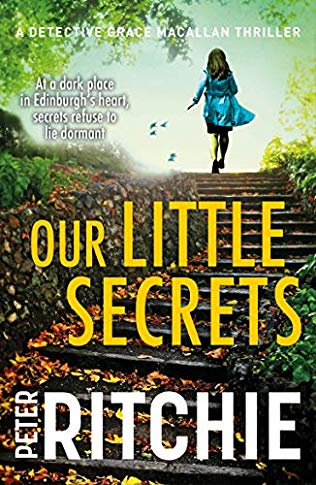
I am delighted to taking my turn today on the blog tour for Our Little Secrets by Peter Ritchie. Thank you to Alastair Chivers of Black and White Publishing for inviting me along for this glimpse into the Edinburgh Gangland, in all it’s menacing glory.
On to the book…
Our Little Secrets is the fifth instalment of the Grace Macallan series.
Set in Edinburgh, we catch up with Grace, who is trying to establish where her life is heading. Has she got a future in the force, or does she need to break away for the sake of her family and her own peace of mind?
Meanwhile there is a new woman on the scene. DI Janet Hadden is a woman on the up. Ruthless and without boundaries she is looking to make her mark at any cost. Passed over for promotion, she is out to prove herself, pulling in one of the Gangland’s more notorious figures, Dominic Grainger.
The problem is that Grainger is not as sharp as he used to be and has pressing problems of his own. So begins the construction of a precarious but rather deadly house of cards. It’s going to fall but who will be buried when it does?
If you like your criminals hardened and the stakes high, then this is certainly the novel for you. Ritchie has painted a grizzly portrait of the Edinburgh Underworld. It is a dangerous place with it’s own rules, it’s own hierarchies and a web of intrigue and lies. The authenticity of this dark place where everyone is keeping secrets and no one is being straight can not be over exaggerated. The feeling of menace and tension leap right off the page leaving you terrified but, paradoxically, immediately wanting more.
Ritchie is a master of the plot. He spins a complex mesh of deceit and double crossing, perfectly woven to create a multilayered tale that all comes together in climax that pushes at the boundaries of tension
The focus of this story is on the darkness of it’s characters. Characters who are laid bare many times over, characters who are convincing, often repulsive but always compelling. There are no one dimensional ‘baddies’ here. Their motivations and histories are presented to us, layered up chapter upon chapter, making their actions seem strangely logically and the plot wholly believable.
The lines between traditional perceptions of right and wrong are continually blurred, often warped beyond recognition. Dominic Grainger is barely on the right side of wrong, hiding his crimes behind a legitimate facade, racking up debts and trapped in an unhappy marriage to the daughter of a Gangland chief. His police contact Janet Hadden is cold manipulative and devoid of compassion. Pushing her way through the ranks, she spins her web of informants, but has she stepped too far over the line?
Ritchie is a master of creating complex characters, with histories and high stakes, but crucially, with flaws. Throughout the narrative there is the feeling that no one is running at the top of their game, no one is playing a perfect hand. It is just a matter of time before something or someone tips the balance with a deadly mistake, but who is that going to be?
Greed and long held grudges drive the action forward. No one is prepared to let anything slide, no one is going to be made a fool of and everyone just wants just one more slice of the action. All these strong and brutal characters make for an explosive plot with a fiery conclusion.
And the key question remains can Grace Macallan put the pieces together and will justice, whatever form that may take, be served?
There is no getting away from the fact that this novel is brutal in it’s authenticity. Be warned through out there is strong language, strong feelings and violent confrontations. Violence is the language spoken here and it’s perpetrators have long memories. And it makes for very interesting times!
About the Author
Peter Ritchie is a retired senior police officer. The real- world authenticity in his novels comes from vast experience gained working in CID, murder squads, Serious and Regional Crime Squads, NCIS London and Europol.
Our Little Secrets by Peter Ritchie is published on 27th June 2019 by Black and White Publishing.
And there is more…
Check out other reviews of this gripping novel. Enjoy!
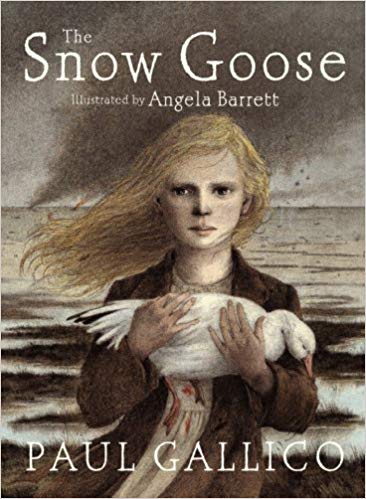
Continuing my with my mantra of keeping the blog individual I would like to introduce, or maybe reintroduce, you to The Snow Goose by Paul Gallico.
Written 1940, this novella is in no way a new release. It is the story of Phillip Rhayader, an artist and conservationist, living alone in abandoned lighthouse on the Essex marshes. Rhayader survives with limited human contact. His outlet is painting and caring for the wildfowl which surround him. All this changes one day when Fritha, a local girl arrives with a injured Snow Goose.
Through the bird Rhayader and Fritha build a bond. The Snow Goose winters at the lighthouse, leaving in the summer months, and this pattern reflects the nature of Rhayader and Fritha’s relationship; when the Goose leaves so does Fritha.
Suddenly the world is plunged into war. Rhayader leaves the lighthouse in his little boat to sail to Dunkirk as part of the evacuation of the beaches. The Goose flies with him, watching over the mission. As this strange man and his bird become part of the solider’s folklore, Fritha waits at home. Waiting to see if both or neither will return.
It is a simple and beautiful tale. I know people who have cherished it since childhood, however I have only discovered it the last few years. And it is not the subject matter it’s self that gives it a special place in my heart and on my shelves.
It is the setting. The lighthouse.
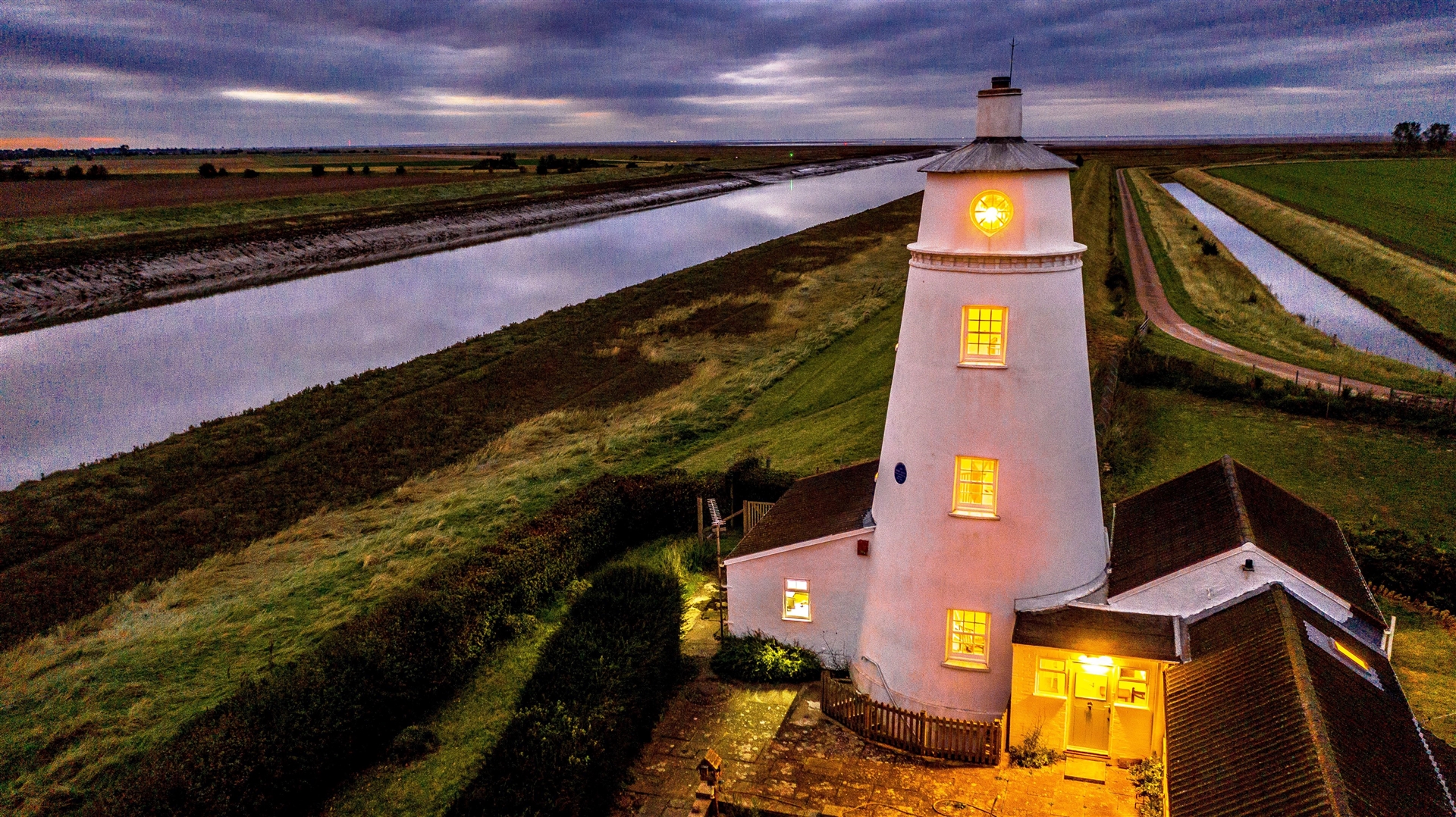
For although this book is set on the Essex’s marshes it’s true inspiration comes from the Fens of my childhood and my ancestors. Rhayader’s lighthouse is in fact the East Bank Light house in Sutton Bridge, on the the mouth of the Lincolnshire Wash. And the Rhayader himself is inspired by Sir Peter Scott, son of the ill fated Antarctic explorer Robert Falcon Scott and sculptor Kathleen Bruce who lived and painted in the lighthouse from 1933 to the beginning of World War II, when it was requisitioned by the Army.
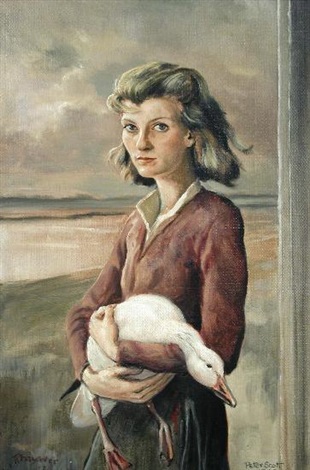
When the English editions of The Snow Goose were published it was Scott who illustrated them, using his first wife as a model for Fritha, the novelist Elizabeth Jane Howard.
It was during his years at the rundown lighthouse Scott underwent his transformation from Wildfowler to wildlife artist and conservationist. He went on to found the World Wildlife Fund and The Wildfowl and Wetlands trust. When asked what the war had cost him, Scott replied ‘his beloved lighthouse’.
And if it was Scott’s beloved lighthouse, it was also an important part of my childhood. In the early 80’s when I would visit with my Grandparents, the lighthouse was derelict and slightly spooky. But somehow ‘ a ride out to the lighthouse’ was always a treat. We would climb the gates and pick samphire on the marsh, Nana’s warning of the creeks ringing in my ears.
The thrill of seeing this childhood landmark depicted in any pages will never quite leave me. Gallico is sharing my lighthouse.
East Bank Lighthouse, Sutton Bridge, Lincolnshire.
It wasn’t until years later that I realised that when Scott lived there my Nana would each day hike up the bank to deliver his milk. She had also turned down his offer of making her his housekeeper, proclaiming the spot too remote.
So instead my Nana hiked back up the East Bank to her home at the Port Hospital, where she lived with two maiden aunts, since she was orphaned in childhood. Aunt Rose and Aunt Alice, Burton sisters and matrons of the Port Hospital, following the footsteps of Burtons since 1881.
1881 when their Grandfather Edward Burton was given charge of the hospital . Built to serve the Sutton Bridge port constructed in the same year.
The port that welcomed just one ship before it collapsed back into the Nene. Taking all the hopes of prosperity and jobs with it.
But somehow inexplicably the Port Hospital remained, cleaned daily and fully stocked. Until it was sold in 1949 it never had a patient. One birth, my mum in 1950 born in the Hospital House, but no patient was ever cared for on it’s wards.
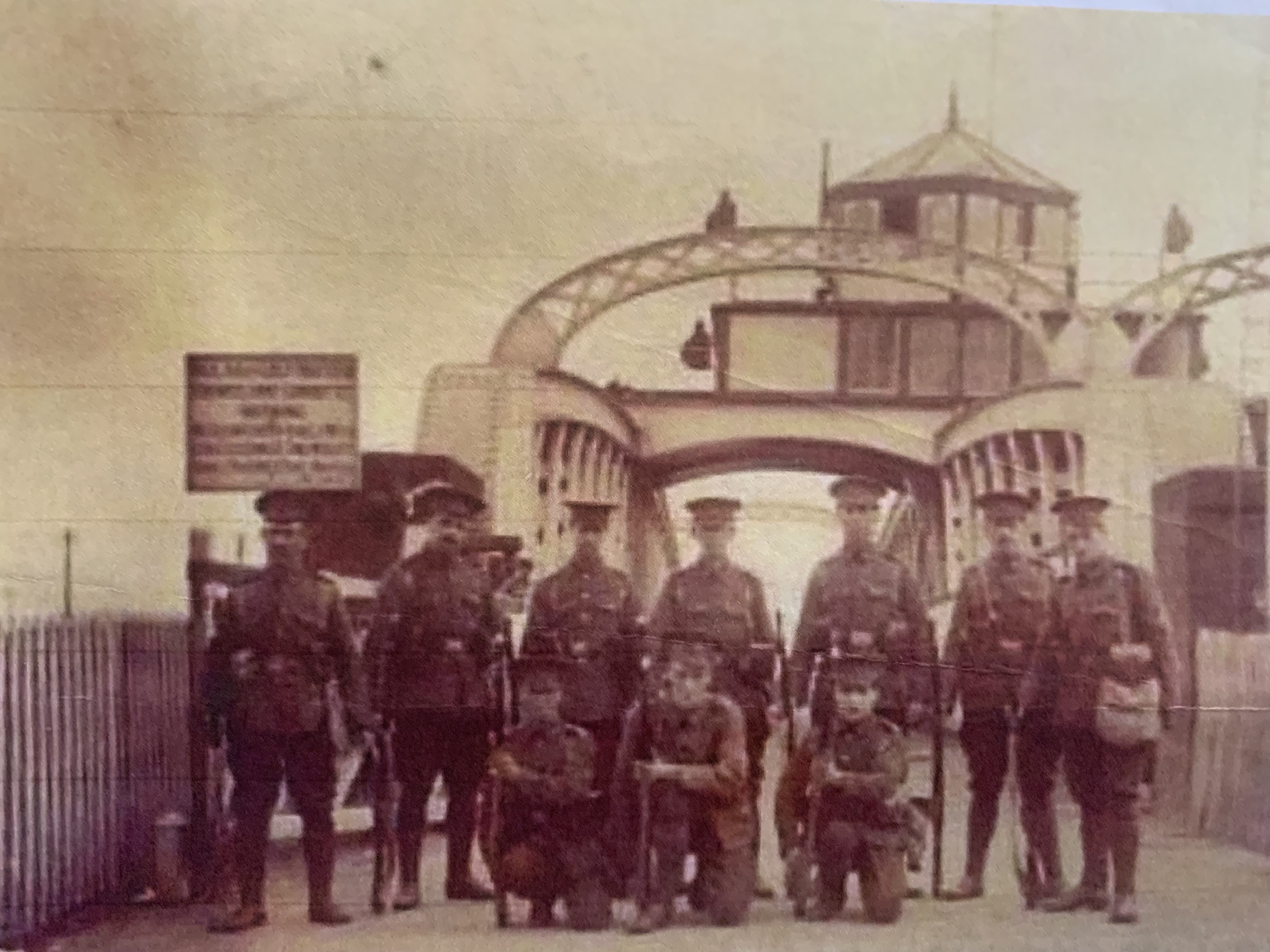
After losing her fiancé in WWI the hospital and raising my Nana became Alice’s life. In my jewellery box sits Alice’s engagement ring and a sliver crucifix, sent back from the trenches for safe keeping. I have this soldiers gifts but I still don’t know his name. Did he go willingly, or was he conscripted? Did Alice know where he was buried? Is he one of the local lads posing on the Cross Keys Bridge?
Soldiers on the Cross Keys Bridge, World War One.
What I do know is that Alice would have watched German Prisoners of War work each day on the East Bank of the Nene. From the camp over the river, they would come to repair the sea wall, build cottages and work the land. How did Alice feel about this? Was she resigned? Angry? Despairing?
Alice and her landscape has haunted me for many years. My mum and my aunt both remember her, she having lived with them until she died. Auntie was fiery; she would promise all political parties her vote for a lift into town on Election Day. It was up to them who got there first!
Alice has a story, and incredible story. And one day Alice I promise I will take your landscape and paint your picture. There is a book in there, I know it.
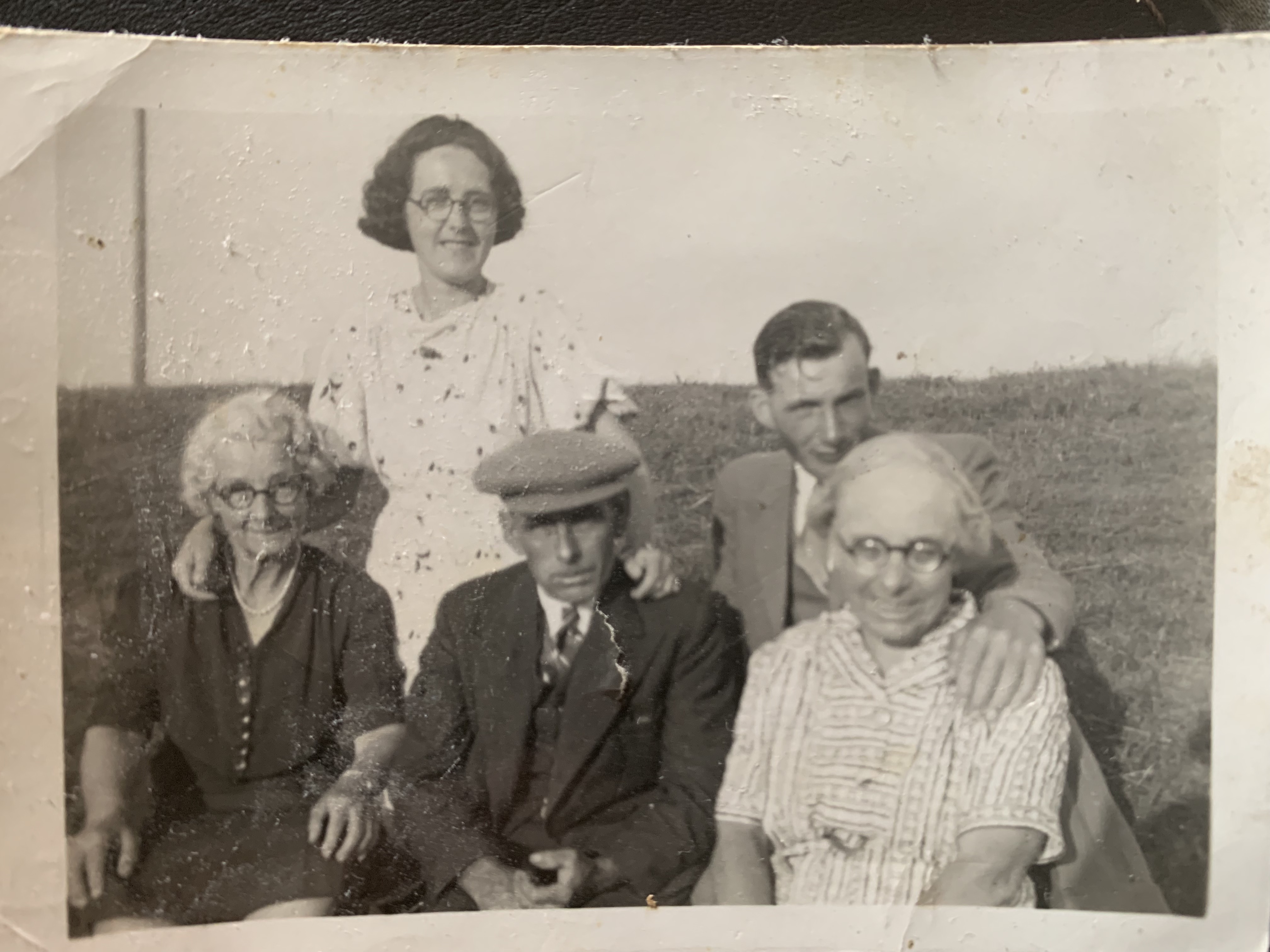
Front row from far left: Aunt Alice, Uncle Dave, Aunt Rose Behind: Nana- Ivy, Grandad – Stan. On East Bank Sutton Bridge.
I did know that but this week it’s been driven home with a hammer blow. This week has been full on. All four of my children have had ‘big’ things going on. Last GCSES, options choices, final major project for college and less excitingly illness and friendship issues. Add in report writing time for me, settling an elderly relative into a care home and just generally keeping on top life means that time for reading has been hard to find.
And lurking constantly in the back of my mind is the blog.
“Must keep up with the blog. Must read this book, that book. Must connect with Twitter, must retweet.”
I managed, against all odds, to get a blog post out on Wednesday. But I felt rushed, a bit harassed and didn’t have time to do my usual Twitter follow up, to engage properly with other lovely bookish people.
Instead I started to get caught up in doing the ‘quick things’, namely checking the stats for the blog. Which not surprisingly given the chaos of this week have been poor. I did what I promised myself I wouldn’t do at the start of this journey, I lost sight of why I was blogging and got caught up in the numbers.
And I really want my blog to be more that the numbers, more than the likes, follows, comments and views. I want it to be something that enhances and embraces my love of books. That helps me find new things I love to read and connects me with new people.
This week I have struggled, thought about disappearing and giving it up. But then I realised I needed to reassess. I needed to stop trying to run before I could walk, still read what I want to read not what I think I should read. I needed to try and step away from the stats. Stop worrying about what everyone else is doing and concentrate on what I am doing, remind myself how far I have come and why I started this in the first place.
So in place of a review this weekend I am posting this. A little mantra, probably more to myself than anyone else.
“Blogging should be fun, blogging should be individual and blogging is about more that the stats”
Next week normal service – whatever that may be – will be resumed. There will be reviews, not philosophical ramblings and lots of lovely book chat.
But this week I am pressing a short pause, reassessing, reminding and thanking everyone who is still listening.
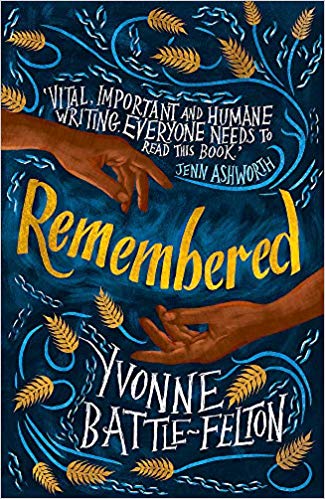
With the announcement of the winner at the beginning of this month, I thought I was done with my Women’s Prize reviewing. But when I finally pulled Remembered from the tottering pile of bedside books I was only 30 pages in when I realised that there was no way I could ignore a book of this power and importance.
Set in 1910 Philadelphia, this is the story of Spring and her journey from freedom, to slavery and back again. Spring recounts her story to her son Edward, who is lying broken and dying on the coloured’s ward of the local hospital. Accused of deliberately running a streetcar into a shop window, Edward is the focus of an angry white mob gathering outside. Neither Spring or the ghost of her dead sister Tempe believe that Edward is guilty. Her son’s time is short and in his remaining hours Spring focuses on attempting to tell him of his roots and of the people who nurtured and created him. We follow both the living and the dead on a journey to impart the history of Edward’s young life.
Remembered by Yvonne Battle-Fenton
Remembered is a vibrant and tragic portrait of the reality of slavery. Told through vivid voices, here is a story alive with ghosts and the heaviness of dark spirituality. Taken from the streets of Philadelphia by a team of slave traders, where she had been living as a ‘free negro’ our story begins with Ella. Alone, abused and struck mute with terror she finds herself enclosed within a slave community who work together to ensure her survival.
Ella arrives on apparently cursed Walker plantation. Apart from Agnes no baby has been born or survived on Walker land for years. Instead there is a unit of strong women working together to break the bonds of slavery. Here are women taking control of their reproductive health , their sexual encounters, all working to ensure that no more children are born into slavery. Here are women working together with a collective knowledge and history to prevent childbirth , prevent intercourse and shape their shared futures, however dark and extreme these actions maybe. These women’s are making choices, even when these choices don’t appear to be desirable. The ability to choice as a push against slavery, however small it may appear to be.
For as much as this is a mediation on slavery this is also an exploration of motherhood. How far will a mother, or even a collective of mothers go to ensure a child’s right to freedom? These women ask and answer the difficult question, is earthly survival the most important prize or is that superseded by gaining spiritual freedom?
Battle- Felton creates striking portraits of women who are prepared to embrace death rather than slavery. With a belief in an afterlife that is strong and sustaining they are prepared to end the life of a child to ensure it’s heavenly freedom. For women used to playing the long game, waiting and hoping for liberty, death is a beginning not an ending.
Just as motherhood can transcend death, then motherhood cuts through the bonds of blood. Women in this novel mother as a collective. They raise each other’s children, drawing strength from a shared belief. We see women coming together to protect and sustain their families, always looking for a better time. Even if gaining ground might involve the ultimate earthly sacrifice.
This novel is a powerful example of the oral storytelling so strongly affiliated with the story of slavery. Here are a group of slaves, holding their own histories and preserving their own identities. There is brutality, but there is hope and a sense of a community which defines characters own lives and identities. There is a need to passon their personal stories and a completeness in doing so.
This book really impressed me. The richness of it’s language and the sense of dark momentum driving it forwards brought to mind the work of Toni Morrison and had much in common with Marlon James’ brilliant Book of the Night Women. This is an empowering and significant novel.
I am so glad that I wasn’t quite done with the Women’s Prize.
I am always in the market for a good ghost story. Followers of Bookbound may well remember that Susan Hill’s classic ghost story ‘The Woman in Black’ made it, rather strangely perhaps , into my Top Ten Comfort Reads. I like nothing better than raising my heckles and disappearing off to dark, forbidding places, bring on the spooks I say!
But the trouble is, in recent years I have found good ghost stories rather hard to find. By the way I am quite happy to be proven wrong in this assertion, so feel free to send me your best supernatural offerings. But be warned I am quite picky. I am not talking horror here, not overtly gruesome or grizzly. I am talking about an old fashioned ghost story, filled with lots of psychological head messing and gloomy attics. Ideally it will contain a storm and definitely an isolated house with untold secrets. Throw in a few freaked out locals for good measure and I am in clover .
The last great ghost story I remember reading was Sarah Waters delicious The Little Stranger. Dark, powerful and reread at least twice, it scratched my ghost story itch. I was starting to think that no one was writing great ghost stories anyone more.
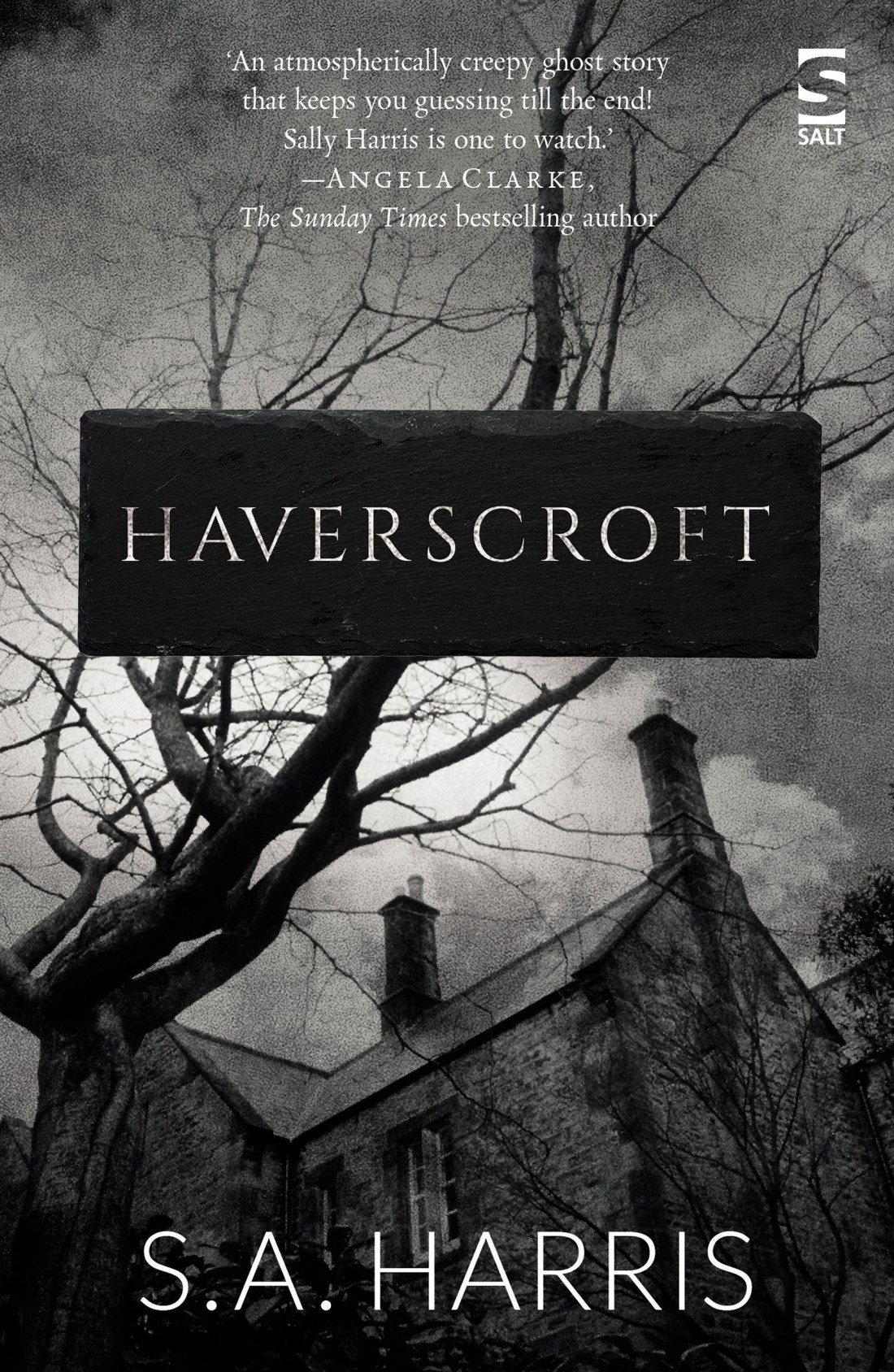
Then along came. Haverscroft
In the past few weeks my Twitter feed has been increasing filled with talk of a new, exciting supernatural tale. Written by Sally Harris and published by Salt, this was a modern ghost story; bang up to date in setting and style but with all the ingredients for a perfect ghost story and more.
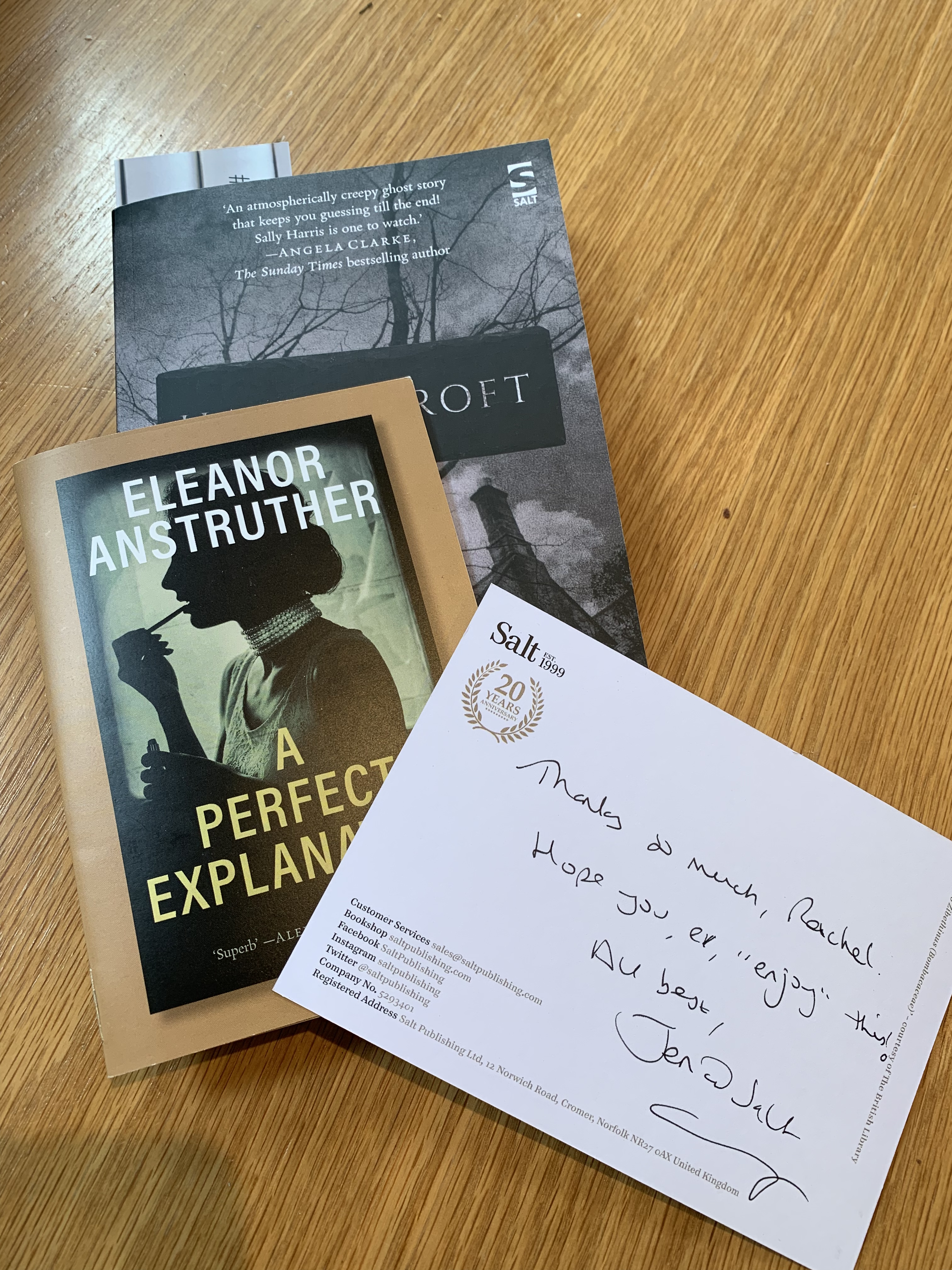
When my beautiful little bookish bundle arrived from Salt, right in the middle of half term, I suspected I was in for a treat.
So here begins the tale of Kate and Mark; we join them on the day they move to Haverscroft, a rundown house in the countryside. Escaping from their London life and trying to repair the cracks in their marriage, the couple arrive at Haverscroft with their young twins. Mark is sure that this the place for them, he is confident and firmly grounded in reality. By contrast Kate is unsure; buying the house feels like a concession to her past mistakes. She is recovering from a breakdown, has left the city and her old life in a determination to make the marriage work. Driven by guilt and uncertainty it is a shaky ground for a new beginning.
Add in the locked attic, sealed by the previous owner, the strange Mrs Havers, doors that refuse to stay shut and an expensive but crumbling classic car in the garage and the we are heading towards ghost story perfection.
Yet Haverscroft is so much more than a standard ghost story. Sally Harris has built this story in a modern and beguiling way. Kate is our guide through this old house and all that comes with it. Her vulnerability makes her immediately relatable, her determination to make this work for her family makes her admirable. And yet her struggles with her mental help don’t make her appear entirely reliable. Harris has created this unreliable narrator to increase the readers interest and make us question what appears to be happening. Can we trust Kate ? Are the things she is experiencing and feeling supernatural happenings or are they due to her fragile mental health?
Slowly and skilfully Harris paints the picture; Kate is not a one dimensional static character. She grows in strength and confidence as the novel progresses. Her feelings about the house and it’s happenings are supported and reflected in the reactions and experiences of the twins, Shirley, the house keeper and other locals. As the house begins to reveal it’s secrets and difficult questions are asked then it moves from being vaguely unsettling to toe -curlingly terrifying.
And if Kate is an unreliable narrator, she is not the only one. In a tale spun of secrets, the feeling that few characters are telling the whole truth adds to the mystery and uncertainty. Mrs Havers, with her selective memory, Mark with his strange behaviour, disappearances and unsettlingly communications; just two of several further examples of an unreliable narrator. Haverscroft is a tangled web of half truth and secrets untold.
Another reoccurring theme is that of mental health. At first Kate seems isolated and alone in her struggles, yet as the novel progresses other charactersare revealed as having their own mental health issues. Richard Denning, long time gardener and friend of Mrs Havers has been in an asylum, his past spreading suspicion and doubt on his present and future. The secrets of the house are tied up in the Post Traumatic Stress of Edward Havers war years and his subsequent behaviour. And how far can we trust Mrs Havers? Is she trapped in the beginnings of dementia as Lyle, the local solicitor would have everyone believe.
Herein lies the strength of Harris’ exploration of mental health. It is others reactions to another’s mental health that provides catalyst for the drama, both in the past and the present. There are parallels between Mark’s behaviour and his reaction, some may say exploitation of Kate’s illness, and reactions to both Mrs Havers and her sister by Edward Havers. Here is a story that focuses on power, power within relationships and how love and guilt are used to control, even years later.
Harris has creative a breathtaking portrayal of the damage caused by secrets and what happens when secrets and grievances refuse to die. Using the classic ghost story motifs surrounding lost children and troubled marriages Harris has written a bang up to masterpiece. It’s domestic setting and attention to detail makes it entirely relatable and it is all the more bone chilling for it.
Thank Sally Harris for giving me another great ghost story to ‘enjoy’ and proving to me that the art telling a ghost story is not forgotten.
Haverscroft is published by Salt Publishing and can be bought right here!
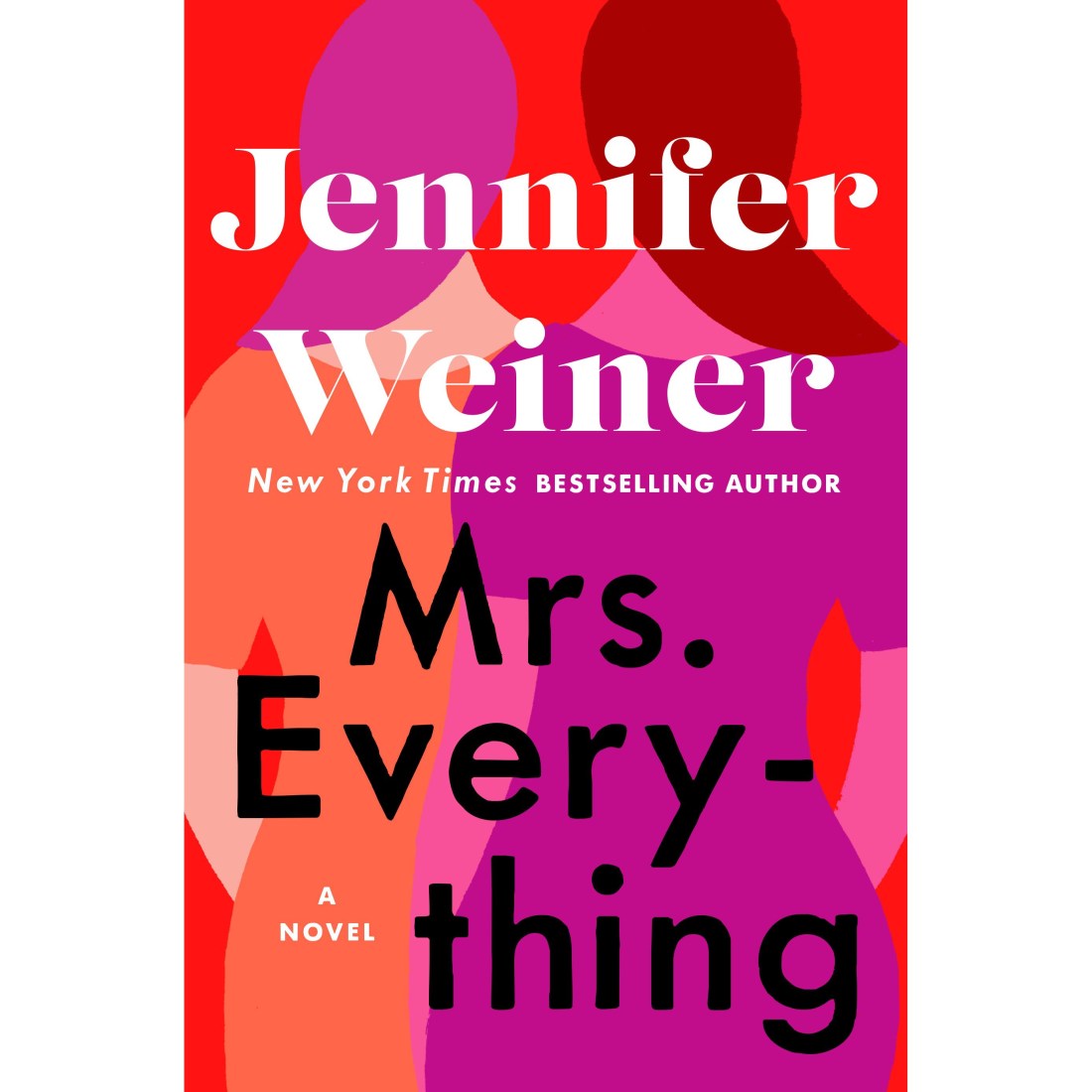
Mrs Everything is a compelling American family saga published by Simon and Schuster on 11th June. Thank you to the publishers for my digital advanced reader copy in exchange for an honest review.
The story of two very different sisters Jo and Bethie begins in the 1950’s and comes right up to date with the #MeToo movement. This is a novel that highlights a society experiencing a sexual and political awakening. Through the staid years of the 1950’s, to the civil rights and anti war protests of the 1960’s, the Women’s liberation movement of the 1970’s, we follow these two women. From the outset it seems their lives are predetermined but surprising circumstances and equally surprising decisions carry the women along different paths. Nothing is predictable and if you think you know where this story is going you probably don’t!
Spanning three generations, this is a book about over coming societal norms and ploughing your own furrow. This is a story of discovery, of what it costs to find yourself, to be comfortable in your own skin. It is a novel that explore the idea that there may things in your own make up you have to make peace with in order to live a fulfilling life. It is about giving yourself permission to learn from your mistakes and the strength to reinvent yourself.
Encompassing issues of sexuality and racial diversity Weiner has created an authentic cast of characters trying to find their way in a rapidly evolving world.
As much as this is a novel about society, outward looking and including defining moments of the 20th Century, it is also a novel concerned with character and how families function. Weiner has much to say about how our family relationships are often the bedrock of our lives and asks, ‘Do we let these relationships define us, even restrict us? Or do we take strength from the positives and disregard the rest?’
Perhaps most importantly, this a novel with feminism at its heart . It is a novel championing strong women characters, each on their own individual journey, each trying to come to terms with what they need and what society and their families seem to demand of them. Weiner’s clever use of believable and inter generational stories serve to illustrate how far the women’s rights movement has come and, also, how far it still has to go.
Weiner is portraying sisterhood, in it’s truest form. Not all female characters are heroines; indeed there are some true and deep betrayals along the way, and neither all men one dimensional monsters. But, as the novel unfolds, there is a sense of women coming together, across cultures and across the years to watch each other’s backs and smooth life’s bumpy road. In essence Weiner is trying to explore that age old question, can we really have it all? Can we be Mrs Everything? What defines us or more importantly what do we let define us?
Something in the novel’s tone reminded me of another great American novel of sisterhood, Louisa May Alcott’s timeless Little Women. Were the key characters in Mrs Everything named for two of those sisters of long ago? I don’t know, but in this readers mind they are definitely linked.
Mrs Everything is about real women, living real lives and making real choices. It is relevant, readable and charming. With a host of strong characters it is hard not to find something to relate to within its pages.
The completion of this book marked the end of a personal mission; my quest to read all of the shortlisted Women’s Prize novels. I managed to squeeze it in just in the nick of time, before the winner’s announcement on 5th June. Last minute as usual!
To be fair I finished An American Marriage a few days ago. As always I like to let a book settle before I try to review it, take a little bit of time to gather my thoughts before I put words down. I was all set to go and then I watched Simon @savidgereads Women’s Prize Final Thoughts with his lovely mum Louise. As usual it was insightful and entertaining, but it did throw me a curve ball. It brought to my rather limited attention that An American Marriage was a retelling of the myth of Penelope and Odysseus, and it was something I hadn’t connected with at all.
Too be honest it threw me off kilter. I was left wondering whether I needed to reassess my responses in the light of this new knowledge. Should I delay my review, while I did a bit more research?
However I have decided that this review will be what all the others before it have been; my initial and personal response to the novel based on what I saw and the knowledge I brought. I could brush up on The Odyssey but it wouldn’t be an honest representation of what i found when I read this book.
So in short, this review has a distinct lack of Greek myth vibe. I hope it won’t be the poorer for it.
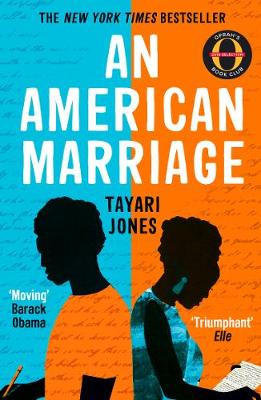
So after a rather long winded justification of my blogging choices, lets move on to the book. An American Marriage is the story of Roy and Celestial, a black, recently married couple living in the USA. Roy is wrongly imprisoned for a crime he didn’t commit. The novel is the story of their time apart, how they cope and what this ordeal means for their marriage. Add in steady, dependable Andre, mutual friend and long time admirer of Celestial and the scene is set for heartbreak.
The structure of the book is clever. It is largely told in a series of short chapters written in the first person, from the point of view of Roy, Celestial and later Andre. Each person has a voice; a powerful, persuasive voice. Just when you think you know where your sympathies lie in this tangled tale, you hear another side, experience another raft of emotions and your perspective changes again. Here is a skilful portrayal of how this couple are ripped apart by this devastating event, but how their experiences and reactions are understandably completely different.
Roughly a quarter of the book is told in a series of letters, written over the five year period that Roy is in prison. To begin with these letters are beautiful, lyrical love letters, holding on to details, trying to keep a young marriage alive. As well as being an exceptionally clever device to show the passing of five long years, they enable us to appreciate how different each characters experiences of those five years are.
Slowly the letters become a source of conflict, revealing how these circumstances have forced the couple into making desperate decisions, decisions that they come to blame each other for. As tensions rise, other letters appear, from other family members and friends, highlighting gaps that are appearing and the way the world is moving on without Roy.
And it is easy to blame the difficulties of this young marriage on the tragedy that befalls it. It seems, and is indeed alluded to throughout the novel, that Jones is retelling that all too familiar tale of a young black man, wrongly punished for a crime he doesn’t commit. Roy’s life is turned upside down, destroyed, his college education, promising career offer no protection as history repeats itself one more terrible time. And all of this is true and relevant. This is undoubtably a comment on the dangers of being a young black male, suspected and victimised. It is a shattering of the illusion that the cycle of racial discrimination has been broken.
But is this the whole story for this particular marriage? In truth, from the beginning, this feels like a marriage built on fractured ground. Even before they are parted both Roy and Celestial are keeping large secrets, coming to terms with different backgrounds and familial tensions, trying to find a solid foundation for their relationship. Right at the start Andre is a presence in their marriage; paradoxically both the one who brought them together and the ultimate potential threat. Even without all the hurdles in it path, would this marriage have survived ?
Celestial and Roy’s is not the only marriage we see portrayed within the novel. Roy’s parents are devoted, traditional; Big Roy’s refusal to allow any hand but his own to bury his wife reflects his final act of love. It is seeing the solid foundation of her own parents marriage as mirror to her own union that compounds Celestial’s doubt about it’s future.
This book throughly deserves it’s place on the Women’s Prize Short List. It does what great books do well, it effortlessly combines the microcosm of a It’s characters, in this case a marriage in crisis, with the wider portrayal of racial tensions and historical factors. So many times over the past months I have heard surprise that this book won a place alongside Diana Evan’s Ordinary People. It was felt by some that it was short sighted to have two books about marital breakdown on the list, just as people felt that two Greek retellings might have been one too many.
Aside from the fact it looks like we have three Greek myths retellings (!), I feel that Ordinary People and An American Marriage are totally different books. They may have similarities, but there is nothing ordinary or everyday about the situation Celestial, Roy and Andre find themselves in. A comparison with Ordinary People feels to me to be superficial.
So there we are. All six shortlisted books reviewed and considered. We await the verdict with anticipation. Anyone got a hunch? Because I haven’t got a clue which way this one is going!
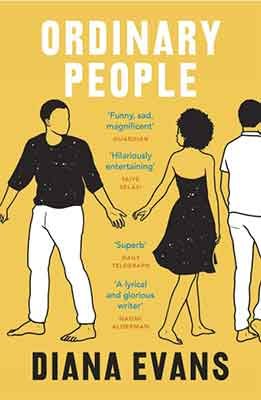
Finally finding time to catch up on my Women’s Prize reading, Ordinary People by Diana Evans has been a welcome addition to my Bank Holiday reading.
Without, I hope, sounding too simplistic or glib this is a book where the title really is a perfect reflection of the book’s content. Because this book is in it’s essence just that; a book about Ordinary People. Ordinary people, living ordinary lives, facing ordinary challenges. And it is all the more powerful for it.
This is the story of two couples; Stephanie and Damian, Melissa and Michael. Stephanie and Damian live in the suburbs, have three small children and problems in their marriage. Damian is grieving the recent loss of his father, but more than that he is grieving the loss of the city. Moving out of London was not his choice, it takes him further away from his dreams of writing, of breaking away from his desk job, further away from his roots. Stephanie loves where she lives, is devoted to her children; it’s Damian and his dissatisfaction that is the pebble in her shoe.
Melissa is striving to embrace her new ‘stay- at- home -mother’ status, whilst trying to freelance and maintain her identity. She is resentful of Michael; watching him moving carelessly through the world she can’t help feel that she is the one making all the sacrifices for their young family. For his part Michael is missing the woman he fell in love with, struggling to connect both emotionally and physically.
The prose of this novel is involved and detailed, and the devil is most certainly in the detail. Writing about the ‘ordinary’, the everyday day details that we too often dismiss as unimportant, is not as easy as it seems. Evans manages to convey that these little details, those that we dismiss as insignificant are actually anything but. The ordinary, however much we might long for the extraordinary, is the bedrock of our day to day lives.
As a reader and as a mother this wasn’t always a comfortable read for me. Like staring into a mirror I often saw myself reflected back. I am a mother, a mother who has over the years worked full time, part time or not at all. A mother who has juggled the need for her own identity with the need to raise her children in the best way possible. There have been times when, like Michelle, I have screamed silently, and may be not so silently, feeling lost and alone in this strange new world, so far from my old self that I was worried I had lost my soul forever. I have zigged zagged between trying to be a domestic goddess and a vibrant independent Mum, trying to the answer that age old question; “Can I have it all?”
Here we see central characters that are moving through that fog of parenthood. Negotiating the paradox of overwhelming love but also that intense craving for your own space, just craving yourself, looking forward to the future and back to that person you used to be. Evans presents a skilful examination of what it means to be a couple, the compromises and sacrifices we make to to keep things moving and what happens when that balance shifts and one person is left feeling adrift and untethered. In Stephanie, for example, we someone settled in her role of wife and mother; her frustration lies in Damian’s unwillingness to keep pace with her.
Evans examines how couples fit together and how that unity changes as life happens around it. Can Michelle and Michael weather the tide of parenthood? Or will the reality of children seep, like water into the cracks of their relationship, splitting them further apart.
Framed by two pivotal moments in recent history, Obama’s Election and Michael Jackson’s death, there is no doubt that race and black cultural identify are key themes within the novel. Damian feels he has betrayed his roots leaving inner city London, Michelle is clinging to those not so small details from her childhood, desperate to pass her cultural identity on to her children. For her is important to make eba and stew just like her mother, just as it is important to eat rice with a spoon and a fork. We are back, once again, to the fact that those small factors add up to a larger, more defining whole . The characters within the novel make us question whether can we hold on to our own identify within a relationship? Can we grow together and as individuals, fitting together but also maintaining the essence of ourselves?
And yet, this book is about more than race. It is about place and how place shapes us. Is your identity tied to a place or is it held within you? Damian and Michael are wedded to the city. Damian has left London and is miserable, feeling he has betrayed his roots. Michael is unwillingly to consider moving, even when increasing street crime comes ever nearer to his door. Stephanie has the house she dreams of, but can’t get Damian to engage. Meanwhile Michelle is trapped in a house she grows to hate, so much so it almost takes on a sinister life of it’s own. It is no coincidence that the catalyst for both couples occurs when all are away from London; a new sense of place, new minor details, a new ‘ordinary’ and things are forced to move on.
By weaving together all these elements Evans brings us a stunning novel with the question of identify and all it’s variants at it’s very heart. It brings into the focus how we hold on to what is important to us as an individual, however big or small that may be. It questions whether the choices you have made have lead you to life you are destined to live or the life you have settled for.
Bravo, Diana Evans; you have made the ordinary extraordinary.
This week I have read a couple of amazing books. Both The Doll Factory and The Rapture are books that I have mentally filed under ‘potential rereads’. This means they are books that either I have enjoyed so much I can’t wait to dive back in or books I think with be enhanced by a second reading.
But there is a third category of ‘read again books’ . There are those which are my ‘comfort reads’. Books that are so wonderful, so familiar, that sinking back into them is like wrapping yourself in a blanket and shutting out the world.
These are the books that I have had deep relationships with, quite often going back years. They are books that have touched some part of my soul. Often the love doesn’t just come solely from the words within the book but also the context in which which I read them. Who introduced me to the book? What was going on in my life at the time?
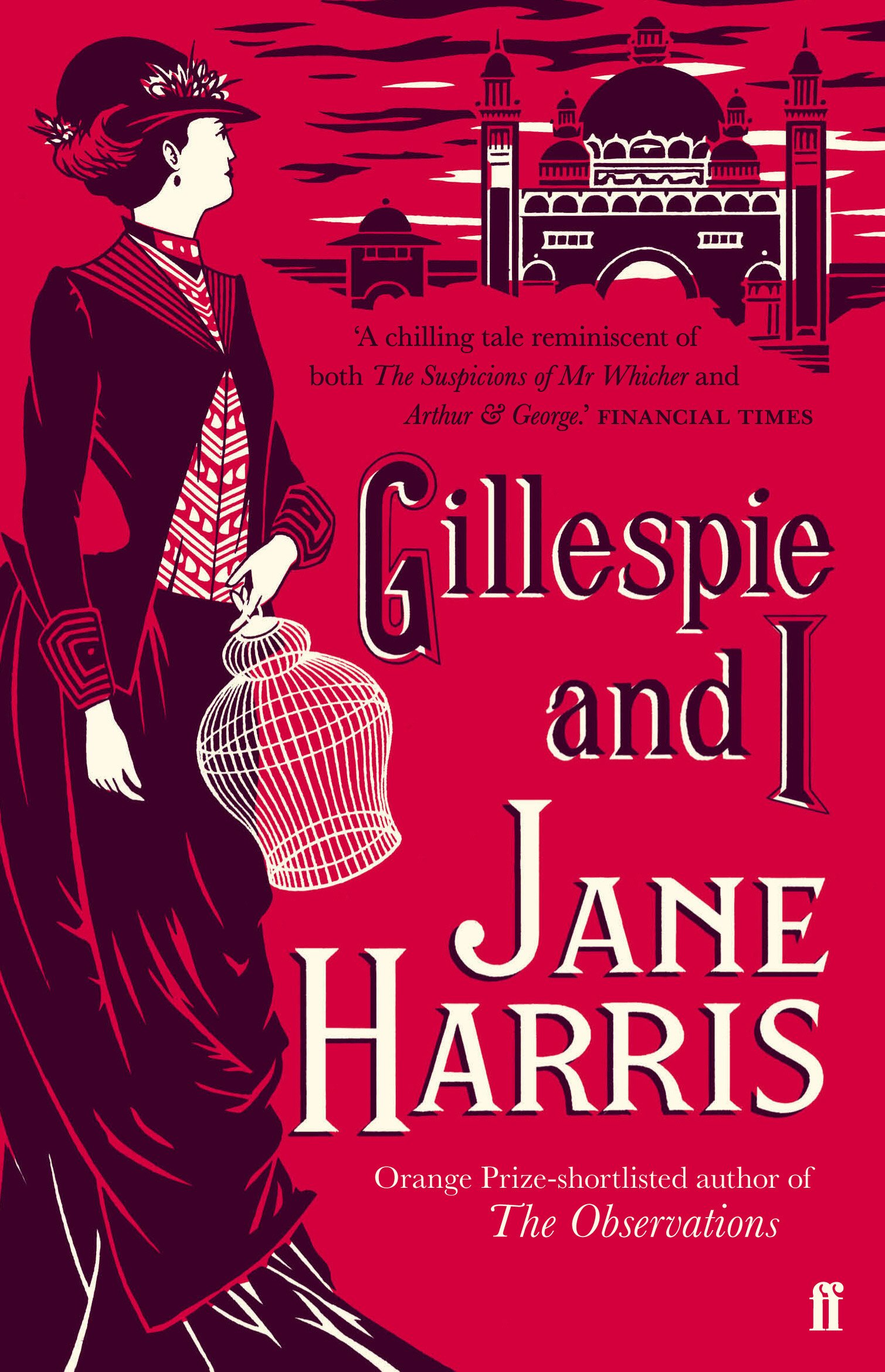
It got me thinking , wondering if I could come up with a list of my Top Ten Comfort Reads. Actually it was easier than I thought. Because this isn’t a list of my favourite books or books I would like to reread, it’s a list of books that have very special place in my heart, and it takes more than being just a good book to get there. These are the books I get a wee bit emotional about, books I might just own multiple copies of and they are the books I struggle to debate logically. I would defend these books to the death, in much the same way I would a family member.
This list spans the whole of my reading life so far, so you will notice there are a few children’s books included. I make no apologies for that. Great children’s literature lasts a lifetime and it was definitely my experiences as a child that made me into a life long reader.
So…on with the list.
1. Wuthering Heights – Emily Bronte
I first read this classic when I was 14. I was lucky enough to have several fantastic English Teachers and one of them suggested that I should give this haunting tale a go. I was hooked immediately, drawn into the brooding dark world of Cathy and Heathcliff, marvelling at the intensity and passion of the writing.
I knew very little at this point about the Bronte’s, but as I grew older and more aware, my fascination and awe only grew. How did a young women like Emily Bronte, with her relatively limited life experiences, write such a beautifully dark masterpiece? Imagination, that’s how. If any one book can show you what the creative human mind can achieve for me it has to be Wuthering Heights.
Don’t get me wrong, I am not one of those people who is passionately in love with Heathcliff. On the contrary Heathcliff terrifies me! But I am in love with the intensity and emotion of Cathy and Heathcliff’s relationship. I am drawn back time and again, and like a moth to a flame, watching them destroy themselves for a passion that is just too overwhelming for them to control.
Every time I ‘hear’ Cathy tell Nelly:
” My love for Linton is like the foliage in the woods: time will change it, I’m well aware, as winter changes the trees. My love for Heathcliff resembles the eternal rocks beneath: a source of little visible delight, but necessary. Nelly, I am Healthcliff“
my heart breaks all over again.
I have read this book nearly every year since our first date; 35 years of wandering the moors! I don’t see me stopping any time soon.
2. The Lion, the Witch and the Wardrobe – C.S. Lewis
Another book brought to me by a wonderful teacher! Mrs Roberts read this to me when I was 7 years old. At the end of every school day our class would sit on the carpet, some of us bookworms following the story in our own copies, and disappear into Narnia.
I was entranced from the first word, captivated by the idea that there were other worlds waiting to be discovered, magical lands, strange creatures and all of covered in snow!
I reading and read my copy until the cover quite simply disintegrated. I think I have been through more copies of this one book than any other. I made my way through all the Chronicles of Narnia but L,W &W will always be my first love.
A few years ago I shared the book with a class I was teaching. A group of young people with Special Educational needs, they were immediately drawn in. Towards the end of the book we set off on an outdoor learning day. It was winter and we headed up through the Lakes to a snowy tarn. We climbed up through a snow covered forest, passed a frozen waterfall, followed a tame robin through the trees and sat by the lake to read the last chapter. We were just packing up when the trees behind us came alive with the sound of barking and howling. Every child screamed’ The Secret Police’! Actually a pack of trail hounds being exercised, but the joy on their faces that day was beyond belief.
I didn’t think I could love this book anymore than I did. Thanks to that day I was proven wrong.
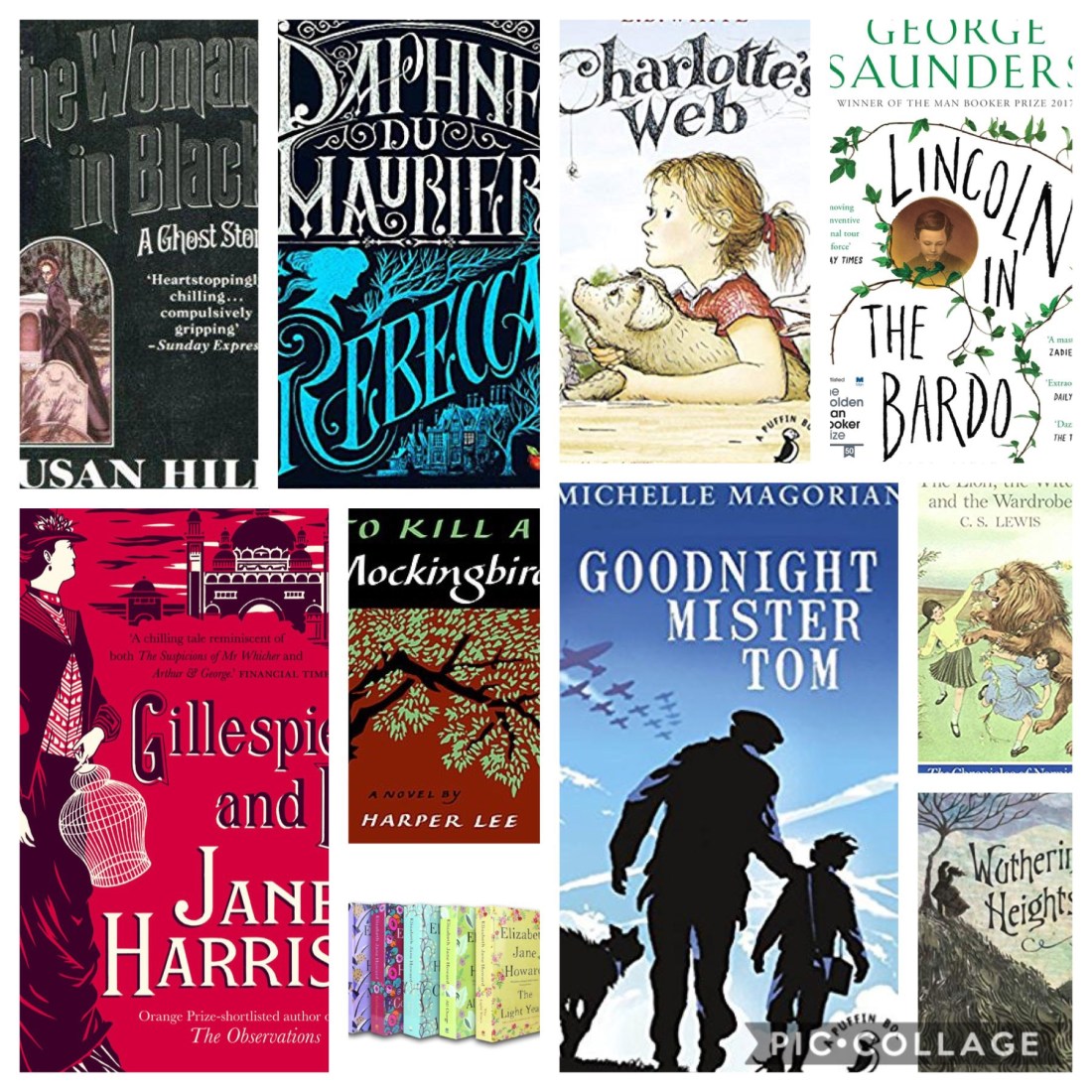
3. Goodnight Mister Tom – Michelle Magician
I honestly don’t know when I first read this book, or who introduced me to it. This story of Tom and his love for the evacuee Willie Beech has been with me for what seems like forever.
Set in WW2, it is the story of how two broken hearts are mended through patience, respect and an unconditional love. It is a story of second chances and uncovering talents.
It is a book that is also filled with heartbreak. Magorian doesn’t shy away from difficult subjects, she doesn’t patronise young readers into thinking the world is a completely safe place. But her characters provide hope. No one is perfect, everyone has flaws, but equally they have individual talents, no child is written off.
This is hands down that book that I have recommended most often to older children over the years. I must have bought at least 20 copies to give as gifts. It is the book that my Grandad read in his 90’s and loved, despite ‘not being much of a reader’. Everyone needs a little bit of Mr Tom in their lives.
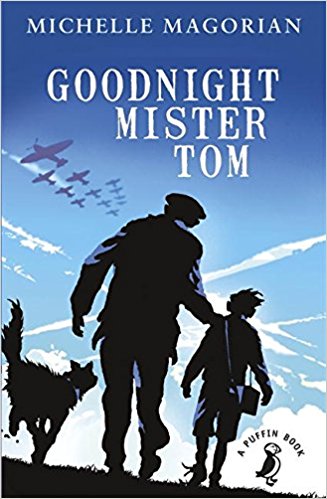
4. Rebecca – Daphne du Maurier
It never ceases to amazing me that I am so drawn to this book; a book whose author on first meeting is so meek and cowed by the situation she finds herself in, that she never even revels her own name.
For the ‘Rebecca’ of the title is not the strong lead character we might expect, she is the foreboding first Mrs de Winter. Dead, but most definitely not forgotten. Her presence spills out of the pages, kept alive by the formidable Mrs Danvers, whose grief has warped into something dark and sinister. The very creation of this character is a masterclass in how to create an atmosphere of menace.
This book was first published in 1938 and it has never been out of print. Nor does it feel dated or any less vivid than it did at the time of publication. It truly is a timeless classic.
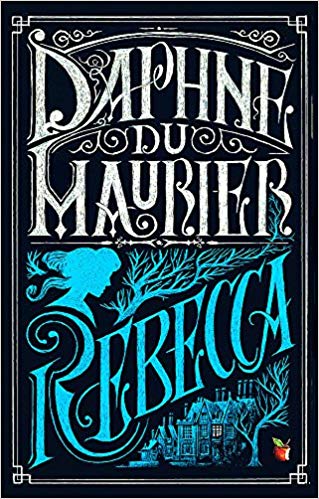
5. Gillespie and I – Jane Harris
This is a late entry to the top ten! I first read this book in 2011, the year of it’s publication. Like du Maurier, Jane Harris has used a strong, quick witted female character to build an air of pervading menace. The difference is that character is very much alive.
A book set across two historical time periods, it is the tale of the spinster Harriet and her relationship with Glasgow painter Ned Gillespie. It is a book which is constantly evolving before your eyes, each page throwing up more questions than answers. It is a book which is hard to read in a linear fashion. I guarantee that you will be flicking back and forth, questioning what you have read as new revelations come to light.
I must have reread this book at least 5 times in the last 8 years, and it never gets tired. Each time there is a small detail I have missed, something that takes the air of suspense and doubt to the next level. It is a story woven with the finest skill. If characters you love to hate are your thing, then this one is a must read.
6. To Kill a Mockingbird – Harper Lee
Quite possibly this was the first piece of great American Literature I read. I was around 15, studying for my GCSE’ s and busy developing my own social conscience. Maybe I was a late developer, or maybe I had been lucky enough to be raised in a truly multicultural school but To Kill a Mockingbird was a benchmark in my understanding that the world wasn’t always a very nice place. It was in these pages that I was first understood what racism really looked like. It wasn’t just that list of words you shouldn’t say, it wasn’t name calling in the dinner hall; it was a systematic denial of opportunity, human dignity and justice.
Harper Lee’s great novel sparked my interest. It opened my eyes to injustice and inequality. It led me on to other great American novels, such as Toni Morrison’s Beloved, Alice Walker’s ‘ The Color Purple’ . It is the book that I will return to time and time again when I need a quick reminder of how far we have come and just how far we still have to go in upholding human rights for everyone.
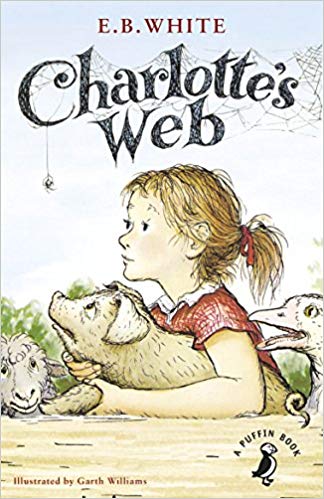
7. Charlotte’s Web – E.B White
Another book read to me by the lovely Mrs Roberts, this book was the cause of two firsts in my young life.
Firstly it was the first time I had ever truly cried at a book. I remember reeling in shock when Charlotte died, alone in the corner of the fairground. It was the first time that I had read a book where everything didn’t ‘turn out all right in the end’. My seven year old self was blown away by the fact that Charlotte wouldn’t be around for ever.
And suddenly it dawned on me, that I wouldn’t be around for ever either. Charlotte’s web was my first understanding of mortality, my own and other people’s. And yet it wasn’t a terrifying experience, it was oddly comforting that life went on without Charlotte. Yes, people were very, very sad, but no one forgot her; she was alive in their memories and in her children .
Charlotte’s Web taught me lots about life and death. It taught me about friendship and how helping other’s brings it’s own rewards. and it still reminds me to make the most of every single day because tomorrow is not guaranteed.
8. The Cazalet Chronicles – Elizabeth Jane Howard.
Ok, so technically this might just be cheating, as this is a series of books not just one. But quite frankly it is my list and therefore I make the rules.
I found the first 4 of these books on my Mother in Law’s towering book shelves during the summer I finished University. Searching for something to read my eyes landed upon The Light Years, and away I went, swept up in a family saga that begins in 1938 and ends in the mid 50’s.
It has everything; love, life, death, marriage, deceit, birth, divorce. Three generations of Cazalet’s guiding you through their lives, growing and maturing before your eyes. Draw up a chintz chair in the Duchy’s drawing room and I guarantee you won’t want to leave.
A semi autobiographical account of her marriage to Peter Scott, this is Elizabeth Jane Howard’s masterpiece. My copies are dog eared, and the audiobooks, read perfectly Penelope Wilton got me through half marathon training. Even typing this I am coming over all nostalgic and misty eyed!
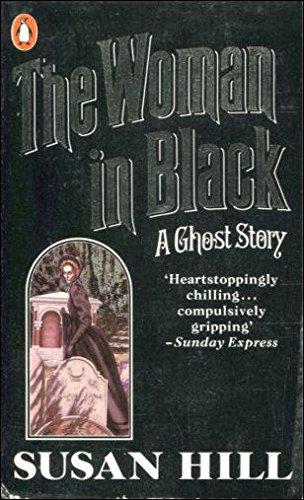
9. The Woman in Black – Susan Hill
Ok, so I might be deviating slightly from the ‘warm fluffy blanket comfort read’ brief here, but this book is always going to be in my top ten rereads list.
Another throwback from my teenage years, when I was experimenting with scaring myself half daft with Stephen King, another of my wise teachers suggested I might like to try this little gem. She explained that it wouldn’t be the level of horror King was dishing up but I might enjoy the psychological element.
Long story short, I scared myself witless and I loved it! Set in a house surrounded by marshes, only reachable by a causeway often submerged in water, a young solicitor is sorting the affairs of a recently deceased widow. The locals are suspicious and reluctant to help, never a great sign, and the scene is set for one of the best ghost stories of the 20th century.
This is a short novel, but it is 192 pages contain some of the most precise writing you will ever read. There isn’t a word out of place and every single page builds to it’s terrible conclusion.
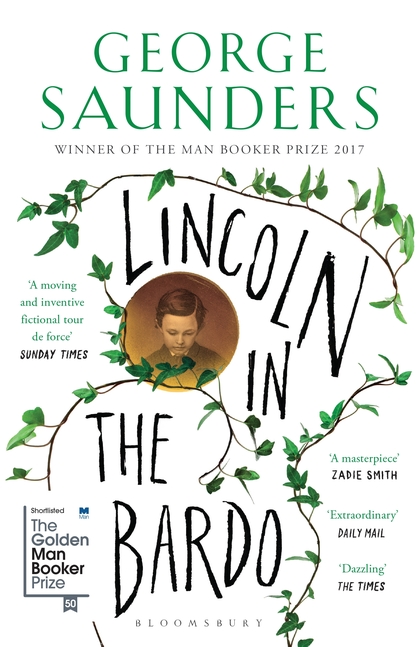
10. Lincoln in the Bardo – George Saunders
This 2017 Man Booker prize winner is the most recent addition to my little list. It is there quite simply because it blew me away. I read it in the Spring of 2017, immediately recommended it to every single person I knew, and read the whole Man Booker long list that year, just in case there was something better out there.
In essence it is the story of Willie Lincoln, young the US president who died from typhoid fever, age 12. Saunders takes the President’s grief and makes it the centre of portrayal of the Bardo; a place that is sandwiched between life and death. The novel is populated by a cast of characters, all trapped in the Bardo, all refusing to move on because of unresolved issues in their life.
Saunders plays with style, plays with emotions and turns everything we expect on it’s head. It is one of the best portrayals of grief and loss I have even experienced in literature. There is great pathos and regret, but also tremendous black humour providing a great insight into the human condition.
Since first encountering this book, almost exactly 2 years ago I have reread it 3 times and listened to the audiobook once. Every time I see a copy in a charity shop, I want to push it in to someones hands and say ‘ Take it, read it, love it.’ It may just have become my obsession.
So there you have it, my very personal list of comfort reads. All there for different reasons, but all books I hold lightly in my hands but close to my heart. I doubt anyone out there will have the same list as mine and neither should you.
However I would love to know what your top ten would be. Who wants to go first?
It’s been a cracking reading week so far this week. And it’s only Wednesday!
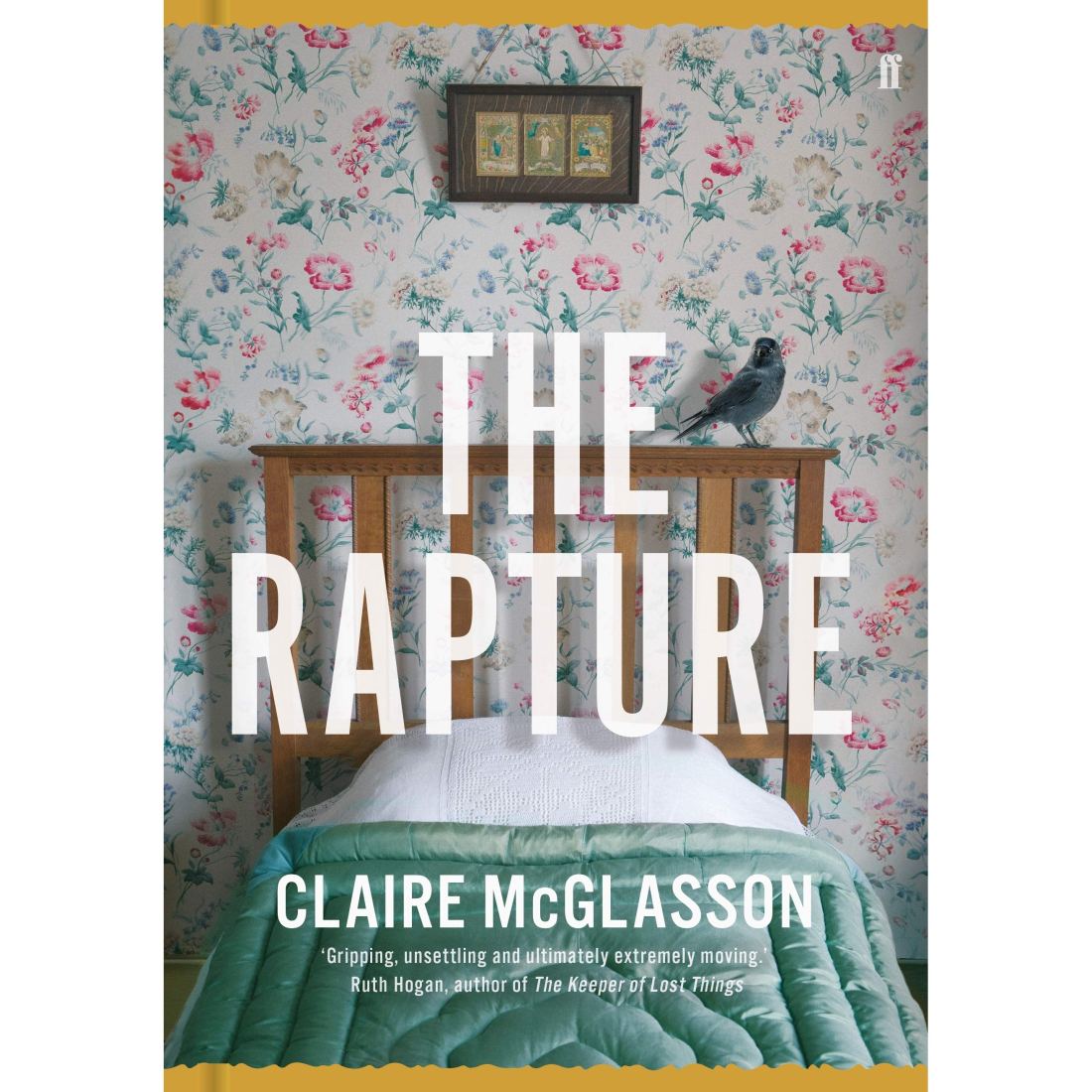
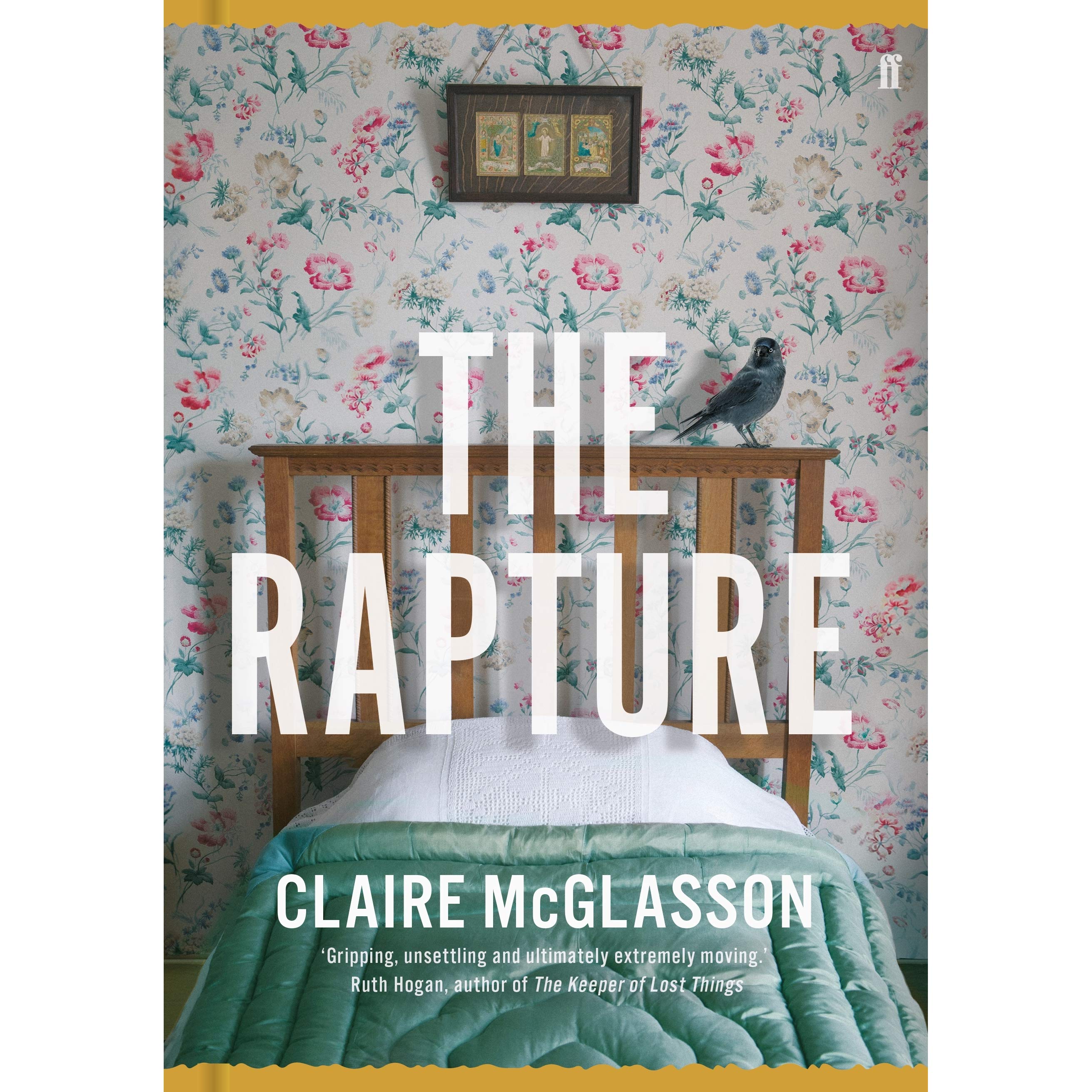
First the excellent The Doll Factory by Elizabeth Macneal,and now The Rapture by Claire McGlasson.I was lucky enough to have received a copy of this book from Faber and Faber in exchange for an honest review. And it has been my absolute pleasure to read and review.
It is a well documented fact that truth is often stranger than fiction and the tale told in The Raptureis the very embodiment of this. Open the pages and you are taken back to 1920’s Bedford, England. In the years following the Great War a women, Mabel Barltrop, Vicars wife and mother of four, believed herself to be the daughter of God. Styling herself as Octavia, she drew a following of women who set up their own religious community; The Panacea Society. The women believed they were working towards the end of days and the opening of a box sealed years before by the prophetess Joanna Southcott. They believed that by persuading all 24 Bishops to accept the supreme rule of women than the answer to all despair would be revealed upon the opening of the box.
Are you gripped yet???
And so begins McGlasson’s skilful imaging of this intriguing story. Told from the perspective of Dilys, the youngest member of the society, events slowly unfold. At first this seems a very domestic and civilised cult. A wry, humorous tone pervades the narrative. Will the Lord really care about the cushion covers? And if Jesus returns and finds you looking tired and drawn, will he cancel the second coming? It is a gentle introduction to the society, building a picture of a group that is slightly eccentric, definitely misguided but ultimately doing no harm.
They are after all the Pancea Society. By their very definition they do no harm.
Do they?
The arrival of fresh blood in the form of the lively and beguiling Grace throws the women into stark relief. Dilys is the one to find Grace. Almost unwittingly she brings her into the fold and quickly comes to rely on her. At the start of the novel Dilys is fumbling, misguided and clearly unhappy. Her life is ruled by signs and messages, interpreted and imposed on her by others. She is fighting with suppressed doubt when suddenly new and powerful emotions are awoken by Grace’s presence. Dilys’ reaction rings with imagery of religious conversion; in Grace she finds what the cult denies her, but is she strong enough, brave enough to take what is offered?
If the novel starts with benign domesticity McGlasson slow, menacingly slides this air of comfort away. Tensions build as darker motivations and actions come into play. A series of shocking revelations and discoveries come together to reveal a group not in harmony. An increasing air of suspicion and accusations surround the characters and we begin to see what happens as core values are threaten and life long beliefs begin to shatter.
McGlasson has built a compelling portrait of a group of vulnerable souls, devastated by loss and war, looking for a truth that they can believe in. The novel raises key questions about the search for a wider truth, and who do we trust in our search. It pursues the blurred lines between faith, hope and the ultimate reality. How do we cope when everything we build our lives, belief systems and very being begins to tumble around us? Do we face difficult truths or do we create more falsehoods, keeping up damaging a pretence? In the words of Dilys:
“Sometimes we cling to the very thing that is pulling us under.”
Many of the characters within this novel harbour secrets, all are looking for redemption and a sense of peace. McGlasson shows us just how fine the balance between hope and despair can be. It asks big questions about the role of religion not just with the Panacea Society, but in the wider community. Is faith a welcome force, uplifting and sustaining or does it always lead to compromise and control, ultimately becoming an abuse of power?
McGlasson has created a powerful and thought provoking piece of work, one that leads the reader to an incredible, but little known event in Post war England. It’s real power lies within its ability to weave together many complex issues. McGlasson gives us no definitive answers, raises many questions; sometimes without giving answers. And yet this is a most satisfying book. It will make you think, make you talk, make you want to discuss the issues within it. It is not a book to be read and forgetton. It educates, pushes boundaries and seeps into your soul. This one is going to causes some waves!







 Book Bound