
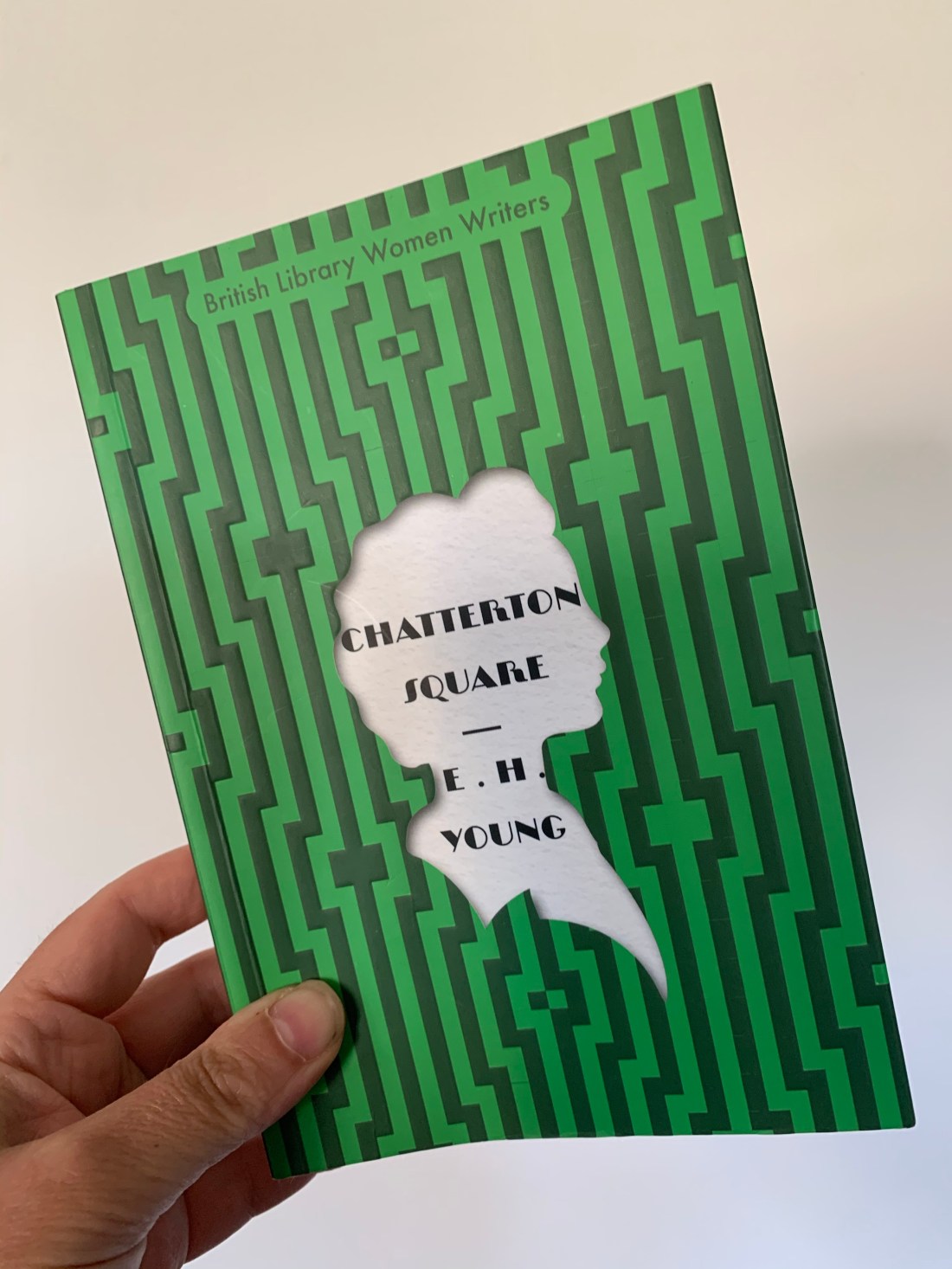
I love social history. I am fascinated by the past and how it has shaped the present. I love to see the way attitudes and views have changed over the years, particularly with regard to the lives of Women.
So when I connected with the fact that British Library Publishing were re-releasing a series of books from 1910 through to 1940 with just this premise in mind, I knew I wanted to be involved. The only problem was which title to choose…
In the end I went for Chatterton Square By E.H. Young. Published in 1947, on the surface it is the story of two households, both living on opposite sides of a square in Bristol. But scratch the surface and the richness of the prose reveals so much more.
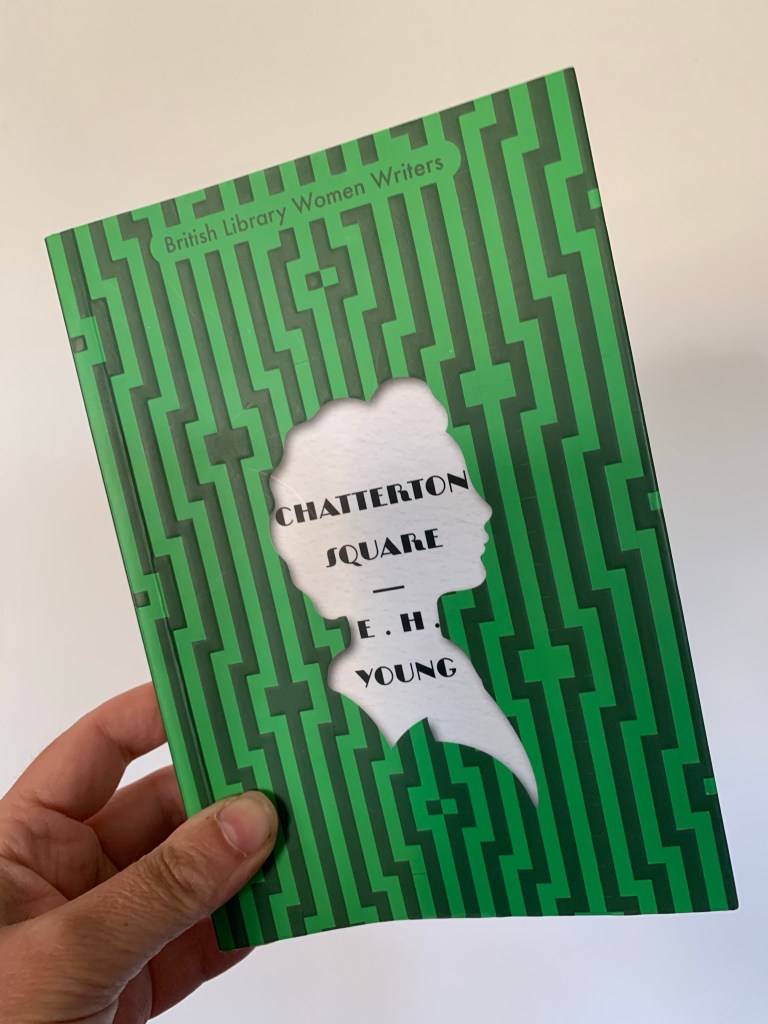
With breathtaking wit and a keen observational eye, E H Young presents us with a beautifully drawn portrait of two very different families. Throughout 1938, the summer of appeasement, when the possibility of war was stalking the country we are introduced to the Frasers and the Blacketts.
The Frasers are a large and genial household, comprised of matriarch Rosamund, five children and long time family friend and lodger, Miss Spanner. Their’s is a predominately happy household, and crucially they live without a father figure, Fergus Fraser having walked out years before. Rosamund lives as if widowed.
The Frasers seem to live a free and happy life. Their mother is unusual; concerned for her children, she has the rare ability to love them without stifling them. They are largely self sufficient but they confide in her, without fear of judgment or reproach.
The contrast between the Blackett and the Fraser households is stark and rests almost entirely with it’s patriarch. There is no missing father figure here. On the contrary Mr Herbert Blackett is very much present and in control. He believes his will and his beliefs are unequivocally right and they govern all the interactions and limited freedoms of his family.
His three daughters Flora, Rhoda and Mary are repressed and his long suffering wife Bertha is trapped in a marriage she has regretted since her honeymoon in Florence.
The two families seem entirely separate, both in out look and lifestyle but as the spring and summer progress, circumstances and relationships bring them closer together.
One such circumstance is the reappearance of Piers Lindsay, cousin and former sweetheart of Bertha Blackett. Disliked by her husband, Piers’ presence and growing relationship with Rosamund Fraser brings years of Bertha’s repressed anger and frustration to the surface.
Against the backdrop of approaching war, Young explores the realities and finality of marriage for women. In a time when obtaining a divorce was a practically impossible for a wife, Chatterton Square is a stark reminder of the fact a women’s identity was perceived by wider society in terms of her marital status.
There is feeling that men see women as a constant in their lives, something to be acquired and then bent to their will. Bertha is a wife, not a person; her wishes, opinions and dreams are expected to be a mirror of , and indeed provided by, her husband. It is no accident that the happier, more enlightened house contains both a women with an absent husband and a spinster.
When Herbert Blackett goes away, Bertha Blackett begins to live. She unfurls, creating new connections and relationships; releasing her younger daughters from tyrannical rules and crucially sleeping outside of the martial bed. Her final rousing and illuminating speech to her husband is a work of literary genius. With courage, wit and biting insight she takes down her husbands conceit and ignorance.
But for all of her frustration with the institution of marriage Young does not make this a novel without love. Indeed there is a clear sense that her characters need and want relationships, and the beginnings of love are celebrated. But there is a continued and pointed understanding of the double standards attached to the affairs and marriages we encounter.
The context of war is also crucial to the novel. The spectre of the Great War is felt at every turn. The fact that Mr Blackett didn’t serve, has shaped his own perception of himself. Piers Lindsay did and bears the scars. Miss Spanner is one of the generation of women left without husband due to the lack of returning men. The memories are fresh, and they dictate the atmosphere as the news becomes more perilous.
The two households differ in their attitude to war, just as they do in their attitude to love. Herbert Blackett dismisses the notion outright. But the Frasers, despite having sons who will fight, all feel that war is necessary, and appeasement is morally wrong. The spilt in opinion is a reflection of the wider societal views.
And that is the beauty of this novel. At it’s heart it is a microcosm of it’s age. A snap shot in time of society on the brink of change, bringing us closer to a time in history that has shaped us all for ever.
Rachel x


 Book Bound