#BlogTour Review: The Long, Long Afternoon by Inga Vesper

Yesterday, I kissed my husband for the last time.

Sometimes you pick up a book and the first line is absolute perfection. A line that is a hook that sinks in deep and refuses to let go. And that is exactly what happened when I settled down with Inga Vesper’s The Long, Long Afternoon published 4th February, by Bonnier Books.

It’s 1959, in the serene , immaculate suburb of Sunnylakes. Amongst the swimming pools, sprinklers and Sunday gatherings, a tragedy is brewing. Quietly and without warning Joyce Haney, model housewife and mother, vanishes without a trace. Her two frightened children are discovered by the black maid, Ruby. The girls are alone, blood is smeared across the modern, perfect kitchen and brand new baby clothes lie abandoned on the floor.

It is up to Detective Mick Blanke, an ex – NYC cop, to try and peel away the layers of perfection that surround this case and find out the truth that lurks beneath. Escaping his own gremlins , Mick sees this case as a way of atoning for past mistakes and is determined to get this case right.

But this case is anything but straightforward and it is quickly apparent that nothing and no one are what they first appear to be. And Mick is going to need whatever help he can get, however unconventional that maybe.

In Ruby, Mick recognises an intelligence and determination that belies the prejudice and horror she faces on a daily basis. Befriended and championed as she was by Joyce Haney, Ruby is desperate to find out the truth and is persuaded, at great personal risk to help the Detective put the pieces of this grisly jigsaw together.

Aided by Ruby’s unique insight into the homes of Sunnylakes Detective Mick Blanke examines the cast of characters that surround this case and probes deeper, asking questions and turning stones.

How devoted is Frank Haney to his missing wife? What exactly do the women discuss at Genevieve Crane’s Women’s Improvement Meetings? Why had Joyce befriended young Deena Klintz, so obviously from the wrong side of the tracks? Which of these perfect friends and neighbours really understand Joyce? And who is the mysterious Jimmy that has suddenly reappeared in her life?

This novel is populated by a cast of colourful and shifting characters, whose motives and emotions dance like fireflies before your eyes. There is a vibrancy to the dialogue, to the plotting and the atmosphere that makes this story impossible to leave. The telling of this tale is so authentic and evocative of the period and there is more than just the complex story of Joyce Haney evolving here.

This is web of stories; stories of the forgotten voices, of the past we try to out run, the prejudices we try to ignore, the facades we create and the lies we tell ourselves in order to move forward.

It is also the story of the people who dare to look behind the facade and to challenge the norm, to address the prejudice and to push the boundaries, even if that might bring the whole house of cards crashing down.

This books burst with life, emotion and most of all humanity. Thank you Tracy Fenton for my blog tour invite. This one was an absolute joy!

Rachel

And there is more…

For other reviews and reactions, check out the rest of the blog tour below…

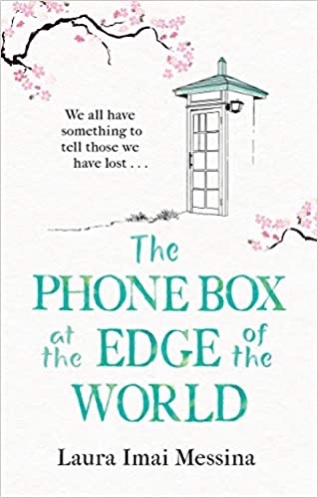
Book Review: The Phone Box at the Edge of the World by Laura Imai Messina

When this book caught my eye on Twitter, I was instantly drawn to the idea behind it. So I was thrilled to receive a gifted copy, for which I offer heartfelt thanks. It has been a pleasure to read and review this unique work. Please, let me introduce you to The Phone Box at the Edge of the World by Laura Imai Messina.

Inspired by real places and true events this story is of an exploration of grief and, at the same time, a celebration of life. It is one of those stories where you find yourself nodding and smiling in recognition at the truths you find within it. And maybe sometimes wiping away a tear…

Yui, lives in Tokyo. She works at a local radio station and she is grieving. Like thousands of others her life was changed beyond recognition on 11th March 2011 when an unprecedented tsunami hit the north- east of Japan. The disaster claimed the lives of both Yui’s mother and young daughter, leaving her entirely alone. For a while her family were among the yukue fumei, ‘whereabouts unknown’. During this time Yui lived in a school gymnasium, on a sheet of canvas, waiting with scores of other grieving souls, for news of their loved ones. All trying to cope with unbearable pain and loss in their individual ways.

When we first meet Yui she is still wrapped tightly within her grief. Life is about coping, about counting the hours and trying to function. Her grief does not have a voice, she does not talk about what happen, it is ‘the deep abyss she carried inside.’

Then she presents a radio programme about coping with loss. A programme in which people share the ways they have found to cope and move forward. It is here that Yui first becomes aware of Bell Gardia, a place offering comfort to those who are lost and grieving in the most unique way.

At Bell Gardia, is a Phonebox, disconnected but still well used. Set in remote gardens, on the top of a hill, it is a place that grieving relatives go to speak to their loved ones. Their words are carried away by the wind, scattered to the four corners of the earth, but providing comfort just for being spoken.

And so begins Yui’s pilgrimage to Bell Gardia. She arrives at the Phone box, but for a long time she is unable to use it. For Yui her journey to this place provides a different lifeline. It is here she meets new people, people who become important to her and help her to find a way forward; Suzuki-san and his wife, guardians of Bell Gardia, Shio, a young man whose own family was torn about by the tsunami, Keira, a high school student grieving for his mother. And most importantly Fujita- san, or Takeshi, a Tokyo doctor, mourning his wife and trying to find a way to help his daughter find her voice again.

It is this relationship that becomes the bedrock of the story and the path to Yui’s own recovery. It is this relationship that the gentle prose wraps itself around, and shows a couple who are learning to be together, celebrating life, whilst at the same time learning to embrace their grief.

For at the heart of this novel is the true but often unspoken fact that life and death are intertwined, that there is a natural symbiosis to be found and celebrated here. This novel is full to the brim with examples of the way the dead touch our daily lives. There are fascinating insights into Japanese culture which highlight just this attitude.

For example, the butsudan; a altar found in many Japanese homes where families honour their dead, talking to them , making them part of everyday life. There is a belief that the dead don’t leave us, they just move to a different place in the house. That the dead are always with us and that the key to moving forwards is to find a way to make the dead part of your life, no matter what form that may take.

That silencing a man was equivalent to erasing him forever. And so it was important to tell stories, to talk to people, to talk about people.

The Phone Box at the Edge of the World by Laura Imai Messina.

This idea extends to and is part of the very structure of the novel. Every second chapter is like a snapshot in time, some relating to the present but many offer a glimpse of the people who have passed. They may seem like mundane lists of favourite foods or sayings, but in fact they reinforce the fact that the importance and essence of people, both living and dead, lies in the individual details. These snapshots reinforce one of the novel’s core messages; that life and healing are to be found in the everyday. That details are important and often they provide crumbs of hope, restoration and salvation.

This book is a celebration and exploration of the process of grief. It offers a sympathetic acknowledgment that loss is part of life and how we deal with that is very much an individual process. The novel details the physical manifestations of grief, the changing stages one person’s grief moves through and draws out cultural differences along the way. I particularly like this summation of the grieving process …

Yui and Takeshi gradually realised that the Wind Phone was like a verb that conjugated differently for each person: everybody’s grief looked the same at first but, ultimately, was completely different.

Pg 126 The Phone Box at the Edge of the World by Laura Imai Messina

Laura Imai Messina has created something truly unique. This novel has a dreamlike quality, but unpick the layers and you will find everything about it is grounded in truth. In a world where we are rushing ahead, shouting out loud, this is a book to draw you back in and make you think about what is truly important and inescapable; life and death, and our attitudes to them both.

Simply lovely.

Rachel x

The Phone Box at the Edge of the World by Laura Imai Messina is published 25th June 2020 by Manila Press/ Bonnier Books.

More information can be found here