This week’s reads…part 2

From Lancashire of the the 1600’s to Memphis in the 1950’s, I am swapping one kind of hysteria for another with my second review of the week. Enter Elvis!


Cards on the table, before we go any further,I may have to confess to having a minor Elvis obsession, cultivated in my childhood, nurtured through my teenage years and hopefully matured in adulthood. The early music I find incredible, mainly in contrast to that which went before. I defy anyone to listen to the earliest Elvis recordings and not to be moved by the sheer energy and raw power, a sound which white American teenagers had never heard before.

I do, therefore, have more than a passing interest in the subject matter contained within this novel. I discovered it whilst listening to the fabulous, and for me recently unearthed Backlisted Podcast.Discussing the impeccably researched and unbelievably detailed ‘Last Train to Memphis’ and ‘Careless Love’ by music journalist Peter Guranlick, was the author of ‘Graceland’ , Bethan Roberts. Describing her own fascination with a the man who shaped a generation Roberts explains the premise of the novel.

This is not just another Elvis rehash, not just another retelling of the myth. It doesn’t focus on the parody Elvis of the Vegas years, the excesses, the drugs, the women, instead it focuses on the relationship between Elvis and his much adored mother Gladys.

Of course this relationship is well documented. The closeness of mother and son has it roots with Elvis’ still born twin, cemented by years spent together dealing with crippling poverty and a father in jail. By her own admission Roberts is not telling a new story, but yet by making this the focus of a novel Roberts is giving herself licence to look beyond the facts. This format allows her to examine the emotions and motivation of both Gladys and Elvis. The result is devastating.

The Gladys we see her is not the one dimensional, suffocating matriarch portrayed through the years. Whilst Elvis is the very heart of her hopes, her reason for existing, Gladys continually fights her own maternal impulses to let him grow and develop. Like most mothers she is seen fighting the pangs of fear as he takes one more step away from her into the world. Even from the earliest of ages Gladys understands her son’s incredible talent. She, through a mother’s adoring eyes, can see that this is something special. And whilst it thrills her, it also terrifies her.

It is difficult to make herself sit there, listening, because she knows he has talent, and she also knows that when he sings he goes someplace else, someplace beyond her reach. And in that place she cannot rescue him from failure.

Page 89, Graceland by Bethan Roberts

Gladys wants success for her son, but she is also reluctant to share him with the world. She is worried that this closeness they share, almost a symbiotic relationship which sustains and guides them both will be destroyed. She is right to worry.

As Roberts guides us through the early years of Elvis’ success, the Sun Record sessions, tours, TV appearances, we get a sense of a family in free fall. Suddenly the dirt poor are hugely wealthy. Gladys describes jewellery boxes over flowing with diamonds, pink cadillacs she can’t even drive parked outside, a mansion to live in. And yet the essence of Gladys is gone. Her son won’t let her cook and clean for him anymore; they have maids. He doesn’t need shirts making; he has so many he is throwing them away. Her one final pleasure, the anchor to the life she knew before is removed, when Elvis tells her she is forbidden from feeding her own chickens. It’s bad for his image.

At this something in her snaps, and she slings a handful of corn at her son’s chest.

‘I am not part of your image!’ She is close to tears, but she won’t let them break. ‘I’m your mother! I’m a person!’

Pg 378, Graceland – Bethan Roberts

The heart of her relationship with her son is being slowly eroded. Elvis, in his misplaced desire to protect and preserve his mother, is slowly killing her, in doing so he destroying the bedrock, the very thing his own success and moral compass is built upon.

Success for Elvis, and therefore by default his family, was on a scale never seen before. Driven forward to new and dizzying heights by his ruthless manager Colonel Tom Parker, no one, less of all Elvis had any idea how to ride this Roller Coaster or how to make it stop. And the fear for a family who had come from nothing was always, if it stops, how do we start it again? Vernon, Elvis’s father embodies the very essence of this fear within the novel. Inflated and emboldened by the success of his son, we see him blindly buying into all Parker’s schemes, closing down yet another escape route for Elvis and opening up the culture of unquestioning loyalty that was ultimately his son’s death knell.

Presley’s own reliance of prescription drugs is certainly not news, but what this novel shows, in heartbreaking clarity, is that his fame’s first casualty was Gladys. As fame took her son further and further away from her own humble dreams for him, those of a good steady job, respect and a family, she began to fill the Elvis sized hole in her life with something else. Alcohol.

At the time of Gladys death from acute liver failure Elvis has just entered his US army basic training. Her death shatters him. Unable to cope in any sense, he allows himself to be railroaded into a public funeral by Tom Parker, a pattern that will continue now for the rest of his life. After the funeral paralysed by grief, Elvis is sedated.

…his father and Colonel Parker are coming for him with Dr Evans, who is carrying a pouchy brown medicine bag.

Elvis’s legs go liquid, but Vernon catches him by the elbow. ‘The doc’s gonna give you a shot, son,’ he says.

Pg 417, Graceland – Bethan Roberts.

Roberts is clear, without Gladys other support is needed and the drugs, already hinted at within the novel, become the ultimate crutch. Nothing else can fill the void. Drugs offer a simple obliteration in the face or unshakeable loss.

Often Elvis’s career is defined in two halves; ‘Before the Army’ verses ‘After the Army.’ Roberts takes that view and turns it on its head, shaking it by the ankles for good measure. Elvis’s career and, more importantly, his life wasn’t defined by the Army, it was defined by the loss of Gladys.

In losing her he lost unconditional love and support. He lost the one person who remembered him for what he truly was, the one person who even in his wildest moments could look him in the eye and make him take stock. Without Gladys all the brakes were off. There was no one to worry about getting home to, no one to right his moral compass. Add to the mix the unbearable guilt he felt and his sudden lack of purpose and we are left wondering just how he survived for so long.

Bethan Roberts has taken a well told tale and looked beyond the surface. I repeat, making this a novel is a master stroke. By doing so she has granted herself permission to look beyond the myths and preconceptions and bring to life one of the great, overlooked tragedies of Rock and Roll.

Books mentioned in this blog:

  • Last Train to Memphis – Peter Guralnick
  • Careless Love – Peter Guralnick
  • Graceland – Bethan Roberts
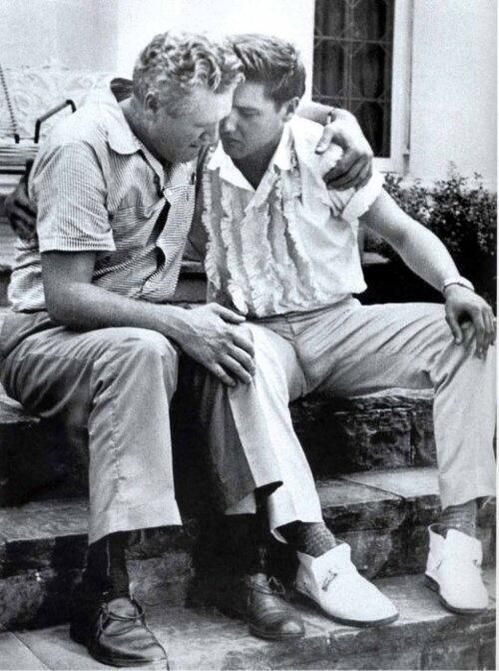
Elvis and Vernon on the steps of Graceland the morning after Gladys’s death.

This week’s reads…part 1

First week of blogging about about books and it’s been eventful. I never expected to meet so many other great bloggers and book enthusiasts. It has opened up my reading world even more. Which is great… but OH MY GOODNESS the TBR pile is starting to totter!

Too many books not enough time, as usual!

So…moving on, this week’s book reviews are below. Quite a mix in terms of genre and certainly time period. Make of them what you will!!

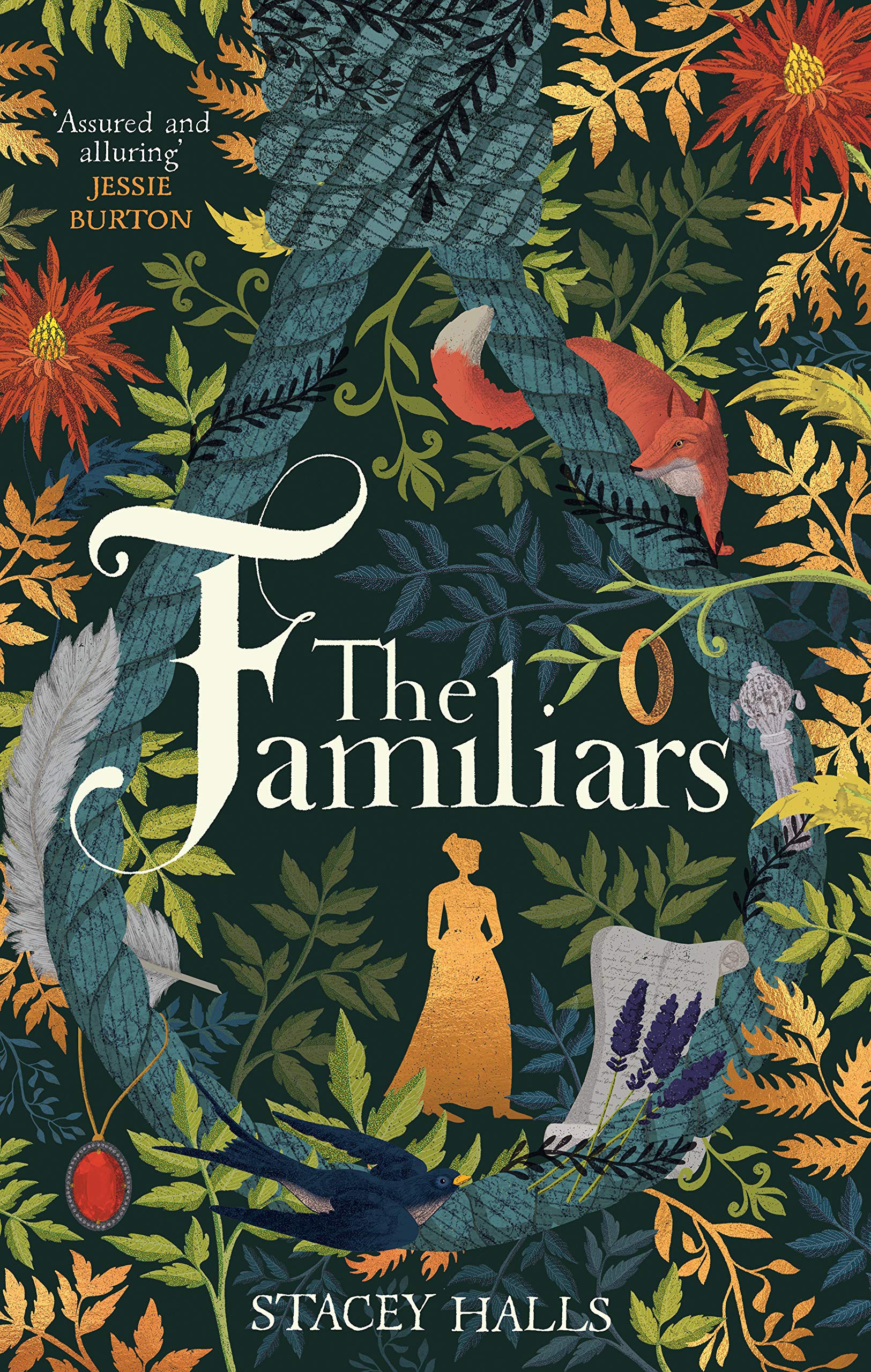
The Familiars – Stacey Halls

A historical drama dealing with The Pendle witch trials, this was a read for one of my ‘real life’ book groups. It was chosen as it is set very, very locally to us. I am not sure if I am just a perpetual child, easily pleased or both, but I still get that strange thrill when I see the name of a place I know really well in print. So from that respect at least The Familiars was a winner!

The story centres on Fleetwood Shutteworth, the 17 year old mistress of Gawthorpe Hall. Her dilemma is that age old problem of being required to provide an heir for her husband. When the novel begins Fleetwood is pregnant for the fourth time and has just discovered she is unlikely to survive another pregnancy. Cue the arrival of Alice, a local wise woman and midwife. Fleetwood and Alice develop a bond, and when Alice becomes embroiled within the Pendle witch trials, Fleetwood is desperate to save her in order to preserve her own life and that of her unborn child.

By far the most interesting element of this book lies in how it presents the theme of power,predominantly, but not exclusively women’s power. The whole book is a power play. Different characters hold and exploit different types of power at different times.

As has been so familiar with the lot of women throughout history, Fleetwood’s power lies in her potential ability to bring a pregnancy to term and ultimately produce an heir. Alice’s power is in her knowledge and skill passed down from generation to generation. Other women, including the child Jennet, implicate their neighbours through the power of gossip.

The witch hunts of the 17th Century did more than just pursue individual women. Crucially they stripped whole groups of women, particularly poor women, of what little power they held. The extension of the remit of the witch hunters to include the use of herbs and charms, local ‘wise women’, who had served their communities for generations as nurses, counsellors and midwives, were suddenly in danger.

The whole novel can be interpreted as a struggle for power; Fleetwood fighting to gain power over her husband, the authorities and even her own body; local officials are fighting for the power that comes with the King’s favour; Protestants fighting to maintain and deepen their power over the forbidden Catholic religion.

This book has a lot to say. It is readable, moves quickly and is a promising debut.

However, there are issues. None of them undermine the message and integrity of the novel but they do, at times come pretty close.

There is a lack of subtly within the writing. For example the narrator talks of past and unwanted companions, and, as if by magic, another companion appears. Symbols of powers such as Richard’s falcon used to show that he can control such a independent creature, serves as a warning to Fleetwood. And yet this symbolism is sometimes not subtle. Throughout there is the feeling that motifs are heavily signposted rather than left for the reader to discover.

Something else that didn’t sit comfortably was the characterisation of Fleetwood. Whilst I am always willing to embrace an independent woman, I remain unconvinced that her portrayal was historically accurate. Would a young wife, with a difficult childbearing history, now pregnant with a longed for heir, be allowed to ride around the countryside, unchaperoned at this point in history? Particularly when she was in danger of jeopardising the reputation of her husband?

Over all this was a good book, a solid debut which I think will be appreciated by those who enjoyed ‘The Silent Companions’ by Laura Purcell and ‘The Wicked Cometh’ by Laura Carlin. Worth a look would also be ‘The Good People’ by Hannah Kent.

It’s has certainly inspired me to find out more about The Pendle Witches. I have already ordered Jeanette Winterson’s ‘ The Daylight Gate’ and may well be heading back to ‘The Crucible’ by Arthur Miller, the staple of my Sixth Form years.

Books mentioned in this blog…

The Wicked Cometh – Laura Carlin

The Familiars – Stacey Halls

The Good People – Hannah Kent

The Silent Companions – Laura Purcell

The Crucible – Arthur Miller

The Daylight Gate – Jeanette Winterson

Next up …

’Graceland’ by Bethan Roberts

Beyond Testament of Youth.


My latest reads have very much been of the meandering kind I described in my first blog. One book had led me to another, taking me back into the past and throwing up different perspectives to a story I though I knew well.

I first read Testament of Youth almost 20 years ago. It is the account of Vera Brittain, an Undergraduate who gave up her hard won place at Oxford to become a VAD Nurse for the duration of the World War One. What makes this story truly remarkable and inescapably tragic is the level of personal loss that Brittain suffered during the war. Both her brother Edward, her fiance, Roland Leighton and two close personal friends, Victor Richardson and Geoffrey Thurlow were killed.

Testament recounts not only her personal experiences but shows how the War coloured and marked the rest of Brittain’s life, namely by putting her on the road to pacifism. The story is haunting and has been hailed as ‘the woman’s story’ of the War.

It is also a well known story , so when I discovered Chronicle of Youth : Vera Brittian’s War Diary, 1913 – 17 I was interested but really wasn’t expecting to learn anything new.

I was wrong. The diaries, published, despite Brittain’s endeavours, after her death, are able to achieve something Testament can’t. That is a feeling of the War unfolding before your eyes, a steady and sinking realisation that this isn’t the big patriotic adventure, but rather a terrible and bloody conflict that will change lives and society for ever. Couple this book with the brilliantly edited Letters from a Lost Generation: First World War Letters of Vera Brittain and Four Friends, and the War comes to life in your hands, whether you want it to or not. Rather than the accomplished, heartfelt account of Testament, written some years after the events, within these texts raw, real time events are unfolding before your eyes.

At the forefront of both books is the relationship between Vera and Roland Leighton. Roland was a close friend of Edward Brittain. Roland and Edward had attended Uppingham Public school, training with the OTC – Officers Training Corp. So, when war broke out in August 1914, both sought Commissions, as did their close companion Victor Richardson. Roland found himself in France by March 1915. Aged just 19.

In her relationship with Roland, Vera finds a man who will treat her intellectually as an equal. Vera writes

But to me you, in this respect most of all, have been an oasis in the desert. A man who could see from a woman’s point of view was something to me quite undreamed of

Vera Brittain writing to Roland Leighton. Buxton, 1st September 1915.

A rare man for the time, he never shys away from telling her the truth of his situation. While his letters are accomplished and poetic, matched by Vera’s equally impressive replies, he is often starkly truthful in his descriptions of life in the Trenches.


Let him who thinks that War is a glorious thing, who loves to roll forth stirring words of exhortation…let him but look at a little pile of sodden grey rags that cover half a skull and a shin bone … and let his realise how grand & glorious a thing it is to have distilled all Youth and Joy and Life into a foetid heap of putrescence.

Roland Leighton writing to Vera Brittain. France, 11th September 1915.

Both these books serve to show us how letters are the sustaining force of the War. The only method of communication, they provide information, hope and comfort. Vera and Roland admit that open up in letters in a way they never can in public.

Yes, it is absurd that we should be so intimate in letters, & then when we are together that you should touch my hand almost as if you weren’t doing right, & I even hesitate to meet your eyes with mine.

Vera writing to Roland. Buxton, 11-12th September 1915

And an absence of letters provokes despair. In Chronicle of Youth Vera writes desperately of her need to hear from Roland, particularly at those times when a big push is expected. When letters arrive her relief and joy are palpable, only to be replaced almost immediately by the horror of waiting again. Within Letter from a Lost Generation the power held by the letters lies in the way they are organised; chronologically by date written, crucially not by date received. There are few things more heartbreaking as a reader than the crushing realisation that a beautiful letter was never received.

The letters are telling in more than just words.Autumn and Winter 1915 sees an exchange of short and sometimes angry letters between the Vera and Roland, the war is becoming more relentless and real. Letters from Roland which have been so composed and eloquent arrive without shape or punctuation, a spontaneous stream of consciousness, ahead of his time. Already these young people. who sometimes address letters as ‘Dear Child’ are talking in terms of lost youth.

Some letters will touch even the hardest of hearts . Writing to Roland on what she believes will be the eve of a great battle Vera says:

And if this word should be a ‘Te moriturum salute’, perhaps it will brighten the dark moments a little to think how you have meant to Someone more than anything ever has or ever will. That which you have done & been will not be wasted; what you have striven for will not end in nothing ], fo as long as I live it will be a part of me & I shall remember, always.

Vera writing to Roland. Buxton , 26th September 1915.

Most of us would settle for just one letter like that in a lifetime.

More heartbreaking though than any letters are the diary entries of late December 1915 when Vera is excitedly awaiting Roland home on leave. Her guard is down, she is sure he is safe for the first time in months, she is in a hotel awaiting his arrival.

Monday 27th December 1915

Had just finished dressing when a message came to say that there was a telephone message for me. I sprang up joyfully, thinking to hear in a moment the dear dreamed- of tones of the beloved voice.

But the telephone message was not from Roland but from Clare; it was not to say that Roland had arrived but instead had come this telegram …

T223. Regret to inform you that LIEUT. R.A.Leighton 7th Worchesters died of wounds December 23rd.

pg 376 Chronicle of Youth – Vera Brittain.

Roland’s death defines Vera’s whole war. She will go on to suffer other shattering losses including her brother’s death and that of Victor and Geoffrey, but it is Roland’s loss that pushes her forward. As in their relationship, she searches for truth in his death. She is frustrated by differing accounts of his death, told by well meaning officers. She needs the truth, no matter how hard it maybe. It is important to her that Roland understood he was to die, she feels that this would be the ultimate betrayal of his trust.

In January 1916 Vera writes to Edward describing coming across the Leighton family, having just taken delivery of Roland’s tattered and bloodied uniform. Despite it reeking of death and filthy with putrid mud Vera inspects it in a forensic matter, continually searching for answers. Their relationship was based on truth and complete honesty. Vera is determined his death shall be the same.

Whether Vera and Roland’s relationship would have survived the war who can say. One estimate is that they spent only 17 days in each other company. However in the aftermath of his death he is turned into a hero, a Godlike figure who Vera describes with as He, always using a capital letter. It is a habit that is taken up by Edward and Victor, the school champion immortalised, never growing old and never tarnished.

Roland was extremely close to his mother, Marie Connor Leighton book, a successful, popular and sentimental pre-war novelist. In 1916 she published a book in praise of Roland called Boy of my Heart. An extended eulogy for her lost son, by today’s standards it is mediocre and saccharine sweet, but it summed up the mood of nation of Mothers. These women were mourning the very thing that they loved best, their boys given over to serve their countries. After the book’s release Mrs Leighton received scores of letters identifying with Roland. Edward writes with scorn to Vera, he is horrified that mother’s of a mere Tommy should compare their son to the deity that is Roland. But of course they would, Roland was just one precious boy lost.

There is so much more I could write about these books. Despite my better judgement I have become tied up with Vera and Roland ‘s tale. I haven’t even touched upon the delightfully bumbling, public school letters of Geoffrey, always jovial, always terrified and often, inexplicably with a cat in his dug out! Or the earnest and religious Victor who was kept of the war for so long by substandard eyesight, only, with cruel irony to be blinded, dying before Vera could make her offer on life long nursing and companionship. And there is Edward, struggling to understand his place in the world, still worshipping Roland, even after he receives the Military Cross for his part in the Somme.

If you haven’t read Testament of Youth please do. If you have, consider looking beyond. There is so much more to discover.

Books mentioned in this post:

  • Testament of Youth – Vera Brittain
  • Chronicle of Youth – Vera Brittain’s War Diary 1913- 1917
  • Letters from a Lost Generation : First World War Letters of Vera Brittain and Four Friends. Edited by Alan Bishop and Mark Bostridge
  • Boy of My Heart – Marie Connor Leighton

Why read?

So starting a book blog, it seems sensible to start at the very beginning. Let’s start with the very basic question ‘Why read?’

What does reading bring to your life that you can’t find any where else?

I read because I need to. I always have. From the very first days when I unlocked the mystery of print on the page I have been hopelessly devoted to the written word. For me reading is like breathing; pretty much essential to my daily life and well being.

Want to enrage me? Hide my book.

Want to soothe my soul? Let me loose in a bookshop or library. Lend me, buy me or recommend to me a book.

I read to escape the pressures and constraints of the real world. I read to educate myself, to push my boundaries, open up new worlds and go beyond my daily life. I read to relax, to revisit old friends and to seek comfort and distraction.

But mainly I read for love.

Next question…what do you read?

For me it is anything that takes my fancy. I think my tastes are pretty far reaching. My lists for the last 3 years show a leaning towards what the book world would class as ‘Modern Literary Fiction’ and probably more female authors than male. But I am always open to suggestions and recommendations. I am guilty of hiding away from Science Fiction and Fantasy, and have become increasingly disillusioned with thrillers ‘Whose twist I won’t see coming’, over the past 18 months. Historical fiction is usually a winner, can’t beat a great classic, biographies are fascinating.

The acid test of a book for me is within it’s writing. If it’s well written, well researched and accurate then I am in, regardless of genre, hype or a fancy cover. Sloppy writing and unconvincing characters make me twitchy, a great story but poorly written is ultimately disappointing. Characters that leap of the page, be they fair or foul, are a winner every time.

And yet I still find it very hard to give up on a book. No matter how frustrating. I will usually persevere. Which is madness, given the sheer number of unread books littering my house and slowing down my Kindle. I can’t account for this bizarre habit, I know life is just too short, but very few books drive me to abandon them.

I am a member of 2 real life book groups, several online forums and follow numerous book blogs and podcasts. They all serve to take me out of my comfort zone, introduce me to brand new authors and keep me on my reading journey.

The practical side of this immersion in a lovely, book filled world is that there are currently 41 unread books piled up around my room. My Kindle tells me I have 160 (!) unread books (Damn you Kindle Daily deals!!!) And this is before there are new releases to sample… or I wander unsupervised into a bookshop… or one hidden gem of a book takes me off on a whole new voyage of discovery. All of this contributes to my regular 3am panic, the one in which I struggle to accept, yet again, that I will die with books unread. Even if I manage to live out my ‘Austen -heroine- fantasy’ of being mildly incapacitated and left to read for a significant chunk of time I would never catch up. One book would lead me in a delightfully meandering fashion on to the next and away from the books already piled up. For me reading isn’t a job you can get done. It’s an evolving journey, often undertaken with maps that change at unexpected times and in unexpected ways.

I truly believe that there is a book out there for everyone. Whether you read it in an afternoon, over a year, download it on your Kindle, listen to it on audiobook or hear it on parents knee, there is a text that will speak to even the stoniest of hearts.

We are all readers. Whether we are reading shopping lists, sauce bottles, graphic novels or War and Peace. We should all read what we want, what we like. Any number of erudite critics can recommend or tear a book down but what an individual reader brings to a book is far, far more important.

Our personal experiences define us and as they make us unique in life, they make us unique readers.

That means that very few books can be truly universally loved, however difficult that may be for us to accept.

I was introduced to this concept very early on in my literary journey by a teacher who I will just call Mr P.

English lit A Level, embarking on the classic ‘Romeo and Juliet’, Mr P’s opening gambit was ” You all need to know, I think Romeo is an arse!” He then proceeded to point out that Romeo was a serial lover and most likely would have abandoned Juliet had events not overtaken them. Mr P taught me there is no right or wrong response to a book, you just helps if you can back it up.

All that said there are some books I would fight to the death for; classically ‘Wuthering Heights’ and ‘Rebecca’, more recently Jane Harris’ brilliant ‘Gillespie and I’ and the sublime ‘Lincoln in the Bardo’ by the genius that is George Saunders. These books have touched me so deeply in different ways that it is hard to stomach criticism, however irrational that maybe. Such is the power of the right book.

I feel that, as with most things in life, the older I get the more confident I become about expressing my own literary opinions and preferences. And this is how I have ended up at the blog. It is a way for me to expand my reading journey and do something constructive with the books I devour each month. It is an outlet for my own opinions and preferences and by default my strengths and weaknesses.

I hope very much that you will enjoy what you find here. I don’t court universal agreement but I would love to engage in debate and challenge. I believe that both books and readers grow by both.

Books mentioned in this blog

  • Wuthering Heights – Emily Bronte
  • Rebecca – Daphne du Maurier
  • Gillespie and I – Jane Harris
  • Lincoln in the Bardo – George Saunders
  • Romeo and Juliet – William Shakespeare