Monthly wrap up: March 2020!!

How do you wrap up March 2020?!? The month the world changed and everyday life became like a dystopian novel or Hollywood blockbuster. I don’t know about you but I keep expecting the soothing tones of Morgan Freeman to pop up at the daily briefing to tell us the world is saved.

Alas not!

For all my glib references to the fact that I had enough books to survive at least 3 pandemics etc etc, none of you need me to tell you that the reality is very different. Life has quite literally been turned on it’s head. My life, everyone’s lives, have changed beyond recognition and people I love and care about are working on the front line.

In such extreme circumstances I nearly abandoned the idea of a Monthly Wrap up. I mean who really cares about what I read last month when we are fighting a global pandemic?

The answer is probably no one, but in times of crisis then normality and routine is some how comforting. So I am clinging to one small shred of normality: I read books and I write about what I have read.

And if no one else reads this, so be it. If nothing else I will have a record of what I was reading in this time of change and extraordinary social history.

That said, it has been very hard to read! As a teacher I am getting to grips with a whole new set of professional challenges. Providing online work for those that want it, remote support for those that need it, managing a team remotely, all whilst managing my own families needs. Daily structures have disappeared and reading time, which I imagined might be plentiful has actually been pretty hard to come by.

And when I do have a slot of uninterrupted time available to me, it has proved somewhat challenging to concentrate! I know I am not alone in the feeling that our Bookish Mojo’s have, at least temporarily, gone walk about! For every book I have finished this month I have abandoned at least one more. Perfectly solid books, but my attention has been so fleeting that I have had to move on, trying to find something to hold me steady.

So the 8 books I have managed to finish this month have worked hard to earn their place.

Of those 8 books, 3 were read in preparation for Blog tours, or in one case my first ‘Blog Blast’.

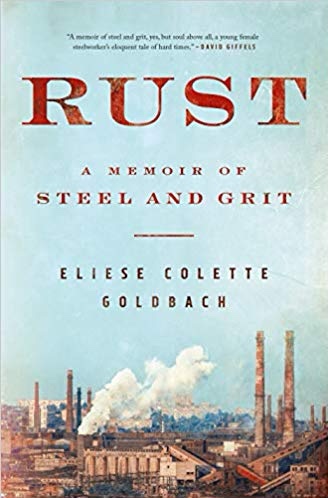
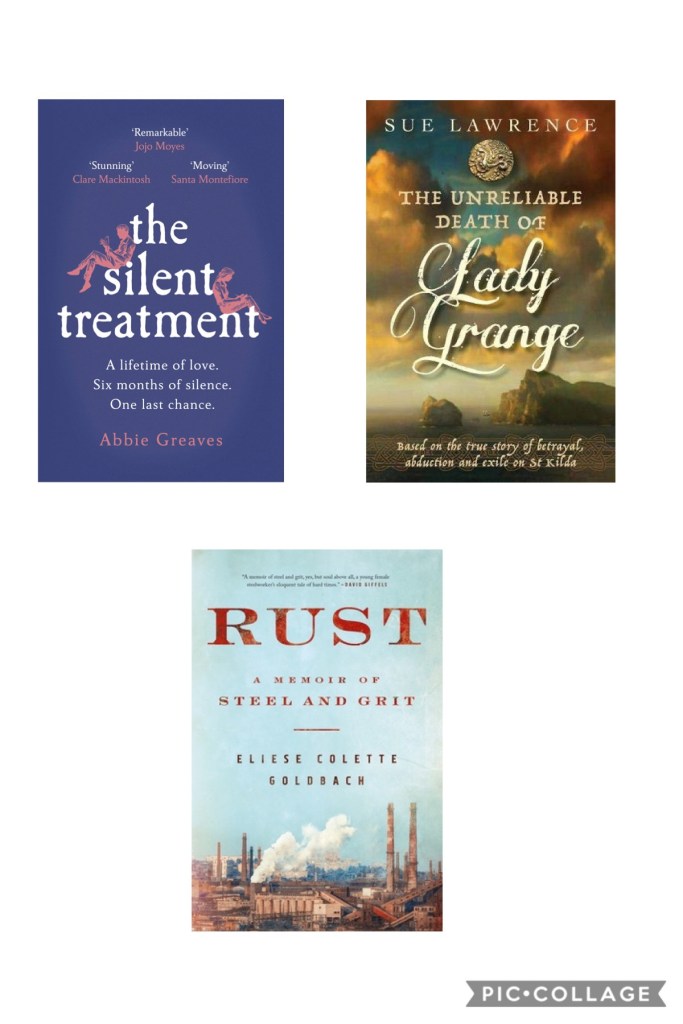
Rust by Eliese Goldbach was my only nonfiction read of the month. A moving and insightful story of the Rust Belt of the MidWest, it was an illuminating insight into current US politics and a ray of hope in a divided landscape.

The Unreliable Death of Lady Grange by Sue Lawrence took me far away from the current crisis to Jacobite plotting and broken families in the distant past. It’s grounding in truth and ongoing intrigue was enough to break through reality and soothe the soul for a while.

My final blog tour read was the wonderful The Silent Treatment by Abbie Greaves. It’s a stunner of a book, moving and heartfelt. Published today by Century, I can’t wait to share my review next week.
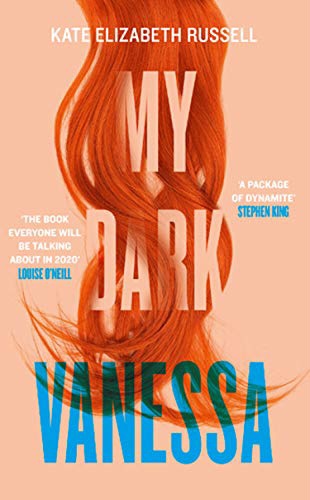
Also pending a review is the breathtaking My Dark Vanessa by Kate Elizabeth Russell. Published in the last couple of days this a must read. Compelling and dark, but oh so important, I am still working on the words to do this one justice.
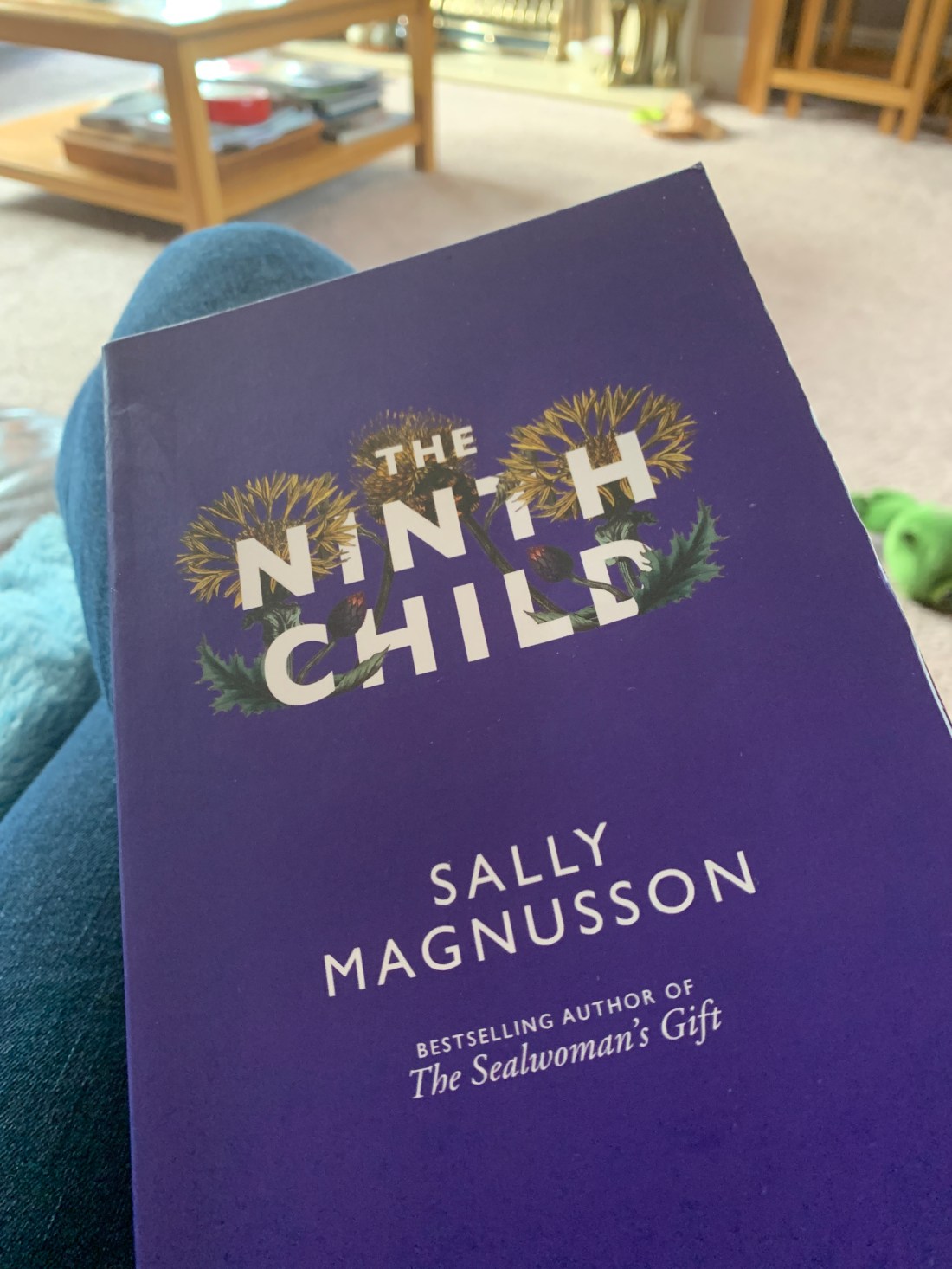
The Ninth Child by Sally Magnusson was another welcome foray into the past. Just as she proved in her previous novel The Seal Woman’s Gift Sally has the gift to create a beautiful and captivating portrait of time gone by. Her emphasis on strong female characters is captivating and the perfect plotting was inspired.

My final review of the month was SheClown and other Stories by Hannah Vincent. A complex and beautifully diverse celebration of women, embracing many different roles, lives and viewpoints. It’s sharp, insightful perception was another of those texts that helped me find some escape in this increasingly crazy world.

Finally not reviewed but certainly enjoyed were the final two books of the month Tidal Zone by Sarah Moss and Wild Dog by Serge Joncour.

Wild Dog , which joins a chorus of fantastic books released today is published by Gallic. Translated from it’s native French by Jane Aitken and Polly Mackintosh, this is a book which works across two time periods, both centred on a remote French Farmhouse. Steeped in superstition and overtaken by nature, there is a feeling that any thing could happen.

Tidal Zone, was a treat I had been saving for myself. Sarah Moss is one of my most recent favourite authors, having been blown away by Bodies of Light and Signs for Lost Children last year. Tidal Zone is the story of a family trying to come to terms with the sudden ill health of child, and all the adjustments and emotions that come with it. Given the current climate this might have been just too near the mark. But in Moss’s skilled hands it was an immersive joy. I can’t wait to read Summerwater which is due for publication in this summer, and which I feel privileged to have secured a digital copy of.

So looking forward in this strange and uncertain world , however hard it maybe at times, reading will remain one of my constants. Currently I am tucked into Hamnet By Maggie O’Farrell. This brilliance is my guiding light towards others on the Women’s Prize Longlist, due to become a Short List on 22nd April.

And in other news, next week my little blog turns 1! How to celebrate this blog birthday in uncertain times? Who knows but I will be marking it some special way.

Take care and stay safe

Rachel x
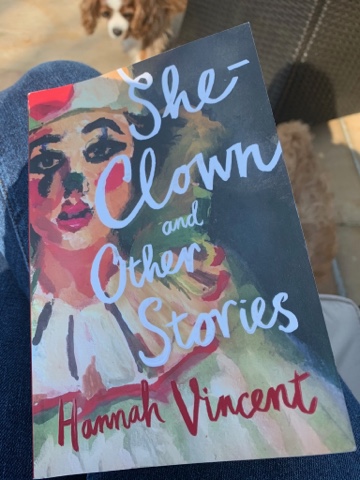
Book Review: She Clown and Other Stories by Hannah Vincent

I keep questioning , as I am writing my current reviews; Should I mention the strange world we are living in? Or is everyone sick to death of hearing about COVID-19 and do they just want to come places like book blogs for escape?

But I have come to the conclusion that any review is about my response to a book and my response is always going to affected by the context in which I read. For example in the last month I have abandoned more books that I have finished. My brain is struggling to cope, and so something has got to be pretty special to get me interested and keep me there. I strongly suspect that I would have continued and enjoyed those discarded books in normal times.

But these are not normal times, and so ignoring that fact seems pretty pointless to me.

But, what you may ask does this long winded justification have to do with She Clown By Hannah Vincent?

Well, to be honest finding a volume of well written and engaging short stories is always a welcome and wondrous thing but at time like this it is a life saver. The short, snappy but beautifully formed stories were just perfect for my current reading style. Like a delicious box of chocolates I could ration myself to grabbing one here and there as my work load and wandering attention allowed or I could gorge on a few given the inclination and opportunity.

She Clown is a relatively thin volume, containing 16 short stories. All the stories concentrate on the life of women, of all ages, social classes and races. But all have names that begin with ‘C’…

With some of the women I formed an immediate connection. Charlotte, for example, the hen pecked and suppressed daughter living with her mother in The Poison Frog. A story with a strong leaning towards the darkest of fairy tales, she is rescued by a frog prince in the most unusual way.

And Caro, the young working mother, exhausted, trying to keep everyone happy and finding her balm in work ( An Extra Teat)

Conversely, there are women that I actively disliked. Bella, for example, the rich, privileged mother, looking constantly to blame others for the things that go wrong in her life, biting her own child in a rage, made me recoil from the page! ( Granny’s Gun) . ( NB I know her name doesn’t begin with ‘C’ – but all becomes clear…read the book!)

But all of these women have a tale to tell. And that is the point.

Hannah Vincent has created a series of tales that are snapshots of women’s lives. These snapshots are a ‘warts and all’ portrayal and celebration of women. Not one women is held up as a saint. All are working within the boundaries of their lives and experiences, all shaped by their past, present and future. Each women is presented within their own social context and connections. Some seem trapped, but others show remarkable abilities to make subtle and sometime dramatic changes to their lives. Here there is no feeling of ‘one size fits all’ but a recognition and embracing of diversity.

The stories are, by definition short. In some cases the snapshot only provide the smallest glimpse of a situation, dilemma or lifestyle. Sometimes we see or feel a sense of resolution, sometimes we don’t.

The final story, Woman of the Year, brings the whole collection together. By taking each central character and putting them together in one story, one social situation, the author offers us further insight into each character but also strengthens and enhances her message of diversity and celebration

She Clown and other stories is a collection of short stories that that both challenges and comforts and one I would heartily recommend, especially in times when we could do with both these qualities in our lives.

Thank you Emma Dowson at Myriad Editions for my gifted copy.

Rachel x

P.S You can buy She Clown by clicking here

Book Review : The Ninth Child by Sally Magnusson

A while ago, in what seems like another reality, I was on a train. I was complaining to myself about the terrible service – oh, little did we know!!! – and trying to get to my first meet up with 4 other lovely book bloggers.

To take my mind off the journey, I scrolled through Twitter and came across the announcement of Sally Magnussons impending new release. Excited I sent out an email asking for a proof , not honestly fancying my chances, as I was sure the whole world was probably asking too.

But the good people at Two Roads were so kind and within a week I had a copy in my grubby little mitts. (Which are obviously only metaphorically grubby! Wash your hands people!!)

And let me tell you bookish people of the world…it is a beauty!!

Beginning in 1856, we are introduced to Alexander and Isabel Aird , a young middle class couple living in Glasgow.

A doctor, Alexander is concerned with the health of the city, particularly the poor. A passionate champion of improving public health, he is following closely the ambitious scheme to bring clean water from the Trossachs to the people of Glasgow. It is his dedication to reducing cholera within the population that sees him accept the job of site doctor at the developing waterworks by the banks of Loch Katrine

Uprooted from her Glasgow life, Isabel finds herself isolated amongst in a strange new landscape; one which is being changed by the intense and relentless blasting of the surrounding hill side to create the series of tunnels and aqueducts needed to complete this mammoth feat of engineering.

Alone for much of the time, Isabel is also grieving. For since the beginning of their marriage Isabel and Alexander have lost seven children to still birth or miscarriage. When we meet Isabel she is carrying her eighth child. She has no hope left, and is waiting painfully for what she feels is the inevitable.

The couple are disconnected, both grieving but both internalising their grief. Alexander has his work to distract him but for Isabel distraction comes in a different, more unconventional and dangerous form…

Loch Katrine and the nearby Doon Hill are steeped in Folklore. They are the haunt of the fairies, the sithichean, and all the recent industrial activity is disturbing the ground and it’s secrets. So when a mysterious, old fashioned but rather charismatic man, going by the name of Robert Kirke appears in Isabel’s life alarms bells start to ring. When Isabel, listens wrapt to his strange story, she offers to help. But the price she is unwittingly agreeing to pay is far too high.

The strange friendship which springs up between Isabel and Robert is of deep concern to Kirsty McEchern, a navvies wife, who has become a house keeper of sorts to The Airds. She is the voice of reason, a pragmatic narrator in the style of Nellie Dean. She has an insight into the minds and marriage of the Airds, recounting the tale years after the event, trying to explain the inexplicable.

And with her own strong sense of tradition and folklore running alongside her day to day reality Kirsty is also the embodiment of one of the novels key themes. The juxtaposition of folklore and superstition with science and progress. Themes that run throughout the history and literature of the Victorian era.

Alexander and his social circle are the embodiment of the progress that is made in public health, medicine and engineering. It is a world that the grieving and unfulfilled Isabel tries desperately to reach. She is constantly rebuffed and discouraged on the basis of her sex.

It is the character of Isabel which is the very core of this novel for me. Her fight to be a mother, in an era when women were judged by their ability to bear children but obstetrics and women’s health, both physical and mental, remained a low priority. Her fight to be more that just a wife, to find purpose in her daily life and efforts to support her husband in meaningful and practical ways.

For me, a successful novel is one which shows a development of not just plot, but character. And Isabel is a key example of this. The Isabel we are introduced to at the beginning of the novel is very definitely not the Isabel we say goodbye to at the end.

Another key strength of the novel is it’s sense of place in both location but very definitely period in time. It feels like a Victorian novel. The themes, language and pace are all authentic, all reminiscent and evocative of that fast moving and strangely conflicted time in history.

The sense of Victorian-a is cemented by a parallel strand of the story, a plot line involving Queen Victoria and Prince Albert. This thread reflects the key themes of the novel; juxtaposition of progress and tradition, women’s role in society, its attitudes to child bearing. It is a thread that is neatly woven throughout and comes to a natural conclusion at the climax of the novel.

Sally Magnusson has mastered the art of weaving stories around a series of facts and bringing them together into intriguing and thought provoking novel. It is a unique story, with a unique approach. Beautifully plotted and at times heartbreakingly poignant, it is one of my reads of the year so far.

Blog Tour Review: The Unreliable Death of Lady Grange by Sue Lawrence

So there is no getting away from it…life is pretty crazy at the moment. And for the first time in a long time ‘real life’ had intruded on my bookish life to such an extent that my reading mojo seemed to vanish.

So The Unreliable Death of Lady Grange by Sue Lawrence was, I have to, up against it. But do you know what? The past was actually the perfect place to be!!!

Based on a true story, we begin in Edinburgh, 1742. The tale begins at the funeral of Lady Grange. Her sudden death has shocked her family.

But the real shock is that the spirited Rachel, Lady Grange is actually still alive.

Kidnapped by her husband, the father of her five surviving children Lady Grange is banished to the remote Hebridean Monach Isles. Fiery and defiant, certainly not a women of her time, Rachel is paying the price for pushing back against Lord Grange’s infidelity and her own ill treatment.

With the aid of the unscrupulous Lord Lovat, Lord Grange imprisons his wife on a series of remote islands, transporting her from a life of privilege to a life of hardship and deprivation.

Unable to speak the native tongue, deprived of books, writing materials and the love of her family, Rachel has been effectively obliterated. Her husband has not only taken her freedom, he has taken her identity and denied her existence.

His motives reach beyond the personal. Encapsulating a turbulent political time in history, Lady Grange has uncovered her husband’s Jacobite sympathies. Terrified that she will put not just his reputation but also his life in danger, James enacts his terrible revenge.

This is a story that is driven by power . Rachel is the very embodiment of female power in a period of time when woman had very little. Even when her circumstances are altered beyond recognition she is determined to maintain her dignity, sense of self and try to return to her current life.

Ultimately and unavoidably it is a commentary on the historical power imbalance between men and women, and how this was used and abused.

This is a powerful book, of a dark but in some ways uplifting story that might just take you away from our current craziness. Thank you Kelly @LoveBookTours for asking me along.

About the author

As well as writing popular historical thrillers, including Down to the Sea, Sue Lawrence is a leading cookery writer. After winning BBC’s MasterChef in 1991, she became a regular contributor to the Sunday Times, Scotland on Sunday and other leading magazines. Raised in Dundee, she now lives in Edinburgh. She has won two Guild of Food Writers Awards.

And there is more

For other reactions and reviews check out the rest of the blog tour below…

Blog Blast!!! Rust by Eliese Colette Goldbach

The balance of my reading always falls down on the side of fiction, but I do love a good nonfiction book. Something to really get my teeth into, and something that might cause me to change or challenge my view of the world. So when I saw the increasing swell of interest that was gathering behind Rust I was intrigued.

Rust is a true account of the author Eliese Colette Goldbach’s , experiences in the steel mills of Cleveland. Working in the so called rust belt of the US at a time of unprecedented political turmoil, in a job she never expected to do, Rust offers a fascinating insight into a world so often referred to but little explored.

Growing up in Cleveland, the mill was a constant of some what looming presence for Eliese. She was up in family that was Catholic and staunchly republican, anti abortion and vehemently anti democrat. In spite of these traditional leanings … and her sister were encouraged to look for more than traditional female roles.

As a dedicated student and committed Christian Eliese believed she was destined for higher things, always believing she would have a successful career, away from Cleveland, never for one minute thinking she would end up in the mill. Going away to college opened up Eliese’s world. Suddenly she was mixing with those who held liberal views, challenging her republican upbringing, shaping her own views.

But in the same place Eliese was subjected to a terrifying sexual assault which threw Eliese’s life far off course. The trauma of her experience triggered the onset of mania and depression found in a bipolar diagnosis. The terrifying mixed state of her condition, coupled with a crippling lack of opportunity brought about by the Great Recession and Eliese finds herself applying for a job in the mill.

The pay is good, far surpassing what she earns working as a house painter. But the conditions are tough; the hours are long and irregular, the mill is inherently dangerous despite all the health and safety measures regularly implemented and updated. At times the mill is terrifying, and it is particularly tough for the female workers who have to work longer, harder and tougher to prove their worth.

The mill is a community. Rough around the edges, where respect is earned, but a community that looks after it’s own. It is a community peopled by generations of mill workers, ruled by the union and increasingly terrified by the reduction of their industry and it’s life blood.

It is in this context that Trump begins his rise to power. Exploiting the fear and unrest felt by the Rust Belt workers and those like them, he made promises and offers, things the workers wanted to hear. But despite their vast political differences Eliese finds herself drawn the workers of the mill. Drawn to their sense of togetherness and camaraderie, Eliese appreciates the differences in their political opinions and begins to find hope in a nation that seems hopelessly divided.

Rust is quite simply excellent. If you have ever questioned the how and why of Trump’s rise to power, Rust might just help you understand. But more importantly it might provide some hope that the seemingly huge divisions between the left and right can, at some point, be bridged.

And there is more…

Check out other bloggers, on the Rust blog blast…

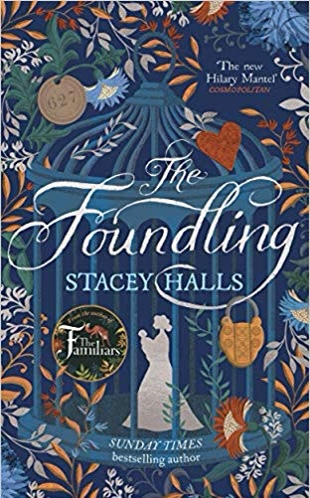
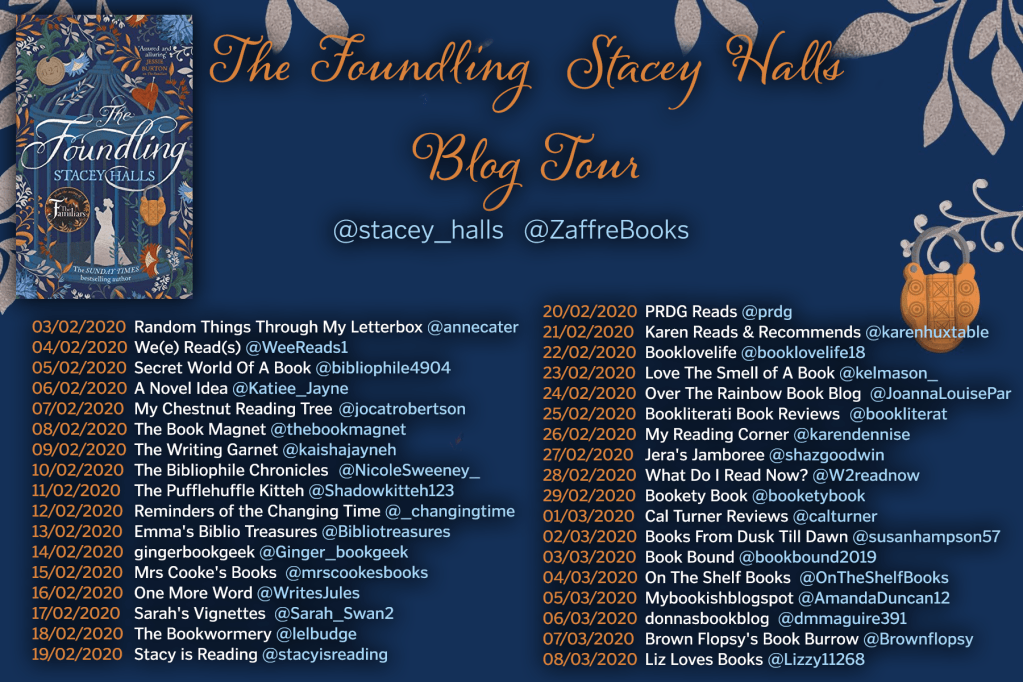
Blog tour review: The Foundling – Stacey Halls

A little while ago I had to have a stern word with myself. I had to remind myself that I can’t do every single blog tour that comes my way.

But sometimes a blog tour lands in the inbox that I practically beg to be involved in! The Foundling was one such book. Having read Stacey Halls incredible debut novel The Familiars last year i couldn’t wait to get on her newest offering.

It did not disappoint.

From the very minute I opened the book I was drawn in. Stacey Hall’s historic London pulled me into it’s spell and held me there.

The story begins with Bess, an unmarried and desperately poor woman, taking her child to The Founding Hospital, hoping they will agree to care for her. Leaving the baby girl, Clara in their care she leaves a token and a promise. A promise that she will return to reclaim her daughter when her circumstances improve.

Fast forward 6 years. Finally Clara has enough resources to reclaim her daughter. She arrives at the Hospital full of hope, only to be told her daughter was claimed by her mother the very day after her entry, six years previously. How is this possible?

Other than to say that the plot is beautifully crafted, I don’t want to give very much away about the plot at all. It is enough to say that from the beginning it is a story of mysteries and I don’t want to spoil any of them!

The story is set in London of the 1700’s. The setting is skilfully depicted as a city of two halves. The rich living comfortably, often extravagantly, the poor just about surviving. This juxtaposition of London life is immediately portrayed within the four walls of the Foundling Hospital. Bess takes her newborn to be entered in to the admission lottery, racked by both physical and emotional pain. That same impossible lottery is source of entertainment for the wealthy patrons of the hospital, all gathered to witness the women bringing their children and asking for help.

This duality forms the very core of the novel. Rich compared with poor. Two mothers, Bess, poor, a street hawker and Alexandra a rich widow; two backgrounds. The Foundling raises questions about what does it take to be a good mother. Through these two women we explore the many faces of motherhood. Stacey Halls asks us to consider whether material comfort alone can replace the bond of a mother whatever their circumstance. Or does every child deserve the chance to escape the crippling poverty if they are given the chance.

Through two heartfelt and beautifully crafted portraits of two very different women the role of nature and nurture is explored. How does the experience of a women’s own life shape her ability to be a mother to her own children ?

I have made no secret of my love for historical fiction. It makes up a considerable portion of my reading material, and done well I think it is hard to beat.

The Foundling is a superb example of it’s genre. From the beginning the impeccable research is apparent. Each detail highlighting the skill of an author who not only takes the time to build the foundations of their novel but weaves the knowledge in a meaningful and relevant way.

There is no research dumping to be found here, just tantalising nuggets of information which add to the overall beauty of the book and, like all the best historical fiction, make you want to find out more.

The Foundling is a quite simply a beautiful book. It is the kind of book you will remember long after reading and the kind of book you will recommend throughout the year.

And there is more…

For other great reviews of this winning novel check out the rest of the blog tour below…

February Reading Roundup!

Wow! The end of February already! Where did that month go???

The big change in the BookBound household has been the arrival of Orla! This bundle has turned our lives upside down and is definitely getting way more likes and retweets than any blog I could produce!!

In other news, unless you are reading this blog from sunnier climes and distant shores, February seems to have passed in a haze of wind, sleet, snow and of course copious amounts of rain. I know it is a very British thing to harp on about the weather but… Even those of us living in the Lake District have found the last month remarkable for all the wrong reasons! As I write now the windows are rattling yet again as Storm Jorge makes it’s presence felt.

The upside of stormy weather? Plenty of reading time, because no one wants to go out!

So… what have I read this month?

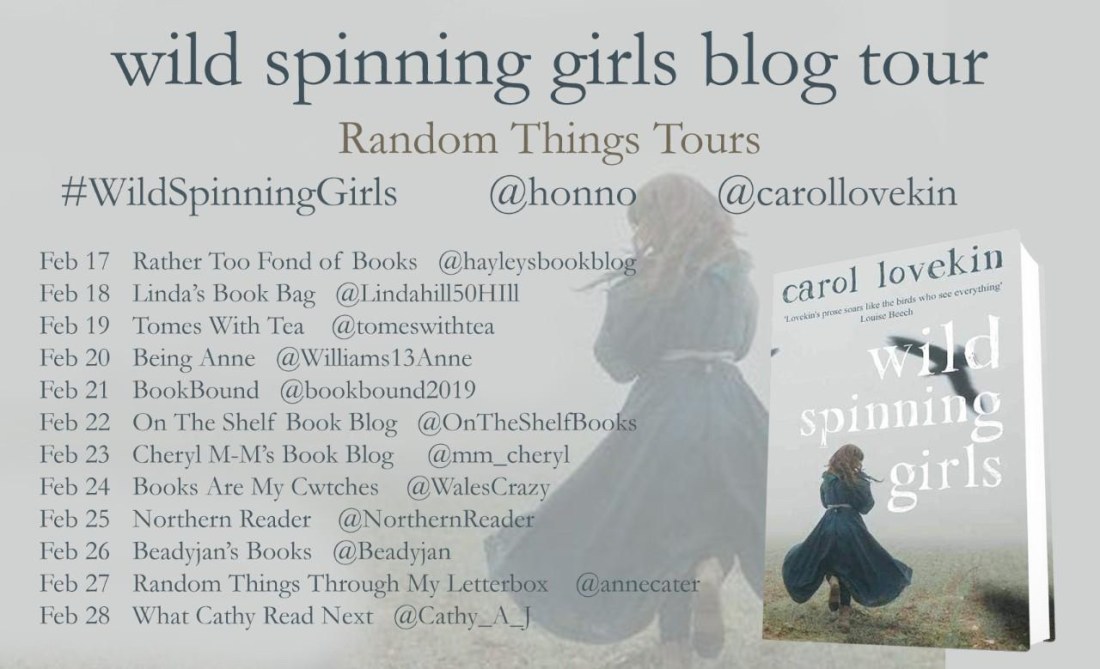
Well I began with an absolute treat! My first, but definitely not my last Carol Lovekin novel, was the perfect novel to begin a wild February! Steeped in mysticism and feminine power it was an absolute pleasure to read and review as part of the Wild Spinning Girls blog tour.

Carol was so lovely to work alongside and took the time to show her appreciation for the dedication of bloggers everywhere. In case you missed it you can find my review right here

Carrying on with Blog Tour theme I was lucky enough to manage to grab a spot on the blog tour for The Foundling by the incredible Stacey Halls.

As expected the novel was stunning! Immersive and impeccably researched. My blog tour review goes live tomorrow…watch this space…

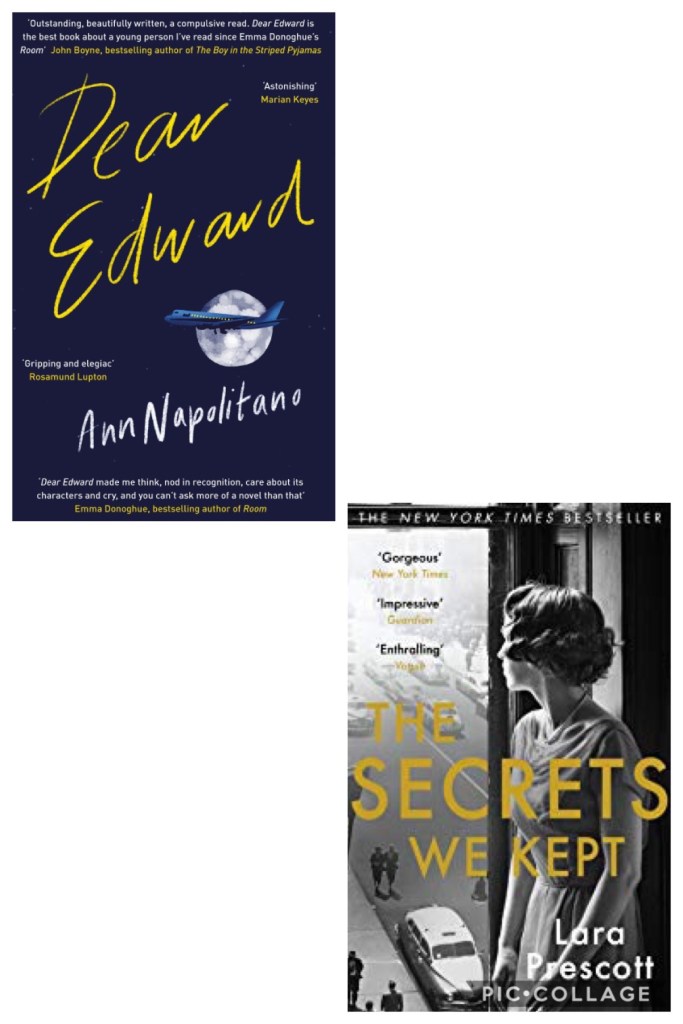
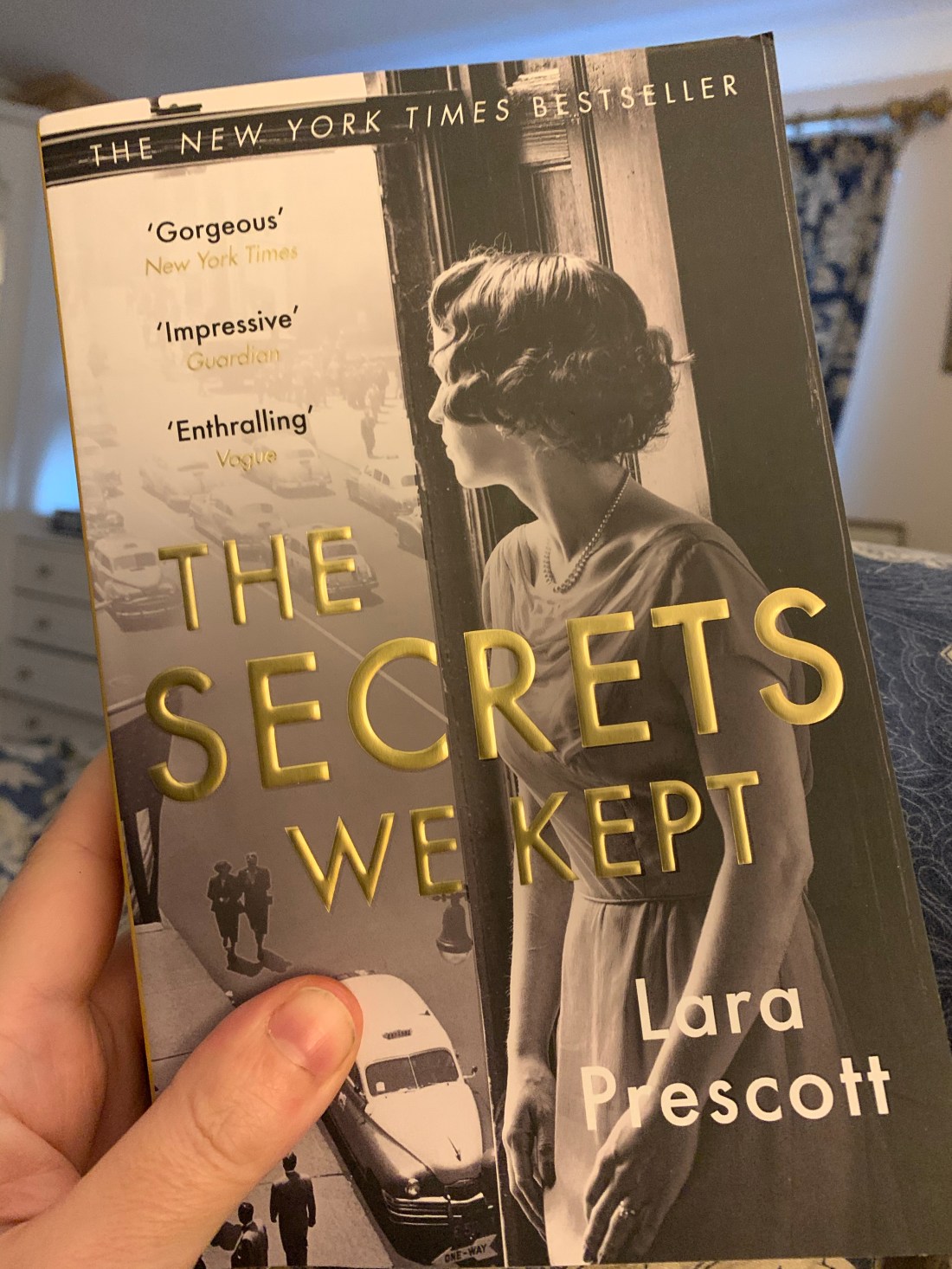
As always I have to say a huge thank you to those lovely people who have sent books for me to enjoy this month. I honestly never take this privilege for granted. This month I have read three such books ; all very different but all equally delightful. My blogger reviews of the gripping The Secrets We Kept by Lara Prescott and life affirming Dear Edward by Ann Napolitano can be found on the blog.

Finding Clara by Anika Scott , the third of this trio, was an interesting and thought provoking read.

It is set in Germany, just after World War Two and it focuses on what it was like to be within a country that has lost a war. The novel focuses on three characters. Clara, an heiress who’s father is awaiting trial for War Crimes and is herself wanted by the British Military Police. Jakob, a wounded war veteran, doing what he can to support his family and Willy, a teenage boy, living in an abandoned mine, labouring under the misconception that the war is still being fought.

These characters bring to life the reality of defeat and explore the grey areas of war. What is acceptable and who is ultimately responsible for their actions in a time of chaos, when normal rules don’t seem to apply.

It was refreshing and often quite challenging to consider this time in history from a new perspective. Definitely one I would recommend and thank you Klara Zak for my gifted copy.

Finding Clara is published on 5th March by Hutchinson Books and can be preordered here

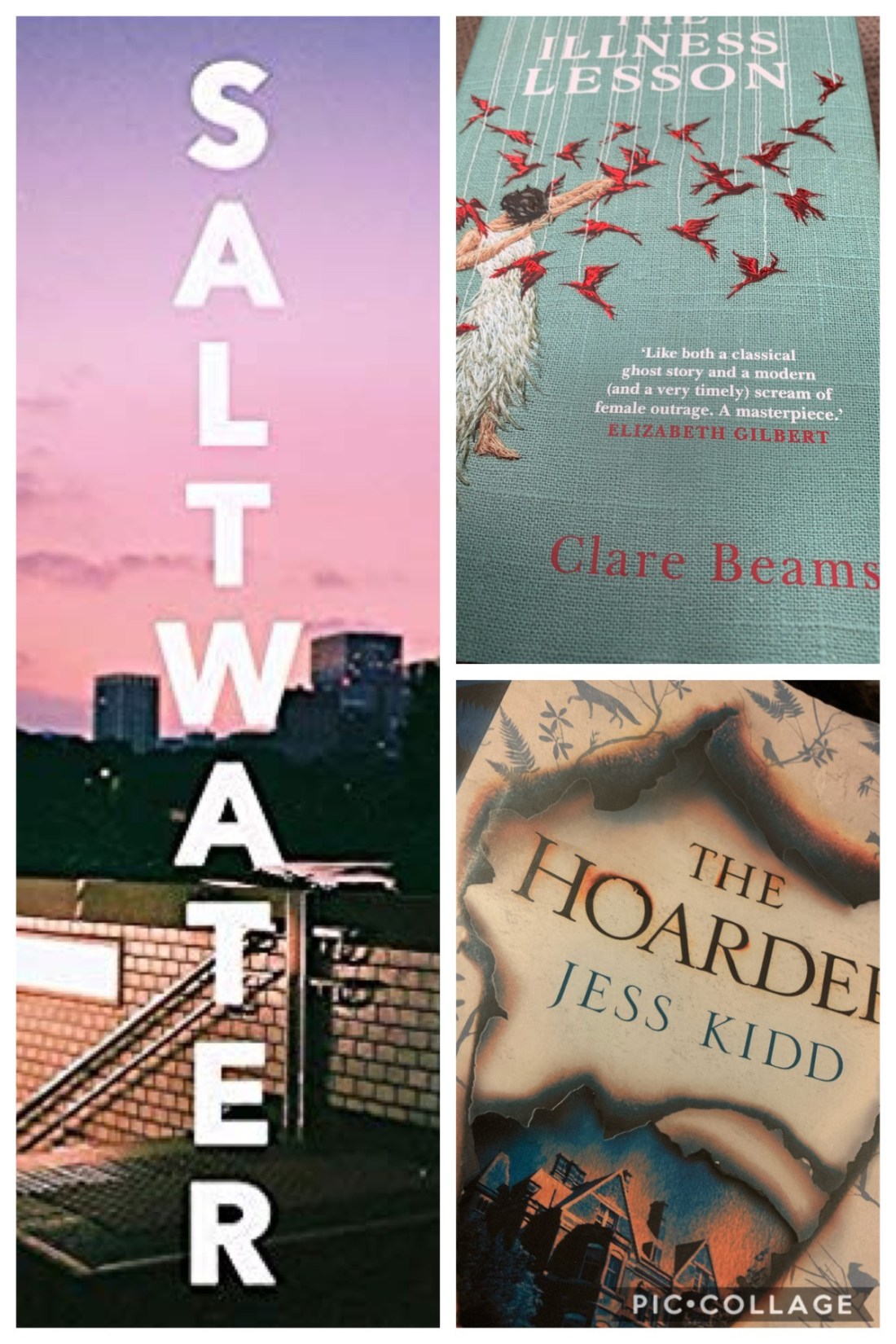
In other fiction news this month I have been catching up with some longstanding recommendations. When numerous knowledgeable bloggers start shouting ‘You have to read this book!’ experience tells me to listen and obey. Falling into this category this month have been the deliciously quirky The Hoarder by Jess Kidd, (late to the party! I know!) and the recently released and superb The Illness Lesson by Clare Beams. Add to that list the unique and haunting Saltwater by Jessica Andrews and you can see this month has contained some stunners.

It seems to be becoming a theme in my reading at the moment but I have also started to revisit books. This month I read for book club My Cousin Rachel by Daphne Du Maurier. If you haven’t read it, do! It’s a master class in dramatic tension and plot twists. Audiobook wise I am continuing to work my way through the gorgeousness of The Cazalet Chronicles by Elizabeth Jane Howard; Confusion completed Casting off begun.

This month has contained many treats but I have to say the last day of the month threw me something special! Last night I had the pleasure of experiencing my first Hollie McNish performance. Just amazing!!!

First performance maybe…definitely not my last!

Thank you February! Wild weather aside, it’s been a stonking book month!

Blog Tour Review : Wild Spinning Girls – Carol Lovekin.

If you are looking for a novel steeped in atmosphere then look no further…

Let me introduce you to Wild Spinning Girls by Carol Lovekin.

I am thrilled to be on the Blog Tour for this unique and special book, one which grabs you from the first and pulls you in, weaving it’s spell gently but very definitely through each page. Huge thanks to Honno Press and Anne Cater for my gifted copy and the opportunity to be on the tour.

This novel starts with grief and loss. Ida is 29 and her world has turned,quite suddenly, upside down. Just weeks after losing her job in the local book shop, she suddenly and unexpectedly loses both parents.

Although Ida is grieving for both parents, it is the loss of her mother which affects her most profoundly. Her mother, Anna, was her idol. A famous and talented dancer, she was everything that Ida has aspired to be. Without her she feels untethered, lost.

But as much as Anna was a source of inspiration for her daughter, she was also a source of guilt and regret. For it was in her mother’s plan that Ida should follow in her footsteps, but an injury, for which Ida stills blames herself, scuppered these plans. It quickly becomes clear that even before the loss of her parents and her job, Ida is a soul at sea. She is trapped in regret and disappointment, looking to find herself and in denial about who she truly is and what she desires in her life.

The catalyst for change comes in the form of Ty’r Cwnwl or Cloud House, the remote Welsh property that her father, David, has left her in his will. Feeling cut off from the rest of her life, unsure which direction to turn, Ida heads to the house, unsure of what she will find and the decisions she will make.

Ida’s early childhood was spent in the house, but her memories are sketchy at best and she remembers little beyond fleeting images and her mother’s dislike for the property.

She arrives expecting to find the house empty, and she is shocked to come face to face with Heather, a fiery teenage girl, who lets herself into the house on Ida’s second morning there. Heather feels strongly that the house is part of her heritage. She too is grieving, her mother Olwen , tenant of Ty’r Cwnwl, having recently died.

Olwen was seen as a local wise woman. In tune with the elements, knowledgeable about plants and their medicinal properties, she is another strong matriarch. Heather believes that she is connected to the house in mystical ways. She too wants to live up to her mother’s expectations and is fighting her way through her grief.

Heather, the house and it’s surroundings all seem to belong to a different time. They are bound up in mysticism and magic. The dark birds that surrounding the property seem to Ida to be malevolent. One room particularly seems infused with the spirit of Olwen. Here there is a locked bureau, the smell of apples pervades the air and the temperature is unreliable.

Ida is so trapped by her grief she is unable even to dream. The exact opposite to the wild, untamed Heather, Ida struggles to come to terms with her new life, surroundings and next steps in her life.

Thrown together by circumstance the two women’s relationship develops along an uncertain and fractured path. Both are looking for answers, and both will be shocked by the secrets that the house slowly reveals.

This is a story that is beautifully told. The language and imagery is evocative, creating a real and at times painful representation of grief and self discovery.

The prose is lyrical but grounded in reality. There is that very familiar sense attached to grief of moving two steps forward only to pulled backwards again by a misplaced word or memory.

The novel also a celebration of the strength and wisdom of women. This is portrayed not only through the two key characters of Ida and Heather, but through the community of women that surround them. The strength of the female voices carry forward the theme of self discovery and acceptance. It is infused with the sense of women building each other, helping to each other to face truths and grow.

Wild Spinning Girls is a beautiful treat of a novel. It is insightful, thought provoking and skilfully crafted. The premise is a simple but powerful one; it is the beauty of self discovery and healing.

A magical gem of a novel!

Enjoy

Rachel x

Wild Spinning Girls by Carol Lovekin is published on 20th February by Honno and can be purchased here

And there is more…

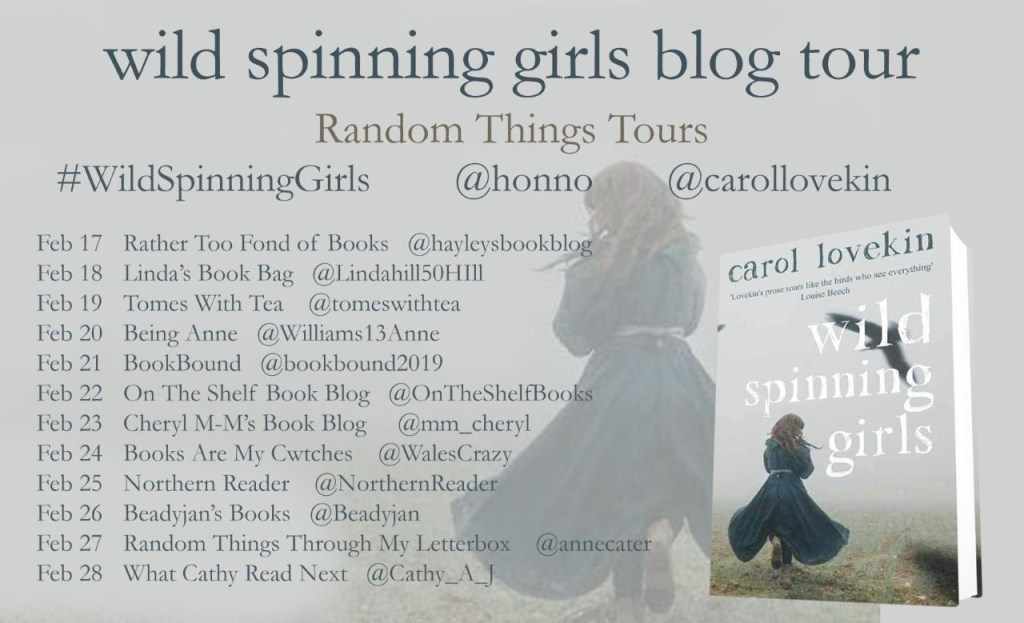
There are many more fantastic bloggers just waiting to tell how fabulous Wild Spinning Girls is! Check out the remainder of the blog tour! Dates below!

Book review: Dear Edward – Ann Napolitano

Dear Edward by Ann Napolitano is a book I have had sitting on my book trolley since the summer of last year, when the gifted copy ( plus very welcome chocolate!) dropped through the letter box.

I haven’t deliberately neglected or avoided this book. Far from it, in fact I have been drawn to it just about every week. Instead I have been saving this book, hoarding it you might say. Because I knew from the premise, the reactions of other trusted bloggers and the overall buzz surrounding it I was going to love it.

And, fickle and rather shallow book beast that I am, when I really love a book I struggle not shout about it almost immediately. So I have waited until just before publication day to read it, and by the time you read this review it will be available for you to enjoy.

191 DIE IN PLANE CRASH; 1 SURVIVOR.

This statement of fact is indeed the crux of this story. It’s the truth at the centre and the catalyst for everything that happens within it.

It is also the reason my husband wrinkled his nose and declared, sarcastically; “Looks like a cheerful book.”

And I suppose that there is every reason to think this might be a dark read, wrapped up in tragedy and fear. But actually nothing could be further from the truth.

The story centres around Edward Alder, a twelve year old boy who is the only survivor of a plane crash in June 2013 which kills 191 others; his father, mother and older brother, Jordon are amongst the dead.

Getting on the plane as a family of 4, flying to begin a new life in California, Edward wakes up in the hospital, an orphan. Known as Eddie before the crash, this young boy has to come to terms with his loss and trauma. As part of coping strategy, he chooses to abandon the name Eddie, becoming Edward instead.

From the beginning of his new life, with his Aunt Lacey and Uncle John, Edward is fighting to create his own normal. His new room is the unoccupied Nursery in John and Lacey’s house, the room created for the babies that never came. Unable to sleep here, unable to find peace anywhere, Edward connects with Shay, the girl next door. Individual, quirky, with demons of her own, Shay offers no judgement, has no emotional baggage and lets Edward come to terms with things in his own way. It is in Shay’s room that he sleeps, comforted by her steady presence in the same way he was anchored in a previous life by his brother.

The story of Edward’s gradual return to being is one time frame in the book. It is juxtaposed, chapter by chapter by another; that of the final hours of Flight 2977. Here we come to know something of the other passengers, see inside their lives and know them as more than just nameless victims .

We meet Florida, a vivacious woman, alternative in her outlook, possessor, she believes, of many previous lives, with bells on her skirts and an abandoned husband behind her.

There is her ‘row- mate’, Linda. Desperate for the love and acceptance she never found from her parents, she is flying out to LA to meet her new boyfriend, harbouring a secret and hoping he will propose.

And Benjamin; US solider, flying back home to his Grandma, mentally and physically broken; questioning who he is and where he is going.

These are just a few of the lives that are lost, just a few of the hopes and dreams that die that day. Because what Edward learns as he moves forward is that it isn’t just enough to survive this plane crash. You have to take the life that’s left to you and live it.

The trouble is he isn’t sure how to do this. Equally his Aunt and Uncle, desperate not to cause him further pain, don’t know how to help him. When Edward becomes the focus for the grief of the families left behind John and Lacey do everything they can to protect Edward, to stop him being swept aside by the tide of pain and intensity behind it.

It is in an effort to keep him safe that they choose to hide the letters from him. Letters written to him from the families, pouring out their grief, looking for answers and comfort, seeking affirmation and commitment.

So when Edward and Shay discover these letters late one night, what will they do to Edward? Will they push him further in to pain ? Or will the love of the other families and the very real mark each of the victims has made on this planet start to heal him?

This is a book, that despite it’s central event, celebrates life. In a strange twist this story embraces tragedy and uses it as the catalyst to throw life, in all it’s many and varied forms, into stark relief.

Dear Edward is a celebration not a wake. Make sure you take the time to join in.

Rachel x

Another Unplanned Book Review : The Secrets We Kept – Lara Prescott

I have said it before and I will say it again but the thing I love most about Book Twitter is the unexpected gems it throws in your path. Earlier this week I seized upon the offer of a copy of The Secrets We Kept by Lara Prescott. The gifted copy, sent by Sarah Ridley was awaiting me later in the week and it quickly threw all my weekend reading plans into disarray…

And I am so glad it did!

You could classify this novel as ‘the story of a story’. For at it’s heart it is the story of how Dr Zhivago, written by Boris Pasternak behind the Iron Curtain, made it to the Western world. It is the story of the price that was paid and the repercussions that were felt in both the East and West following the novels publication and international reception.

Named after the heroine of Doctor Zhivago, Lara Prescott has scrupulously researched and represented this extraordinary tale. Her portrait of Pasternak is of a complex, driven man, willingly to suffer for his art, passionate but sometimes blind to the consequences of his actions, both for himself and those around him.

The novel opens with his longtime and pregnant lover Olga Vsevolodovna being set to Gulag for her association with Boris and her refusal to betray him and his work.

And from this beginning we are left in no doubt who be the focus of this story.

For it is the women who drive this incredible narrative forward, both in the East and the West. And equally it is the women who are chronically underestimated.

Told by alternating from East to West,the story has all the hallmarks of a classic Cold War tale of spying and intrigue. But it is so much more. And it’s power lies within it’s characterisation.

Each chapter marks the evolution of the women at the stories heart. The changing character of the women as they move along their journeys of intrigue are marked, quite literally, in the changing nature of the titles.

There is real and genuine sense of voice in this book. Take for example the character of Sally, an experienced agent, a Swallow; her narrative manages to be both breezy and heartfelt, driving the plot along .With an inner steel, she is playing the long game, embracing duality and a changing persona. And ultimately revenge.

Or Irina, in whose heritage East and West come together, who is quickly proven to be so much more than a typist and who finds an unexpected and powerful connection with Sally. The relationship that develops between these two women might appear to be a subplot, but it is in fact intrinsic to the body of the novel.

Far more than the sum of it’s parts this is a celebration of love, sexuality, belief and talent, all wrapped up in a cloak of power, glamour and danger.

So glad I found it!

Rachel x