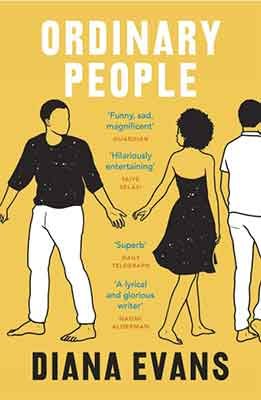
Finally finding time to catch up on my Women’s Prize reading, Ordinary People by Diana Evans has been a welcome addition to my Bank Holiday reading.
Without, I hope, sounding too simplistic or glib this is a book where the title really is a perfect reflection of the book’s content. Because this book is in it’s essence just that; a book about Ordinary People. Ordinary people, living ordinary lives, facing ordinary challenges. And it is all the more powerful for it.
This is the story of two couples; Stephanie and Damian, Melissa and Michael. Stephanie and Damian live in the suburbs, have three small children and problems in their marriage. Damian is grieving the recent loss of his father, but more than that he is grieving the loss of the city. Moving out of London was not his choice, it takes him further away from his dreams of writing, of breaking away from his desk job, further away from his roots. Stephanie loves where she lives, is devoted to her children; it’s Damian and his dissatisfaction that is the pebble in her shoe.
Melissa is striving to embrace her new ‘stay- at- home -mother’ status, whilst trying to freelance and maintain her identity. She is resentful of Michael; watching him moving carelessly through the world she can’t help feel that she is the one making all the sacrifices for their young family. For his part Michael is missing the woman he fell in love with, struggling to connect both emotionally and physically.
The prose of this novel is involved and detailed, and the devil is most certainly in the detail. Writing about the ‘ordinary’, the everyday day details that we too often dismiss as unimportant, is not as easy as it seems. Evans manages to convey that these little details, those that we dismiss as insignificant are actually anything but. The ordinary, however much we might long for the extraordinary, is the bedrock of our day to day lives.
As a reader and as a mother this wasn’t always a comfortable read for me. Like staring into a mirror I often saw myself reflected back. I am a mother, a mother who has over the years worked full time, part time or not at all. A mother who has juggled the need for her own identity with the need to raise her children in the best way possible. There have been times when, like Michelle, I have screamed silently, and may be not so silently, feeling lost and alone in this strange new world, so far from my old self that I was worried I had lost my soul forever. I have zigged zagged between trying to be a domestic goddess and a vibrant independent Mum, trying to the answer that age old question; “Can I have it all?”
Here we see central characters that are moving through that fog of parenthood. Negotiating the paradox of overwhelming love but also that intense craving for your own space, just craving yourself, looking forward to the future and back to that person you used to be. Evans presents a skilful examination of what it means to be a couple, the compromises and sacrifices we make to to keep things moving and what happens when that balance shifts and one person is left feeling adrift and untethered. In Stephanie, for example, we someone settled in her role of wife and mother; her frustration lies in Damian’s unwillingness to keep pace with her.
Evans examines how couples fit together and how that unity changes as life happens around it. Can Michelle and Michael weather the tide of parenthood? Or will the reality of children seep, like water into the cracks of their relationship, splitting them further apart.
Framed by two pivotal moments in recent history, Obama’s Election and Michael Jackson’s death, there is no doubt that race and black cultural identify are key themes within the novel. Damian feels he has betrayed his roots leaving inner city London, Michelle is clinging to those not so small details from her childhood, desperate to pass her cultural identity on to her children. For her is important to make eba and stew just like her mother, just as it is important to eat rice with a spoon and a fork. We are back, once again, to the fact that those small factors add up to a larger, more defining whole . The characters within the novel make us question whether can we hold on to our own identify within a relationship? Can we grow together and as individuals, fitting together but also maintaining the essence of ourselves?
And yet, this book is about more than race. It is about place and how place shapes us. Is your identity tied to a place or is it held within you? Damian and Michael are wedded to the city. Damian has left London and is miserable, feeling he has betrayed his roots. Michael is unwillingly to consider moving, even when increasing street crime comes ever nearer to his door. Stephanie has the house she dreams of, but can’t get Damian to engage. Meanwhile Michelle is trapped in a house she grows to hate, so much so it almost takes on a sinister life of it’s own. It is no coincidence that the catalyst for both couples occurs when all are away from London; a new sense of place, new minor details, a new ‘ordinary’ and things are forced to move on.
By weaving together all these elements Evans brings us a stunning novel with the question of identify and all it’s variants at it’s very heart. It brings into the focus how we hold on to what is important to us as an individual, however big or small that may be. It questions whether the choices you have made have lead you to life you are destined to live or the life you have settled for.
Bravo, Diana Evans; you have made the ordinary extraordinary.
This week I have read a couple of amazing books. Both The Doll Factory and The Rapture are books that I have mentally filed under ‘potential rereads’. This means they are books that either I have enjoyed so much I can’t wait to dive back in or books I think with be enhanced by a second reading.
But there is a third category of ‘read again books’ . There are those which are my ‘comfort reads’. Books that are so wonderful, so familiar, that sinking back into them is like wrapping yourself in a blanket and shutting out the world.
These are the books that I have had deep relationships with, quite often going back years. They are books that have touched some part of my soul. Often the love doesn’t just come solely from the words within the book but also the context in which which I read them. Who introduced me to the book? What was going on in my life at the time?
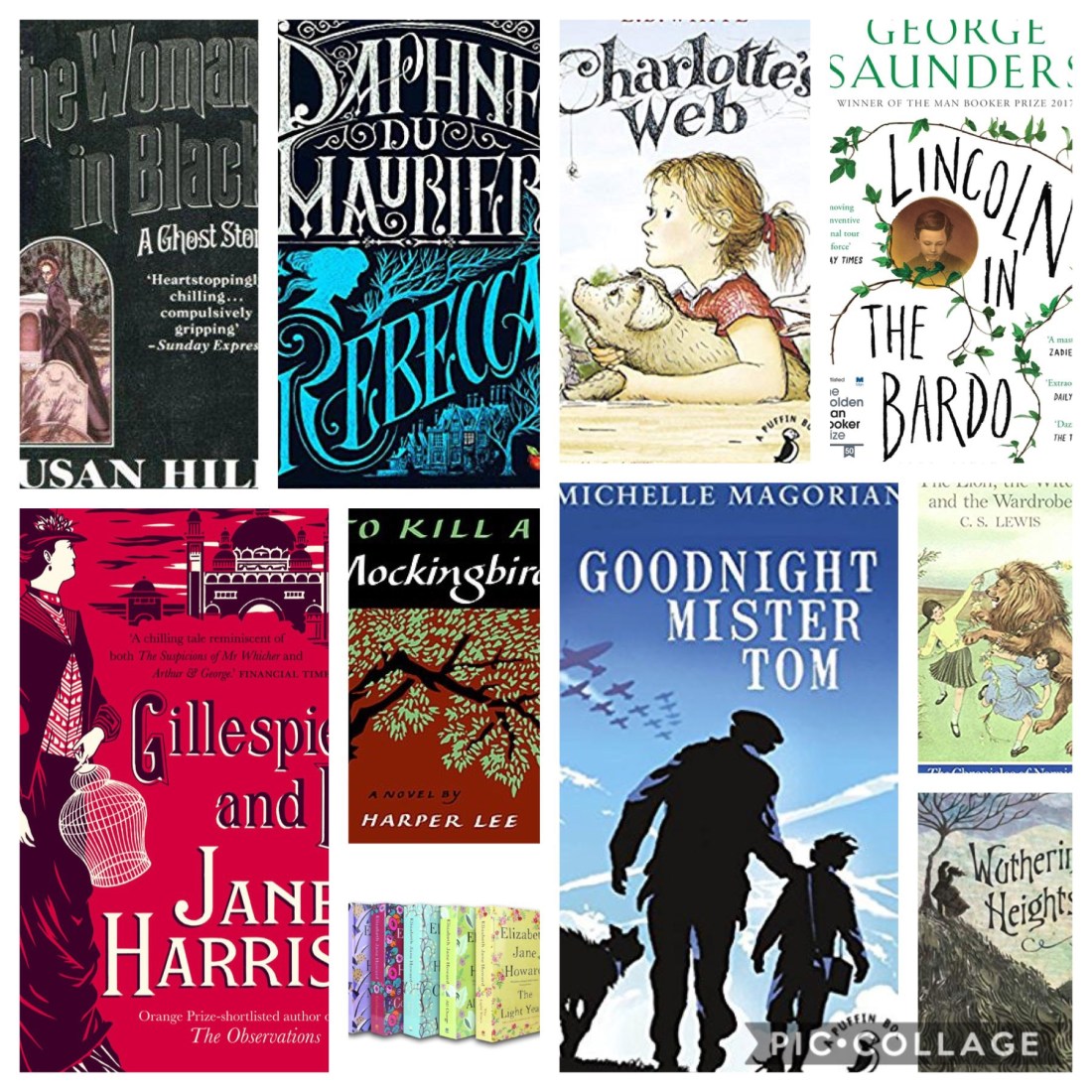
It got me thinking , wondering if I could come up with a list of my Top Ten Comfort Reads. Actually it was easier than I thought. Because this isn’t a list of my favourite books or books I would like to reread, it’s a list of books that have very special place in my heart, and it takes more than being just a good book to get there. These are the books I get a wee bit emotional about, books I might just own multiple copies of and they are the books I struggle to debate logically. I would defend these books to the death, in much the same way I would a family member.
This list spans the whole of my reading life so far, so you will notice there are a few children’s books included. I make no apologies for that. Great children’s literature lasts a lifetime and it was definitely my experiences as a child that made me into a life long reader.
So…on with the list.
1. Wuthering Heights – Emily Bronte
I first read this classic when I was 14. I was lucky enough to have several fantastic English Teachers and one of them suggested that I should give this haunting tale a go. I was hooked immediately, drawn into the brooding dark world of Cathy and Heathcliff, marvelling at the intensity and passion of the writing.
I knew very little at this point about the Bronte’s, but as I grew older and more aware, my fascination and awe only grew. How did a young women like Emily Bronte, with her relatively limited life experiences, write such a beautifully dark masterpiece? Imagination, that’s how. If any one book can show you what the creative human mind can achieve for me it has to be Wuthering Heights.
Don’t get me wrong, I am not one of those people who is passionately in love with Heathcliff. On the contrary Heathcliff terrifies me! But I am in love with the intensity and emotion of Cathy and Heathcliff’s relationship. I am drawn back time and again, and like a moth to a flame, watching them destroy themselves for a passion that is just too overwhelming for them to control.
Every time I ‘hear’ Cathy tell Nelly:
” My love for Linton is like the foliage in the woods: time will change it, I’m well aware, as winter changes the trees. My love for Heathcliff resembles the eternal rocks beneath: a source of little visible delight, but necessary. Nelly, I am Healthcliff“
my heart breaks all over again.
I have read this book nearly every year since our first date; 35 years of wandering the moors! I don’t see me stopping any time soon.
2. The Lion, the Witch and the Wardrobe – C.S. Lewis
Another book brought to me by a wonderful teacher! Mrs Roberts read this to me when I was 7 years old. At the end of every school day our class would sit on the carpet, some of us bookworms following the story in our own copies, and disappear into Narnia.
I was entranced from the first word, captivated by the idea that there were other worlds waiting to be discovered, magical lands, strange creatures and all of covered in snow!
I reading and read my copy until the cover quite simply disintegrated. I think I have been through more copies of this one book than any other. I made my way through all the Chronicles of Narnia but L,W &W will always be my first love.
A few years ago I shared the book with a class I was teaching. A group of young people with Special Educational needs, they were immediately drawn in. Towards the end of the book we set off on an outdoor learning day. It was winter and we headed up through the Lakes to a snowy tarn. We climbed up through a snow covered forest, passed a frozen waterfall, followed a tame robin through the trees and sat by the lake to read the last chapter. We were just packing up when the trees behind us came alive with the sound of barking and howling. Every child screamed’ The Secret Police’! Actually a pack of trail hounds being exercised, but the joy on their faces that day was beyond belief.
I didn’t think I could love this book anymore than I did. Thanks to that day I was proven wrong.
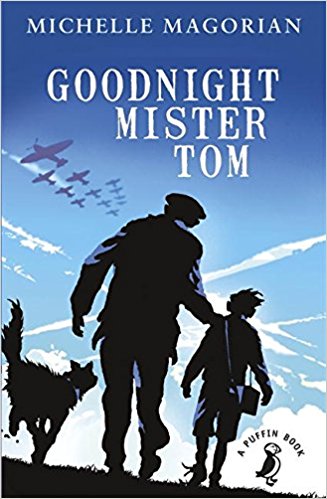
3. Goodnight Mister Tom – Michelle Magician
I honestly don’t know when I first read this book, or who introduced me to it. This story of Tom and his love for the evacuee Willie Beech has been with me for what seems like forever.
Set in WW2, it is the story of how two broken hearts are mended through patience, respect and an unconditional love. It is a story of second chances and uncovering talents.
It is a book that is also filled with heartbreak. Magorian doesn’t shy away from difficult subjects, she doesn’t patronise young readers into thinking the world is a completely safe place. But her characters provide hope. No one is perfect, everyone has flaws, but equally they have individual talents, no child is written off.
This is hands down that book that I have recommended most often to older children over the years. I must have bought at least 20 copies to give as gifts. It is the book that my Grandad read in his 90’s and loved, despite ‘not being much of a reader’. Everyone needs a little bit of Mr Tom in their lives.
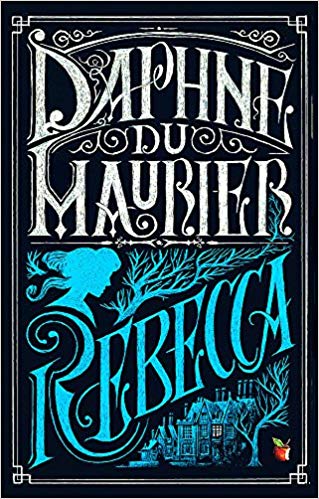
4. Rebecca – Daphne du Maurier
It never ceases to amazing me that I am so drawn to this book; a book whose author on first meeting is so meek and cowed by the situation she finds herself in, that she never even revels her own name.
For the ‘Rebecca’ of the title is not the strong lead character we might expect, she is the foreboding first Mrs de Winter. Dead, but most definitely not forgotten. Her presence spills out of the pages, kept alive by the formidable Mrs Danvers, whose grief has warped into something dark and sinister. The very creation of this character is a masterclass in how to create an atmosphere of menace.
This book was first published in 1938 and it has never been out of print. Nor does it feel dated or any less vivid than it did at the time of publication. It truly is a timeless classic.
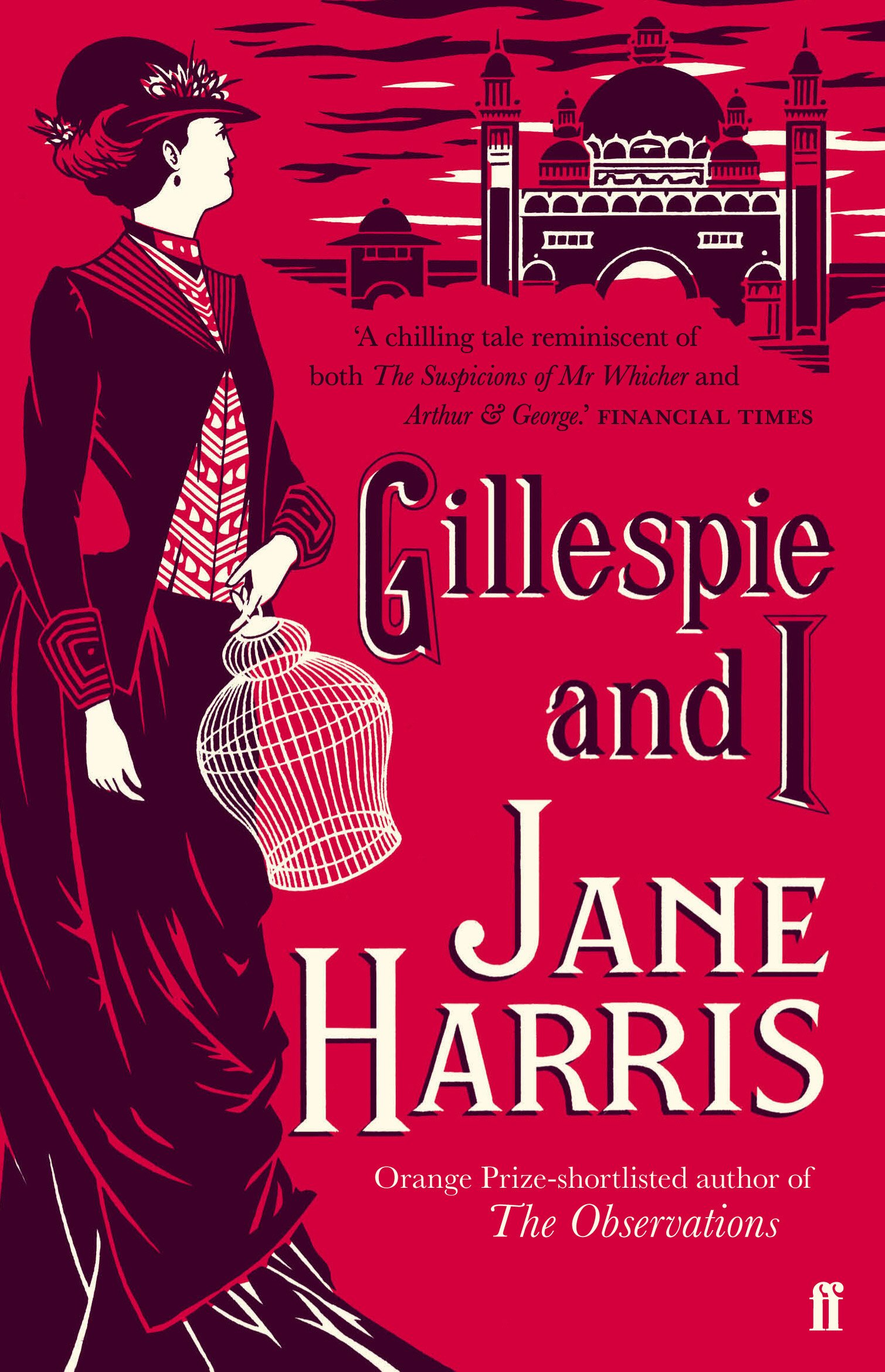
5. Gillespie and I – Jane Harris
This is a late entry to the top ten! I first read this book in 2011, the year of it’s publication. Like du Maurier, Jane Harris has used a strong, quick witted female character to build an air of pervading menace. The difference is that character is very much alive.
A book set across two historical time periods, it is the tale of the spinster Harriet and her relationship with Glasgow painter Ned Gillespie. It is a book which is constantly evolving before your eyes, each page throwing up more questions than answers. It is a book which is hard to read in a linear fashion. I guarantee that you will be flicking back and forth, questioning what you have read as new revelations come to light.
I must have reread this book at least 5 times in the last 8 years, and it never gets tired. Each time there is a small detail I have missed, something that takes the air of suspense and doubt to the next level. It is a story woven with the finest skill. If characters you love to hate are your thing, then this one is a must read.
6. To Kill a Mockingbird – Harper Lee
Quite possibly this was the first piece of great American Literature I read. I was around 15, studying for my GCSE’ s and busy developing my own social conscience. Maybe I was a late developer, or maybe I had been lucky enough to be raised in a truly multicultural school but To Kill a Mockingbird was a benchmark in my understanding that the world wasn’t always a very nice place. It was in these pages that I was first understood what racism really looked like. It wasn’t just that list of words you shouldn’t say, it wasn’t name calling in the dinner hall; it was a systematic denial of opportunity, human dignity and justice.
Harper Lee’s great novel sparked my interest. It opened my eyes to injustice and inequality. It led me on to other great American novels, such as Toni Morrison’s Beloved, Alice Walker’s ‘ The Color Purple’ . It is the book that I will return to time and time again when I need a quick reminder of how far we have come and just how far we still have to go in upholding human rights for everyone.
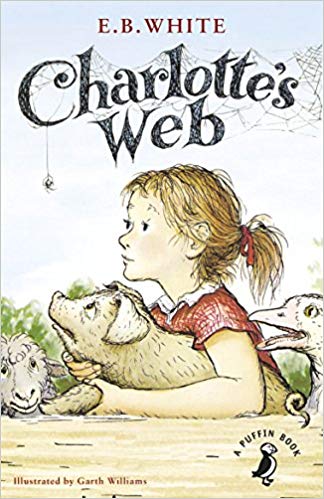
7. Charlotte’s Web – E.B White
Another book read to me by the lovely Mrs Roberts, this book was the cause of two firsts in my young life.
Firstly it was the first time I had ever truly cried at a book. I remember reeling in shock when Charlotte died, alone in the corner of the fairground. It was the first time that I had read a book where everything didn’t ‘turn out all right in the end’. My seven year old self was blown away by the fact that Charlotte wouldn’t be around for ever.
And suddenly it dawned on me, that I wouldn’t be around for ever either. Charlotte’s web was my first understanding of mortality, my own and other people’s. And yet it wasn’t a terrifying experience, it was oddly comforting that life went on without Charlotte. Yes, people were very, very sad, but no one forgot her; she was alive in their memories and in her children .
Charlotte’s Web taught me lots about life and death. It taught me about friendship and how helping other’s brings it’s own rewards. and it still reminds me to make the most of every single day because tomorrow is not guaranteed.
8. The Cazalet Chronicles – Elizabeth Jane Howard.
Ok, so technically this might just be cheating, as this is a series of books not just one. But quite frankly it is my list and therefore I make the rules.
I found the first 4 of these books on my Mother in Law’s towering book shelves during the summer I finished University. Searching for something to read my eyes landed upon The Light Years, and away I went, swept up in a family saga that begins in 1938 and ends in the mid 50’s.
It has everything; love, life, death, marriage, deceit, birth, divorce. Three generations of Cazalet’s guiding you through their lives, growing and maturing before your eyes. Draw up a chintz chair in the Duchy’s drawing room and I guarantee you won’t want to leave.
A semi autobiographical account of her marriage to Peter Scott, this is Elizabeth Jane Howard’s masterpiece. My copies are dog eared, and the audiobooks, read perfectly Penelope Wilton got me through half marathon training. Even typing this I am coming over all nostalgic and misty eyed!
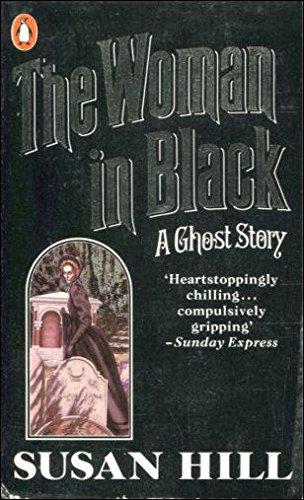
9. The Woman in Black – Susan Hill
Ok, so I might be deviating slightly from the ‘warm fluffy blanket comfort read’ brief here, but this book is always going to be in my top ten rereads list.
Another throwback from my teenage years, when I was experimenting with scaring myself half daft with Stephen King, another of my wise teachers suggested I might like to try this little gem. She explained that it wouldn’t be the level of horror King was dishing up but I might enjoy the psychological element.
Long story short, I scared myself witless and I loved it! Set in a house surrounded by marshes, only reachable by a causeway often submerged in water, a young solicitor is sorting the affairs of a recently deceased widow. The locals are suspicious and reluctant to help, never a great sign, and the scene is set for one of the best ghost stories of the 20th century.
This is a short novel, but it is 192 pages contain some of the most precise writing you will ever read. There isn’t a word out of place and every single page builds to it’s terrible conclusion.
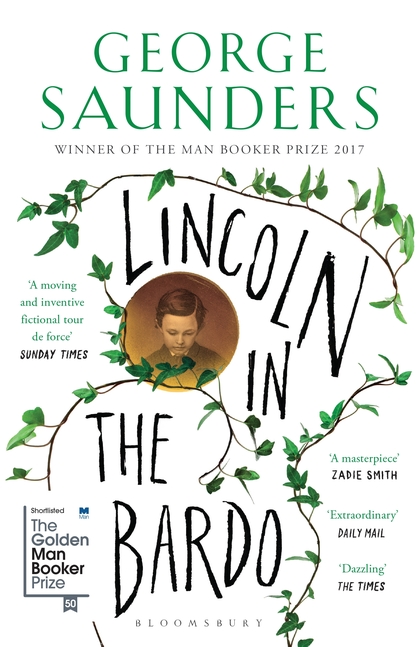
10. Lincoln in the Bardo – George Saunders
This 2017 Man Booker prize winner is the most recent addition to my little list. It is there quite simply because it blew me away. I read it in the Spring of 2017, immediately recommended it to every single person I knew, and read the whole Man Booker long list that year, just in case there was something better out there.
In essence it is the story of Willie Lincoln, young the US president who died from typhoid fever, age 12. Saunders takes the President’s grief and makes it the centre of portrayal of the Bardo; a place that is sandwiched between life and death. The novel is populated by a cast of characters, all trapped in the Bardo, all refusing to move on because of unresolved issues in their life.
Saunders plays with style, plays with emotions and turns everything we expect on it’s head. It is one of the best portrayals of grief and loss I have even experienced in literature. There is great pathos and regret, but also tremendous black humour providing a great insight into the human condition.
Since first encountering this book, almost exactly 2 years ago I have reread it 3 times and listened to the audiobook once. Every time I see a copy in a charity shop, I want to push it in to someones hands and say ‘ Take it, read it, love it.’ It may just have become my obsession.
So there you have it, my very personal list of comfort reads. All there for different reasons, but all books I hold lightly in my hands but close to my heart. I doubt anyone out there will have the same list as mine and neither should you.
However I would love to know what your top ten would be. Who wants to go first?
It’s been a cracking reading week so far this week. And it’s only Wednesday!
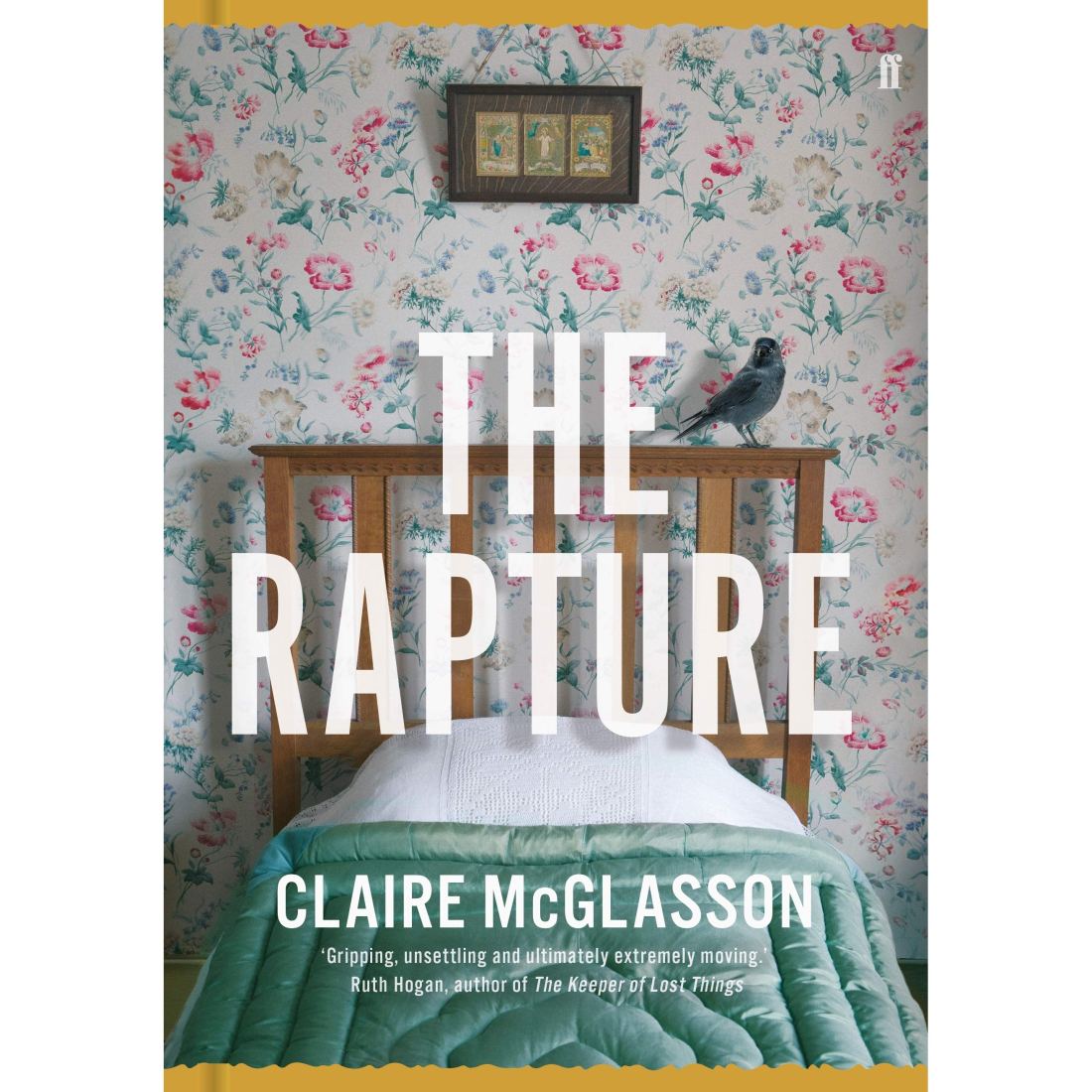
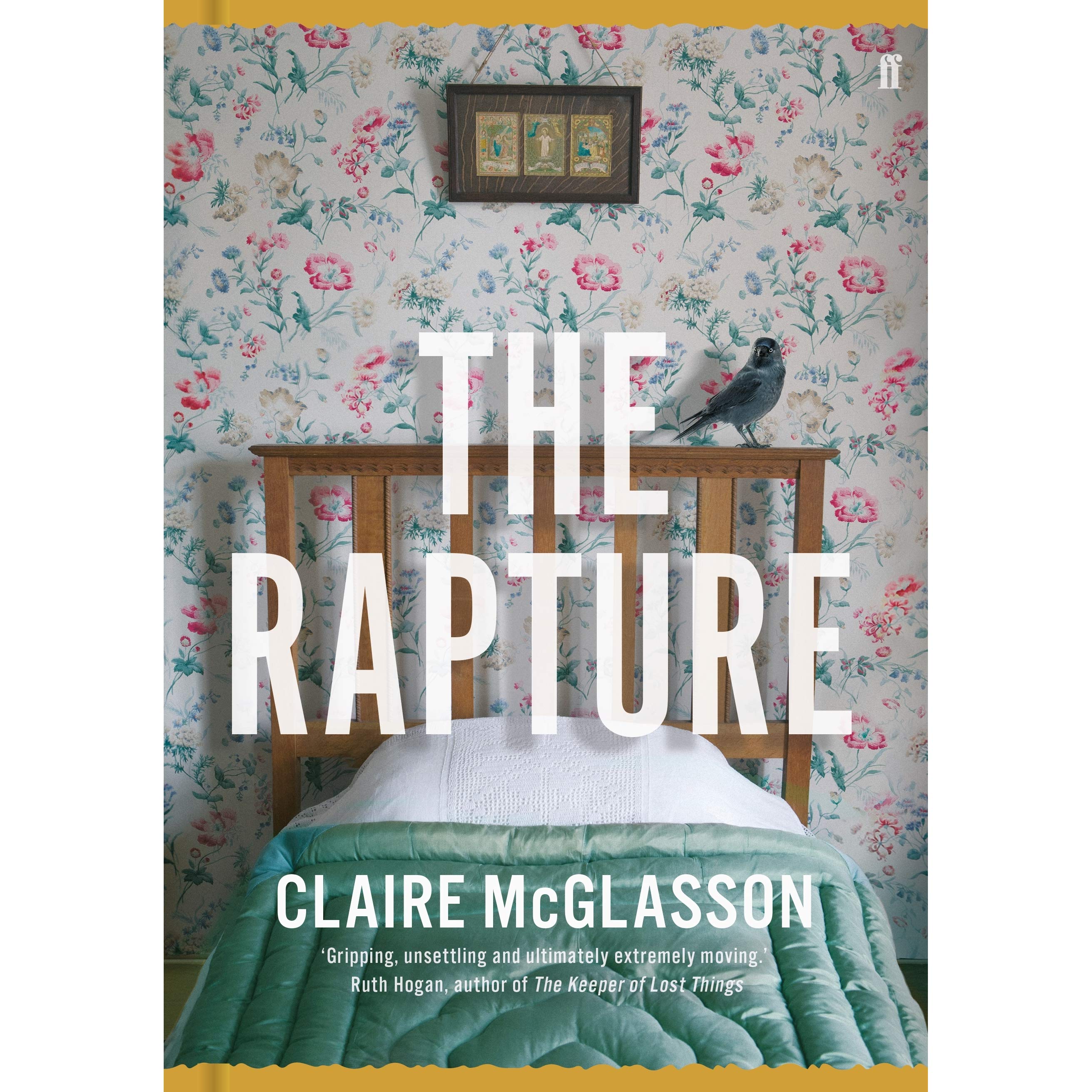
First the excellent The Doll Factory by Elizabeth Macneal,and now The Rapture by Claire McGlasson.I was lucky enough to have received a copy of this book from Faber and Faber in exchange for an honest review. And it has been my absolute pleasure to read and review.
It is a well documented fact that truth is often stranger than fiction and the tale told in The Raptureis the very embodiment of this. Open the pages and you are taken back to 1920’s Bedford, England. In the years following the Great War a women, Mabel Barltrop, Vicars wife and mother of four, believed herself to be the daughter of God. Styling herself as Octavia, she drew a following of women who set up their own religious community; The Panacea Society. The women believed they were working towards the end of days and the opening of a box sealed years before by the prophetess Joanna Southcott. They believed that by persuading all 24 Bishops to accept the supreme rule of women than the answer to all despair would be revealed upon the opening of the box.
Are you gripped yet???
And so begins McGlasson’s skilful imaging of this intriguing story. Told from the perspective of Dilys, the youngest member of the society, events slowly unfold. At first this seems a very domestic and civilised cult. A wry, humorous tone pervades the narrative. Will the Lord really care about the cushion covers? And if Jesus returns and finds you looking tired and drawn, will he cancel the second coming? It is a gentle introduction to the society, building a picture of a group that is slightly eccentric, definitely misguided but ultimately doing no harm.
They are after all the Pancea Society. By their very definition they do no harm.
Do they?
The arrival of fresh blood in the form of the lively and beguiling Grace throws the women into stark relief. Dilys is the one to find Grace. Almost unwittingly she brings her into the fold and quickly comes to rely on her. At the start of the novel Dilys is fumbling, misguided and clearly unhappy. Her life is ruled by signs and messages, interpreted and imposed on her by others. She is fighting with suppressed doubt when suddenly new and powerful emotions are awoken by Grace’s presence. Dilys’ reaction rings with imagery of religious conversion; in Grace she finds what the cult denies her, but is she strong enough, brave enough to take what is offered?
If the novel starts with benign domesticity McGlasson slow, menacingly slides this air of comfort away. Tensions build as darker motivations and actions come into play. A series of shocking revelations and discoveries come together to reveal a group not in harmony. An increasing air of suspicion and accusations surround the characters and we begin to see what happens as core values are threaten and life long beliefs begin to shatter.
McGlasson has built a compelling portrait of a group of vulnerable souls, devastated by loss and war, looking for a truth that they can believe in. The novel raises key questions about the search for a wider truth, and who do we trust in our search. It pursues the blurred lines between faith, hope and the ultimate reality. How do we cope when everything we build our lives, belief systems and very being begins to tumble around us? Do we face difficult truths or do we create more falsehoods, keeping up damaging a pretence? In the words of Dilys:
“Sometimes we cling to the very thing that is pulling us under.”
Many of the characters within this novel harbour secrets, all are looking for redemption and a sense of peace. McGlasson shows us just how fine the balance between hope and despair can be. It asks big questions about the role of religion not just with the Panacea Society, but in the wider community. Is faith a welcome force, uplifting and sustaining or does it always lead to compromise and control, ultimately becoming an abuse of power?
McGlasson has created a powerful and thought provoking piece of work, one that leads the reader to an incredible, but little known event in Post war England. It’s real power lies within its ability to weave together many complex issues. McGlasson gives us no definitive answers, raises many questions; sometimes without giving answers. And yet this is a most satisfying book. It will make you think, make you talk, make you want to discuss the issues within it. It is not a book to be read and forgetton. It educates, pushes boundaries and seeps into your soul. This one is going to causes some waves!
Before I start , quick question would writing in loud, shouty capitals
“THIS BOOK IS AMAZING, I COMMAND YOU TO BUY IT!”,
cut it as a book review?
No? Thought not. Well then we have a problem because I am actually a bit – well, very – scared to review this book. I enjoyed it so much that I am worried that I can’t do a good enough job in conveying how beautiful and complex it is. I just don’t know if I can do it justice, I feel I might some how break the spell it wove around me by trying to write about it.
But, on the other hand, I can’t ignore it. It is one of the most amazing books that I have read this year. So I can’t be a ‘proper’ book blogger if I don’t write about, so here goes.
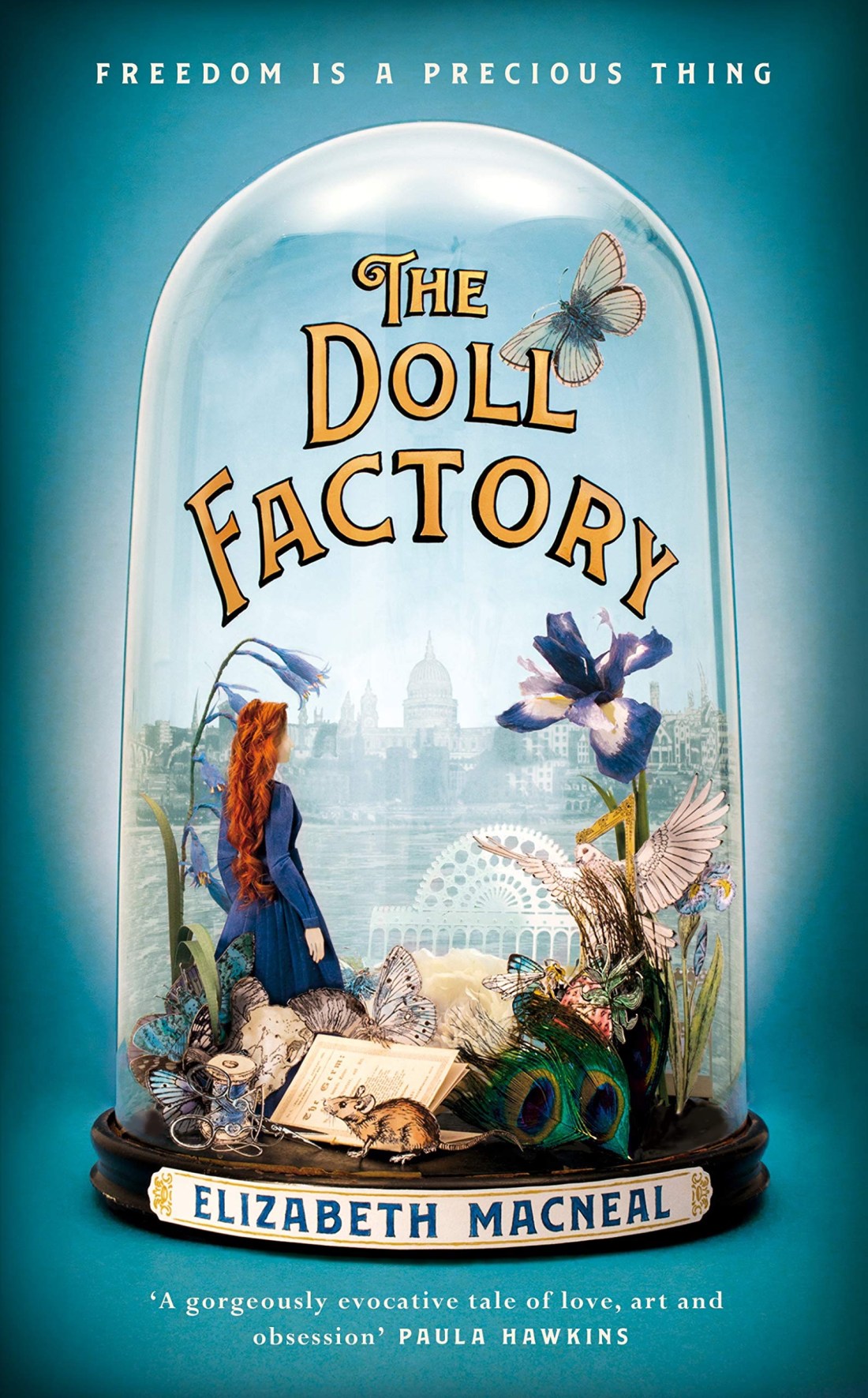
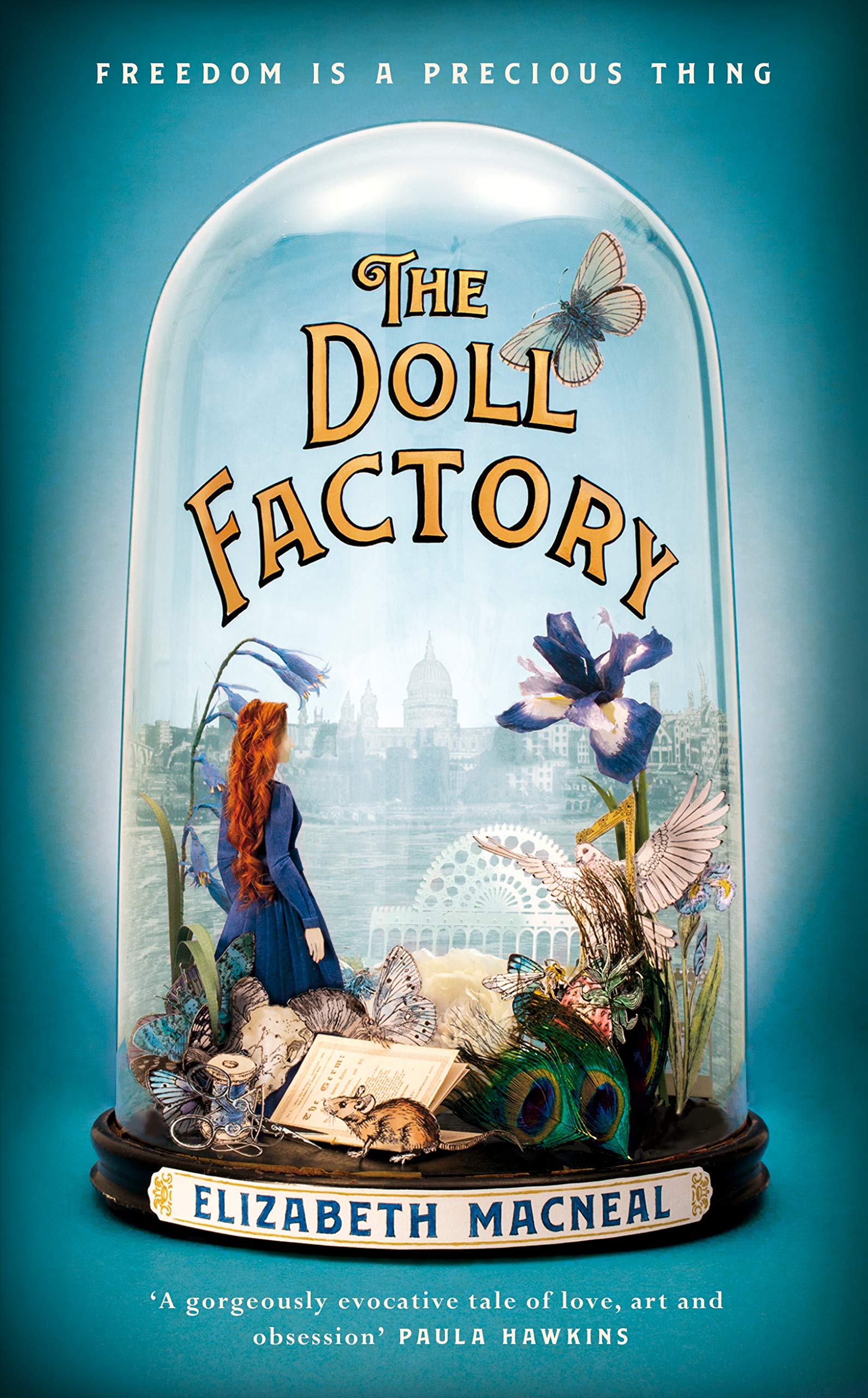
The Doll Factory by Elizabeth Macneal is set in Victorian London. It is 1850 and the Great Exhibition is on the verge of opening. Iris and her twin Rose are working in a Doll Makers shop. Discontented with her lot Iris dreams of being an artist. A chance meeting leads her to the Pre-Raphaelite artist Louis Frost. She becomes his model, his muse and a developing painter in her own right, changing her life completely. But in escaping her life in the doll shop Iris incurs the disapproval of her parents and her sister. Cut loose from her family ties Iris is drawn further into the artist’s world, becoming Louis lover and caught up in his desires for a a place in the Academy Exhibition.
Silas Reed is watching Iris. Introduced to her by street urchin Albie, he is convinced that she is the girl he needs to make his life complete. A loner, working as a taxidermist, dreaming of creating his own exhibition, he is waiting to make Iris his own.
From the beginning of the novel Macneal’s sense of place and time is impeccable and vivid. There is a vibrancy within the writing which speaks to the reader, drawing them into the streets of London. From the outset that tradition and mainstay of Victorian literature is present; the duality of the city. The ever present fact that grime and art, wealth and poverty exist together, and that neither is ever far from the other. Moreover one feeds and enables the other. For example Albie, brings his dead rotting animals to Silas; who in turn stuffs them and sells them on to Louis and his Brotherhood. Nothing in this city is what it seems, appearances are most definitely deceptive.
And once you have picked up on this motif of duality you find it expertly woven everywhere. It’s in the characters of Iris and her twin Rose. One outward looking, seeing beyond her own limitations and reaching for freedom; the other constrained by her physical scars and trapped in the doll shop, resentful of her sisters choices.
Albie, with his poverty but keen emotional intelligence is the nemesis of Silas. Silas, brooding, resentful and increasingly menacing. We seem him develop from a vaguely ridiculous man with harmless delusions of grandeur to a threatening presence. It is Albie, watchful and wise beyond his years who sees the danger.
But what of Louis, where does he fit into this web of duality? Louis and his brotherhood are devoted to capturing life in art, making a true and accurate presentation of what is before them. Like Silas’ taxidermy, their art is striving to preserve an image for posterity. Life in Victorian London is fragile, easily taken away. Be it a stuffed dog, an Academy painting or a doll modelled on a dead child, everyone is in a race to preserve precious life.
Everyone except Silas. Silas has slipped beyond presentation and duplication and into the sinister realms of possession. The possession of life and all that entails. In Silas we see the ultimate duality, just how easily love and affection can fester and tip into the dark realms of obsession and hate. Compare the twisted longing of Silas to the open enabling affection of Louis and we are right back in the arms of duality. Genuis stuff!
Genuis rides again by making the backdrop to this novel the Great Exhibition. Throughout the novel the motif of display is present. Louis and his Brethren dream of the Academy, Silas is looking to create a museum of curios, Iris wants to exhibit her work , the Doll shop and it’s wares; all build a picture of art imitating life but also they force us to question how real they actually are. London itself could be seen as one big exhibition, where nothing is quite as it seems.
For every major character in this novel is an outcast, an anomaly, working on the edges of society. Albie; an urchin, ducking and diving. Silas; social awkward, ridiculed and alone. Rose; disfigured by illness and Iris; born with physical imperfection. Louis and his artistic circle; all working outside the bounds of accepted norms and techniques. It is a cast of misfits. Or curiosities in an exhibition.
This plot is a living museum, where the reader can peek in and see how the characters make the best of the hand they are dealt. Do they turn their differences into strengths, striding forwards like Albie, Louis and Iris to make their mark on the world? Or do they let past misfortunes turn inwards and fester, leaving them bitter, constrained and resentful like Rose and Silas? How do they achieve freedom and how do they use the freedom they gain?
I adored this novel. I loved it’s characters, watching them grow either with confidence and bravado or quiet, creaking menace. I loved the setting, the creeping poverty in juxtaposition with bright lights of London. I loved the plot, infused with humour, pathos and terror. I loved it all.
Thank you Elizabeth Macneal. How long before I am allowed to reread?
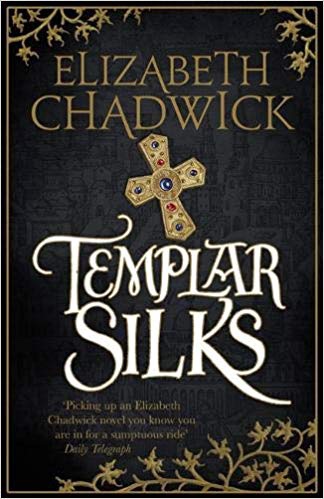
Having discovered Elizabeth Chadwick through her wonderful Eleanor of Aquitaine Trilogy I was delighted to be able to review Templar Silks, due for publication 4th June 2019.Thank you to Sourcebooks for an Advance Reader Copy.
Templar Silks continues the story of William Marshall. Having served loyally as a Knight at the court Henry II, William is reaching the end of his long life. Realising this illness will be his last William knows it is time to fulfil his vow, made long ago in Jerusalem, to become a Templar Monk.
Whilst waiting for his Templar Silks to be delivered to him, William prepares himself for what lies ahead by recalling a lost time; his pilgrimage to the Holy Land to lay the cloak of his Lord, Henry the Young King on Christ’s tomb.
Through his rich and vivid memories, some sensuous, many disturbing Chadwick recreates this incredible and evocative time in history.
What has always struck me about Elizabeth Chadwick’s writing is her amazing eye for detail, and Templar Silks is no exception. At no point does any description feel laboured or over long. Rather such passages are a delight to the readers senses. The opulent Jerusalem Court of the the 1100’s provides the perfect scope for Chadwick to weave her magic. Whether the reader is in the throes of battle or the inner sanctum of a court Mistress, Chadwick is skilled at drawing the reader into the novel. They are able to taste, smell feel their surroundings stepping back hundred of turbulent years in the process.
Moreover the level of detail is testament to just how well researched this novel is. Whilst it is documented that William Marshall did actually spend time in Jerusalem, his actions there are largely unknown, giving the author tremendous creative freedom. Such freedoms within in a historical novel can be both a blessing and a curse. The great challenge is always to stay true to character and importantly period. Through sustained and thorough research Chadwick, as always, pulls it off.
Her portrayal of a life governed by earthly and spiritual duty is rich and colourful. Marshall is portrayed an honourable but flaw man, living in treacherous times.
As with the Eleanor Trilogy there are strong female characters within the novel. Characters that use what power they have to make their own mark in a male dominated and often brutal world. Chadwick is often concerned with love but she is always concerned with power, and how the power balance is constantly and ruthlessly shifting in uncertain times.
Elizabeth Chadwick’s ability to evoke a sense of place is impeccable. She is able to create worlds long gone in vivid detail and she does what only a truly skilled writer’s can. She makes you want to go there. Not just in your minds eye; Chadwick makes you want to pack a bag, maybe hijack a tardis or two and physically experience what you have read about.
That was exactly the experience I had after reading the Eleanor Trilogy a couple of years ago. The Summer Queen, The Autumn Throne and The Winter Crown tell the fascinating story of Eleanor of Aquitaine who was married to both Louis VII of France and Henry II of England. A duchess and ruler in her own right, she was a powerful women in a time when when it was very much the exception rather than the rule. Her second marriage to Henry produced eight children but also saw her incarcerated for her role in the rebellionby her son Henry the Young King against his father.
Chadwick’s description and portrayal of Eleanor as both a Queen and a woman was powerful, and again cleverly drawn sense of place drew me in. It lead to one of those occasions that my family dread but almost (!) always end up thanking me for; one of those occasions when we went in search of history.
Or as my youngest son calls it ‘some random place Mother has read about in a book.’ !
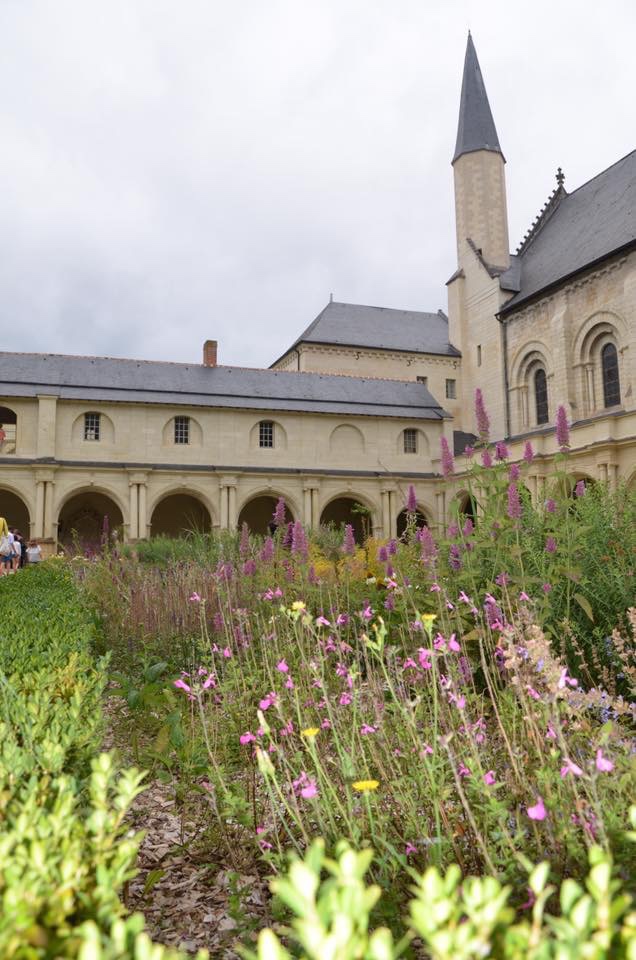
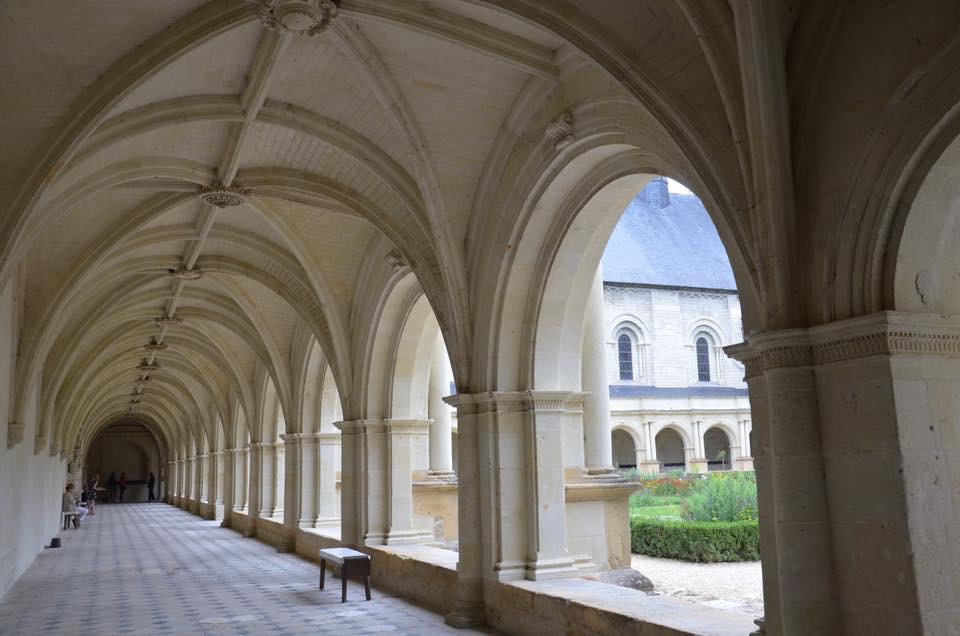
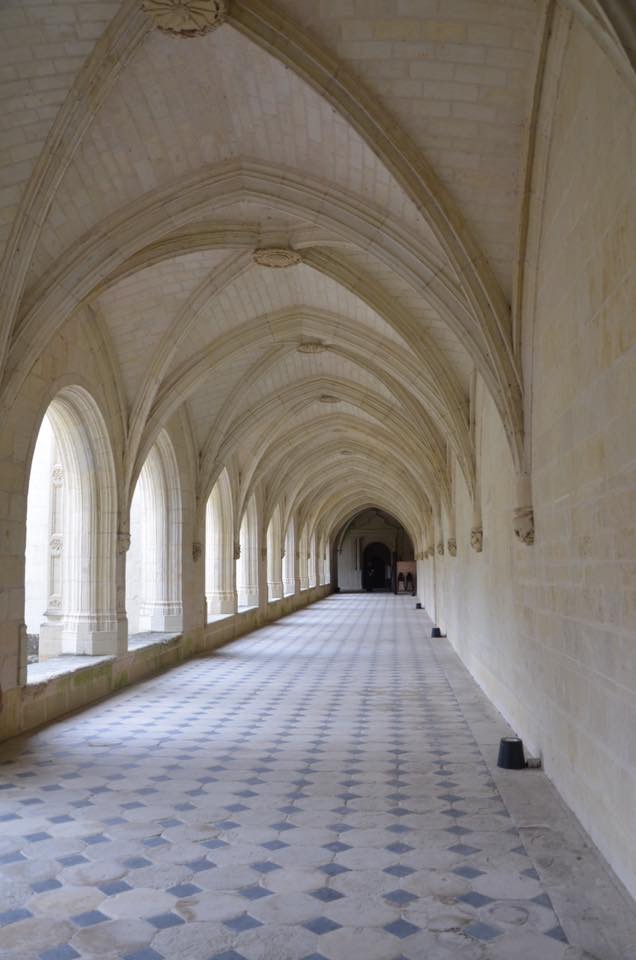
This time the random place in question was Fontevraud Abbey, in the beautiful Loire Valley.
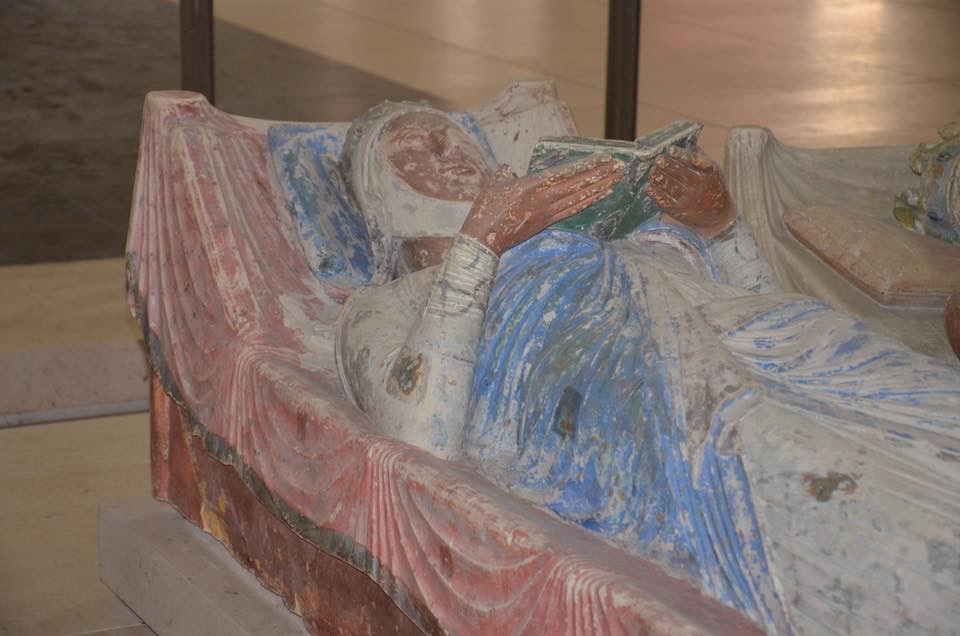
Truly a place of beauty both in setting and architecture, this World Heritage Site was the final resting place of Eleanor. Along with Henry and two of their children, Richard I and Joan, it is believed that their remains were moved or destroyed during the French Revolution. However Eleanor’s beautiful tomb and effigy remain.
Books take you places; cliché it maybe but it’s undeniably true. A good book can transport you to other worlds without you leaving your seat. It take you away, through the pictures it paints in your head. And a great book will paint those pictures and make you want to touch them, smell than and walk amongst them.
So reading Templar Silks I am currently in search of a time machine. Anyone know how I can hitch a lift to Jerusalem in the Middle Ages!!
Today I am delighted to be participating in my first ever Blog Tour. Many thanks to Tracy Fenton of Compulsive Readers for inviting me along and giving me this opportunity. And a huge thank you and massive congratulations to Jeevani Charika. It has been my absolute pleasure to read and review This Stolen Life.
On to the book…
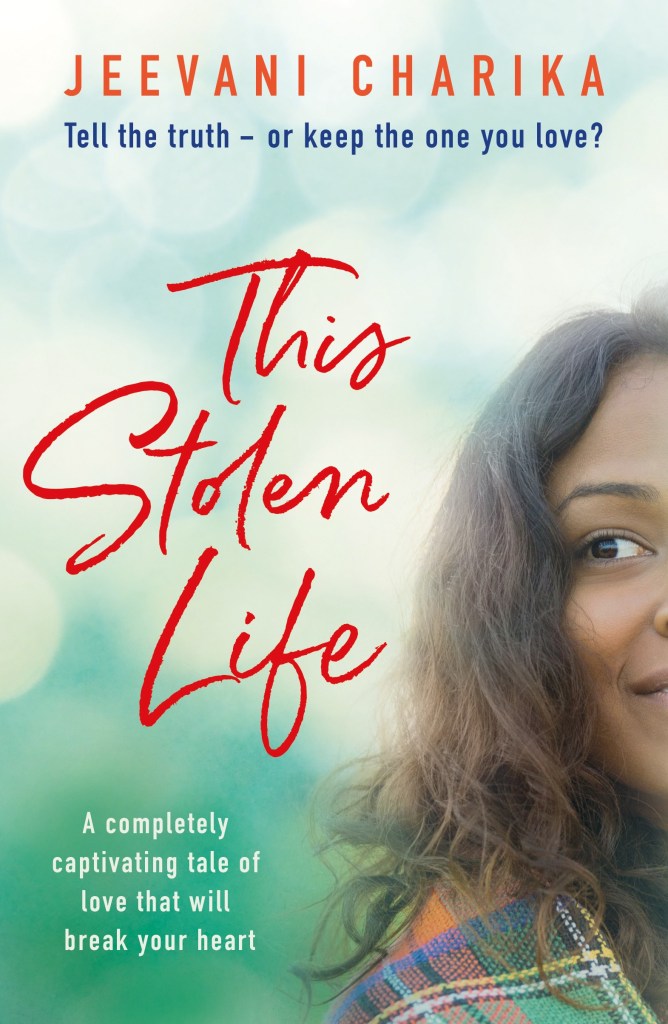
This Stolen Life is a story set across two very different cultures. Beginning in rural Sri Lanka, Jaya is running from an abusive home life. When a chance meeting and a tragic opportunity present themselves, she takes the chance to change her life forever. In the blink of an eye she is on her way to the UK , a new identity and a new life awaiting her.
So Jaya becomes Soma. However she quickly finds that despite a new country, new job and a new name escaping your past and changing your very being isn’t as easy as it seems.
Soma is working in Hull, nannying for a Sri Lankan couple, Yamuna and Bim. Only recently betrothed, within an arranged marriage, this outwardly self assured couple are coping with their own uncertainties and difficulties. A new mother, Yamuna is working through the haze of undiagnosed postnatal depression, whilst long term bachelor Bim is struggling to adjust to family life.
It is through her employers that Soma meets Sahan, nephew of Yamuna. A young, bright undergraduate, Sahan is embroiled in his own journey. Even after three years of living in the UK Sahan finds the cultural differences between his Sri Lanka and his current home difficult to assimilate and come to terms with. Both set adrift in a unfamiliar culture, Soma and Sahan experience an instant attraction which quickly grows into something more. Their’s is a deep and innocent bond, supportive and sustaining but threaten by past secrets and cultural expectations. Soma’s secret is to big to remain concealed, the clock is ticking and can their relationship survive the shock?
What I really enjoyed about this book is how Jeevani Charika explores and portrays the difficulties and complexities faced by those people trying to assimilate a culture that is alien to them. So many of the characters here are on a journey, be that living in a new country, being a new parent, studying or working and they are all trying desperately to fit in.
The balancing act of making your way in a strange world whilst remaining true to yourself and your heritage is skillfully and beautifully portrayed. It is through the innocent eyes of Soma we feel the shock of the English weather, the blandness of food and the utter terror of even stepping outside the front door. It is no accident that the first and most fulfilling bond Soma creates is with her charge, Louie, the infant son of Yamuna and Bim. Here there is no judgement, no social norms to learn and maintain. Within this relationship she can speak her own language and not worrying about maintaining her pretence. It is her sanctuary.
On first reading, the title of the book ,This Stolen Life, seems to related completely to the character and story of Soma. However the more I reflected on this book, the more it appeared that it could equally have applied to many of the novel’s other characters. To some degree many of the character’s lives are constrained by outside pressures. Yamuna is quietly grieving the change that motherhood and marriage have wrought upon her, Sahan is balancing his own desires against those of his parents and their strict cultural expectations. Do any of these characters have the courage to take control of their own destinies and successfully bridge two cultures, and create lives true to themselves in the process?
At first glance this is a simple story, but in reality it is anything but. Charika has woven many complex and relevant issues into her narrative. It is a book to make you stop and think, to reassess and question your own experiences and motivations. I feel it would make a really interesting bookclub read; there is so much to discuss and it is likely to draw a wide range of opinions.
This book is a quiet little gem just waiting to be discovered. A genuine and honest story of self discovery and all that entails. And the fact it was set in Hull, my old University stomping ground and place I meet my future husband, was the icing on a very delicious cake.
Thank you Jeevani Charika, for sharing this book with me and allowing me to review. I hope, like your characters, it gains it wings and flies. It deserves to.
About the author.
Jeevani Charika is a British Sri-Lankan, who also writes under the pen name Rhoda Baxter. She describes herself as a writer of ‘women’s fiction and contemporary romances with a hint of British cynicism.’ Her books have been shortlisted for RoNA awards, the Love Story Awards and the Joan Hessayon Awards. She is a member of the UK Romantic Novelists’ Association and the Society of Authors.
And there is more…
The Blog Tour for This Stolen Life runs until 17th May 2019. Why not check out more reviews of this delightful book?
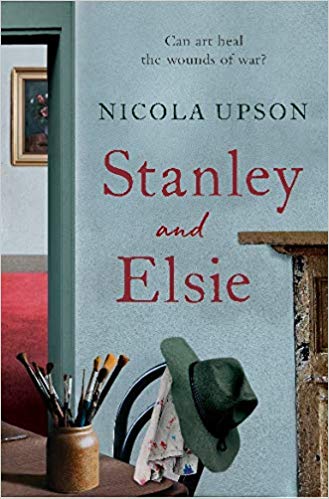
Stanley and Elsie is a retelling of the relationships of artist Stanley Spencer. Spencer, who painted in the early to mid 20th Century, was married twice, first to artist Hilda Carline and secondly to Patrica Preece, also a Slade art school graduate. Both marriages were complex, turbulent and overlapping. It is these intriguing, unconventional and sometimes maddening relationships which provide the backdrop to the book.
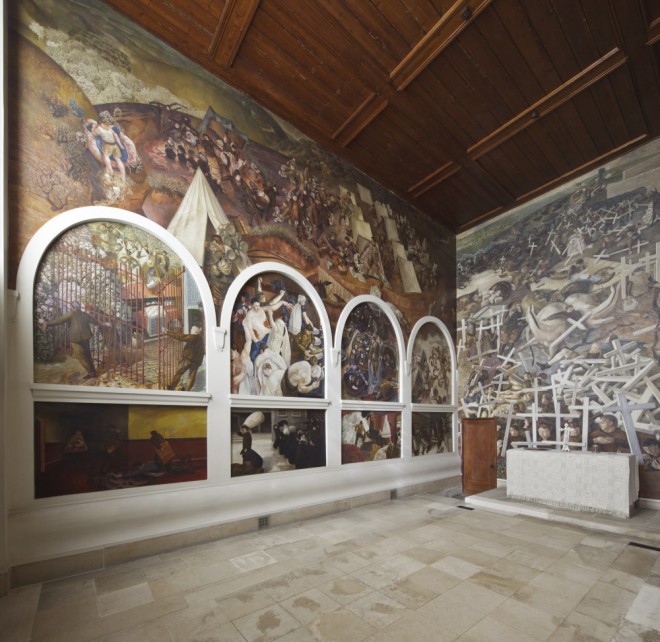
When the novel begins Stanley is engaged in one of his most ambitious and beautiful projects. Commissioned by wealthy patrons John and Mary Behrend, Stanley is painting a purpose build chapel as a WW1 memorial to Harry Sandham , brother of Mary, whose death from malaria, caught whilst on active service, was refused memorial on the village monument. Whilst Stanley is immersed physically, spiritually and emotionally in his work, Hilda is working her way through the fog of post natal depression, struggling to paint and manage her household.
Enter Elsie Munday, the Spencer’s maid, who, over time becomes so much more. Her presence as the voice of reason, domesticity and unswerving honesty and loyalty is the glue which holds the Spencer family together for many difficult years. Indeed it is through the portrayal of stoic and unflappable Elise that the reader is offered insight to the marriage of Stanley and Hilda.
And so begins unrestricted access to a quite brilliant but damaged pair of artists. Moving trusted and almost unnoticed through the Spencer household Elsie provides us with unique perspective of a complex and always evolving situation.
Both Hilda and Stanley are fighting ghosts of their own. Stanley is talented but arrogant; art is his world and he has little patience with the domestic restraints and battles his wife is contending with. Encouraging her to paint, but having little success, he becomes arrogant, bullish and down right cruel. Through clever use of character and dialogue Upson allows the players to tell their own story and there is little for the reader to do but stand back and watch them slowly destroy their marriage. With heartbreaking clarity and sometimes disbelief Upson skilfully charts one of the most complex artistic realtionships. This is the familiar tale of art enhancing life but the artistic temperament being too hard to contain. Unwilling, maybe unable to compromise Stanley is chasing artistic perfection, looking to higher places and missing what is right before him.
Throughout Elsie remains the constant character, a stalwart, the yard stick by which the reader can judge how strange and chaotic the Spencer’s relationship becomes. Upson’s strategic use of Elsie helps to remind us just how far Stanley’s behaviour moves from socially accepted norms. It is no accident that it is through Elise’s eyes that we are encouraged to assess the elegant but ruthless Patricia Preece. It is Elsie who tells us what we should think and feel about this cuckoo in the nest.
There is no doubt that this novel is very much driven by the strength of the characters within. That is not to say there isn’t a plot, but it is a plot with it’s very being in the dialogue and emotion of it’s characters. And within in the emotion it provokes in the reader.
This novel is peppered with facts, revelations and, crucially, beautiful descriptions of art. The dropping of famous names such as Henry Tonks, Vanessa Bell and Virginia Woolf had me firing up the search engines time and after time. It was this element of the book which for me was it’s defining characteristic and strength. I love historical fiction; I love the journey it takes you on, the meandering path of discovery, leading you to new places and texts. And in that respect this novel represents historical fiction at it’s best.
Thank you to Prelude Books who have provided me with a digital copy of Stanley and Elsie, by Nicola Upson, in exchange for an honest review.
Paintings by Stanley Spencer at Sandham Memorial Chapel, Burghclere.
A Little Life by Hanya Yanagihara has been awaiting my attention, quietly on my Kindle, for well over a year. It is not the only book waiting there by a long way. It is, however, one of the few I have skimmed past a little too quickly and a little too often. It is one of those I frequently have glanced at and thought ‘Not now, the time isn’t right.’
It is probably the only book I have thought about deleting, unread.
In short the thought of this book has unnerved and, quite frankly, scared me.
As a teacher of young, vulnerable children, as a mother of four, I wasn’t at all sure I wanted to read this book. I couldn’t find a calm period in our hectic lives when I felt ready to handle the subject matter. When is a good time to tackle a book charting the lifelong effects of sustained and wide reaching childhood abuse? Never, it seemed.
I was also, consciously and subconsciously, questioning whether this book should even have been written. Was it morally right to make this kind of experience into fiction, into some kind of entertainment?
And yet this book has been recommended to me so many times, by so many people. And every time they have been people with kindness, compassion and intelligence at their very core. It was one of these readers who persuaded me to stop skimming past and take a chance.
So almost 2 weeks ago I took the chance. I promised myself I could break my unwritten rule and do the thing I find so inexplicably hard; DNF if need be.
I started to read.
On Saturday I finished, wondering as I reached the end why it was I had waited so long.
This book has taken me over a week to read. In a normal reading week I usually get through 2 -3 books. Practically giving up on TV and having a husband who works away in the week has seen my reading steadily increase in the past 2 years. A Little Life has taken me significantly longer to read than any other book in recent times. This is not to do with its 800+ pages, and everything to do with it’s message.
Even if I possessed days of free reading time I couldn’t have read this book any faster than I did. It was the intensity of this book, much more than it’s length, that slowed my pace. The feelings and empathy that were provoked within me demanded that I took time out. Time to break away, digest, grieve and reflect. This book is beautiful, powerful and for all that it is hard hitting and raw, and sometimes just too painful to assimilate.
At first glance this book is about the relationship between four college friends, at the beginning of their professional lives, living in NYC. Malcolm, a privileged black and talented young architect, trying to escape his parents shadow. Willem, a young actor, alone in the world after the death of his brother and parents. JB, a fiery gay artist, feted and pampered by his matriarchal family. Jude, a brilliant young lawyer, physically disabled, secretive and watchful.
Before too long the focus shifts to Jude, for this is Jude’s story. It is the story of his childhood trauma, abuse so complex and far reaching it touches every inch of his day to day life. His choice of apartment, choice of career; all touched by his past experiences.
This novel is possibly the most comprehensive and heartbreakingly powerful of portrait of abuse you likely to come across. Within it Yanagihara explores the lifelong relationship Jude has with self harm. She charts it’s accidental beginnings, how it becomes a way of using physical pain to reset his emotional terror. Crucially, she represents it’s non linear nature. This is not a static relationship, like other more acceptable and conventional bonds. Jude’s relationship with self harm ebbs and flows. It changes it’s form depending on opportunity and circumstance, but it never ends.
Throughout the novel we see Jude attempting to build circles of trust, investing in relationships that, despite his desperate desires, can never be complete due to his lack of self worth. His career sky rockets and yet he continues to views himself through the past’s tainted eyes. He feels a constant need to apologise, to justify and readjust, living with the ‘creature’ of abuse inside, always one step away from fight or flight. Even pleasure causes pain; his certain fear of when will the past catch up with the present is never far away. and often overwhelming.
The narrative also explores the complex relationship that exists between abused and abusers. We come to appreciate that when abuse has been not only sustained, but delivered at the hands of caregiver, then victims feel their personality is shaped by their experiences. Jude feels that some positive parts of his life can be attributed to his abuser, and this is an ongoing struggle of acceptance. Within this story is contained the very best and the very worst of human nature. There is rarely black or white, just deepening shades of grey, and thankfully some blinding flashes of lightness.
Survival from abuse is not portrayed as a simple upward recovery. For Jude, we read about many ‘rock bottoms’, many triggers, many simple solutions that turn out to be anything but. There are heart rending explorations of future relationships, where patterns of abuse repeat themselves in a way Jude sees as inevitable.
And yet Jude is not without kindness in his life. Throughout the novel, despite his difficulties, Jude has friends, people who care deeply. For the reader these characters fulfil a number of functions. On a practical level they allow us some perspective. They provide a break from the deeply complex nature of Jude’s life and thoughts. They allow us to breathe, pause and provide colour, sometimes humour. They are a mirror that reflect the best of Jude, reflecting his innate brilliance, intelligence and potential. They allow us to see beyond the abused individual and appreciate other qualities that define him.
More than this they are ripples in Jude’s pond. Their presence and reactions to his actions and thoughts allow Yanagihara to explore and portray, yet again, the real and far reaching effects of abuse. We see the ever patient Willem, his closest friend, accept the darkness within Jude and hold it lightly in his hand, waiting patiently for Jude to reveal his truths. Our heart breaks when Jude begs friends to kept terrible secrets, asking them to carry burdens too hard to bear.
I finished this book 4 days ago and before I could even begin to write any kind review I needed time to pause and reflect. Part of me wondered whether I was even able or entitled to write a review. Yet it was inevitable I would. This novel might have broke my heart multiple times but it won’t leave me in a hurry. Whether I have a produced a review to do it justice is entirely another matter.
Jude has been in my head pretty much constantly since I left his world. So many thoughts, perspectives and questions going round and round. And I have been returning again and again to the fact that Jude was a character, who despite his terrible experiences, was thrown the lifeline of opportunity. He was rescued, he was educated, he had people who believed in him, who advocated for him; good, unselfish friends who could see beyond the scars and kept coming back.
And I find myself asking “What of those who don’t have this opportunity? What becomes of those who don’t have advocates and aren’s rescued?”
Because that is the real tragedy of this book. The fact that this isn’t an isolated story, one that never happens in the real world. It does every day. And not all individuals, children or adults, have Jude’s opportunities. Not all have a voice, have ears that will listen, have the skills or financial support to find their path. What happens to those individuals?
And that is why Yanaghari and authors like her have the right to create such stories. In a recent Guardian article, Yanagahari suggest that her intention in writing this book was never to shock or provoke. She believes “that extreme lives exist and therefore should be present in literature.” So while abuse is some ones reality, some one has to keep documenting it, talking about it, bringing it into the public consciousness. Despite my initial concerns this book never feels gratuitous or exploitative. It does shock, take your breath away and makes you think, really think, about the unrelenting effects of abuse. It raise the stakes of awareness like nothing else I have yet encountered.
I would I recommend this book?
Yes, without a doubt, but not without some stipulations. Don’t read until you are ready. In all honest, by the end I was reading quickly, possibly even rushing to the conclusion. Not because this isn’t a ‘good’ book. It is beyond ‘good’. ‘Good’ doesn’t come close. I am still searching for the right word to sum up my feelings for this book. No, I was rushing to the end because I couldn’t quite bear it anymore. It was so intense, so absorbing, it was changing my mood.
But one day, when the time is right for you, spend a little time with Jude. He deserves his story to be heard.
So April is over and it’s time for me to present my monthly round up!
Well the big news, in case you didn’t already know is …I started a Book Blog!
And the even bigger news is that I am loving it. It might be harder than I ever thought but the connections, and in some remarkable cases, reconnections, with wonderful book loving people are so invigorating and rewarding.
It’s a slow burn but the followers here on WordPress, on Twitter and Instagram are slowly growing. People aren’t laughing me out of town and everyday I have to pinch myself to check that this is actually a new addition to my life. A very welcome addition at that. Every time I get a new post like, comment or follow I am more than slightly bewildered but enormously grateful. So thank you for all interactions, past, present and future.
There is plenty for me to learn about the whole process of blogging. For instance I am fast becoming aware that just because I have discovered NetGalley, doesn’t mean I have to request everything in sight. I am continually reminding myself; “There are still only so many reading hours in a day, that I still work full-time, and I still have 4 teenagers etc etc., one of whom is on the brink of GCSE’S!”
Rest assured I am pacing myself, but it’s hard… really hard. There are so many lovely, scrummy books out there begging to be read.
Another thing I thought I knew but now I TRULY KNOW is that good quality, well researched and accurate blog posts aren’t bashed out in a matter of minutes. I am in silent awe of skilled and eloquent bloggers who can post fantastic reviews several times a week. I am definitely not one of those bloggers. I am currently aiming for a couple of good quality posts a week. Anymore is a welcome bonus.
My excitement levels have reached fever pitch over the last few days with my requests being graciously accepted for some very promising ARC’s. And perhaps most exciting of all is the fact I have been asked to participate in two lovely blog tours. More of that later…
I am one giddy little kipper at the moment! Can you tell?
So, what did I read in April?
So April was a pretty solid reading month. I was actually surprised to discover that I has read 15 books. The fact we had a school holiday would definitely have been a contributing factor to this! And there were no DNF’s!
My complete list for April is :
Human Croquet – Kate Atkinson
The Bloody Chamber – Angela Carter
The Complete Poems of Rupert Brooke
Letters from a Lost Generation : First World War Letters of Vera Brittain and Four Friends – Ed. Alan Bishop & Mark Bostridge
Boy of My Heart – Marie Connor Leighton
Because You Died: Poetry and Prose of the First World War and After – Vera Brittain
The Familiars – Stacey Halls
Graceland – Bethan Roberts
The Cut Out Girl – Bart van Es
The Cutting Season – Attica Locke
My Sister the Serial Killer – Oyinkan Braithwaite
Bottled Goods – Sophie van Llewyn
Lost Children Archive – Valeria Luiselli
Picking Up the Pieces – Jo Worgan
Signs for Lost Children – Sarah Moss
I have the pleasure of reading a varied selection of books this month and it contains many highlights.
For those of you who have read some of my previous posts, it will come as no surprise that one of my favourite reads has been My Sister the Serial Killer. Also high up on the list is Bottled Goods, quirky and intense, and the brooding Signs for Lost Children. And no month that contains a previously unread Kate Atkinson can be a bad reading month. Why did Human Croquet sit on my TBR pile for so long? Makes me twitchy about what else is sitting there undiscovered. So many books…
What’s next? Reading plans for May…
As May is already upon us, then it’s reading plans are in fact already actions.
As of lunchtime today my first read of May is A Little Life – Hanya Yanagihara. There will be a review to follow, but first I will need to gather my thoughts. Not a book to be taken lightly in any sense, a review will need careful consideration. A truly incredible but heartbreaking novel.
Next up is my first blog tour read, (did I mention I was excited?) This Stolen Life – Jeevan Charika. Perfect bank holiday reading!
I am also privileged to have some Advance Reader Copies (ARCs) waiting for my undivided attention. Winking at me from my Kindle is the haunting cover of The Immortal Prudence Blackwood – Stephanie Grey. And I am feeling nostalgic for the Fens of my childhood whilst eagerly awaiting Naseby Horses – Dominic Brownlow.
Belonging to two Book Clubs means there is reading already set out for me in real life. First up is The House at the End of Hope Street – Meena van Praag, followed by A Man Called Ove – Fredrik Backman.
In addition I am hoping to get to my two remaining unread Women’s Prize short listed books, An American Marriage – Tayari Jones and Ordinary People – Diana Evans. With a fair wind, and another bank holiday, I might even get to the long listed Remembered – Yvonne Battle-Felton. Wish me luck!
Finally…
So that is a round up of my reading month. It is also a round up of my first blogging month. And I hope sincerely the first of many.
Thank you one and all for all the help, advice, support and encouragement. Onwards…
So it’s Monday night and I am blogging after a day at work, ending with a full staff meeting. What could possibly go wrong? Currently typing this whilst cooking meatballs, feeding dogs and trying not to forget that tomorrow is bin day! So, disclaimer; don’t expect Chaucer! I am going for coherent!
Why am I risking ruining any credibility I might have build up in the 2 weeks or so I have been blogging?? Because the WOMEN’S PRIZE SHORTLIST has been announced and if I can’t drag my weary carcass to a computer on that occasion I might as well give up this book blogging lark.
Less rambling, more book chat. Lets start with…
What would my list have been…
Time to come clean now, I only got around to reading 7 from the 16 longlisted books. In my usual way I got distracted by other lovely shiny books. Also, in my defence, and this is genuinely an important point, literary prize lists are just the tip of the iceberg. So many backlisted, new, undiscovered authors out there, you have to mix up it a little.
Anyway, I digress. I did warn you blogging on a Monday night would be a bit of a risk.
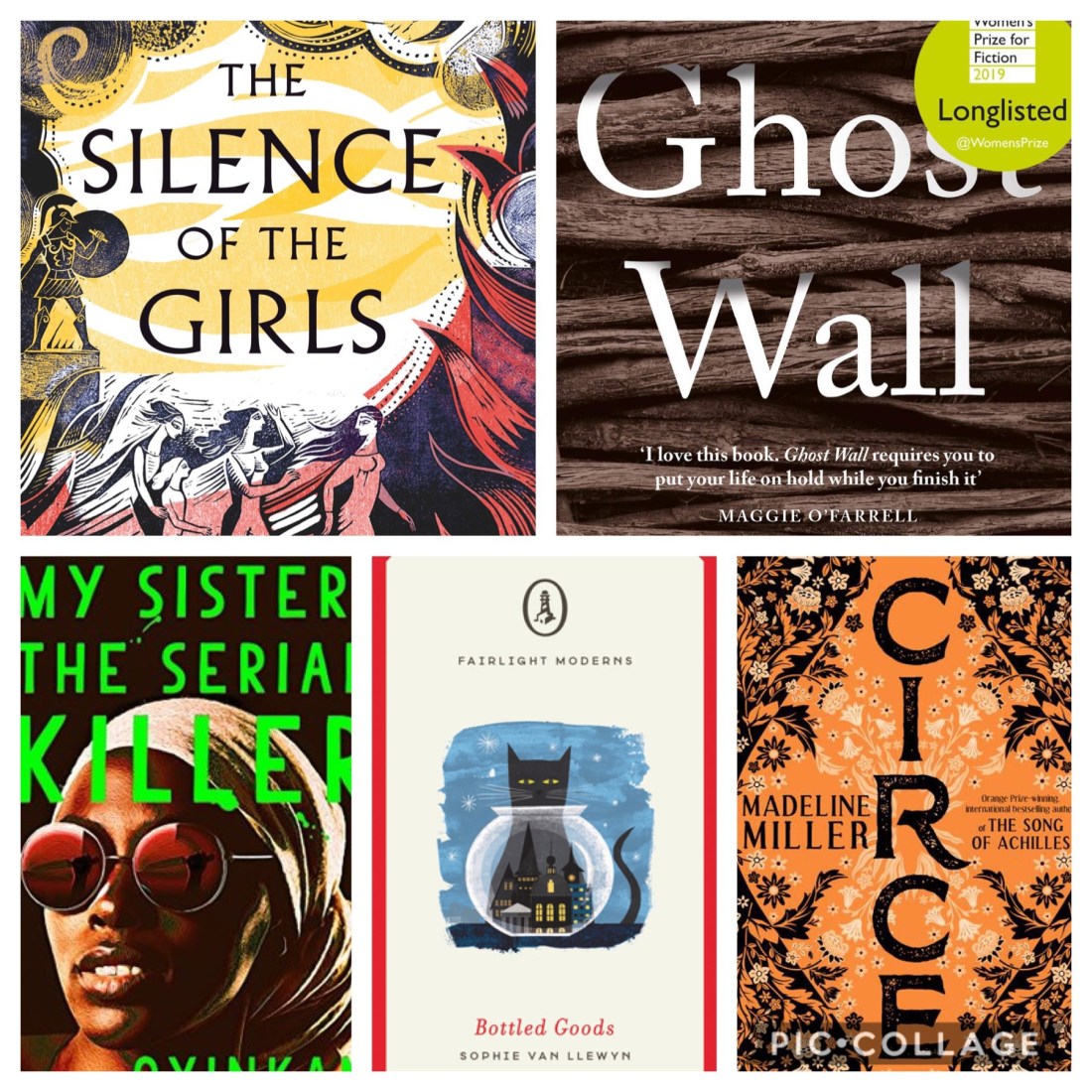
So, having read only 7 books, my preferred short list that I posted on Twitter (@bookbound2019 blog) and Instagram (@bookbound2019) only had 5 books.
And they were…
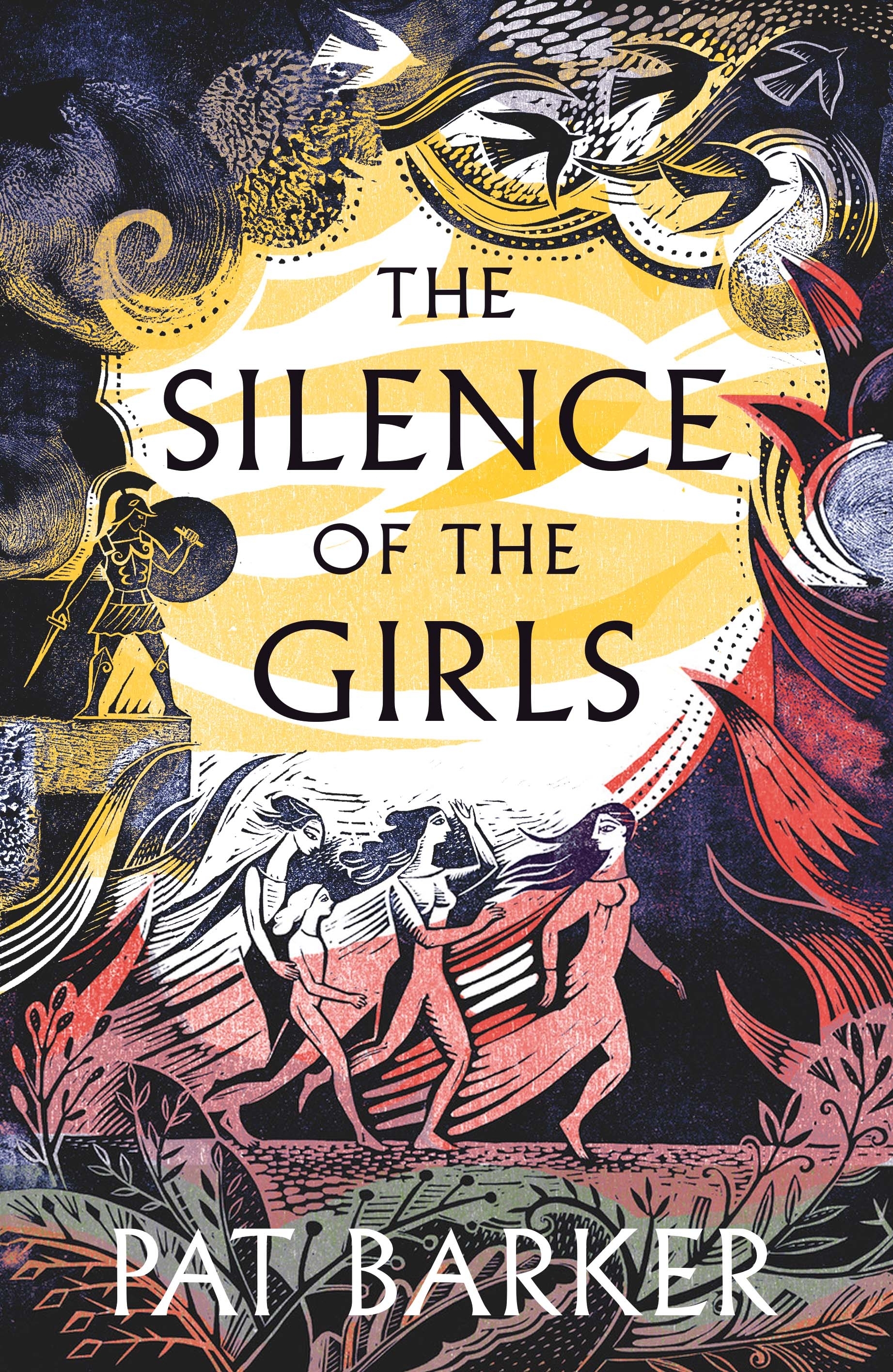
The Silence of the Girls – Pat Barker
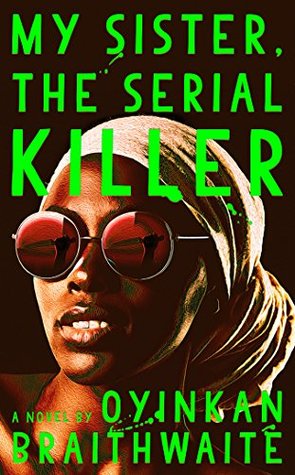
My Sister the Serial Killer – Oyinkan Braithwaite
Circe – Madeline Miller
Ghost Wall – Sarah Moss
Bottled Goods – Sophie van Llewyn
The actual Short List was…
Thoughts on what’s there…
American Marriage – Tayari Jones – Having not read this one I obviously can’t add too much, beyond saying it is on my TBR list. It has also gained a lot of praise from other book bloggers and vloggers, whose opinions I respect and often reflect my own. Excited to get to this one . (If I ever finish A Little Life!)
Ordinary People – Diana Evans – Again another ‘no read’, pretty hopeless so far. But again lots of love for this so watch this space!!!
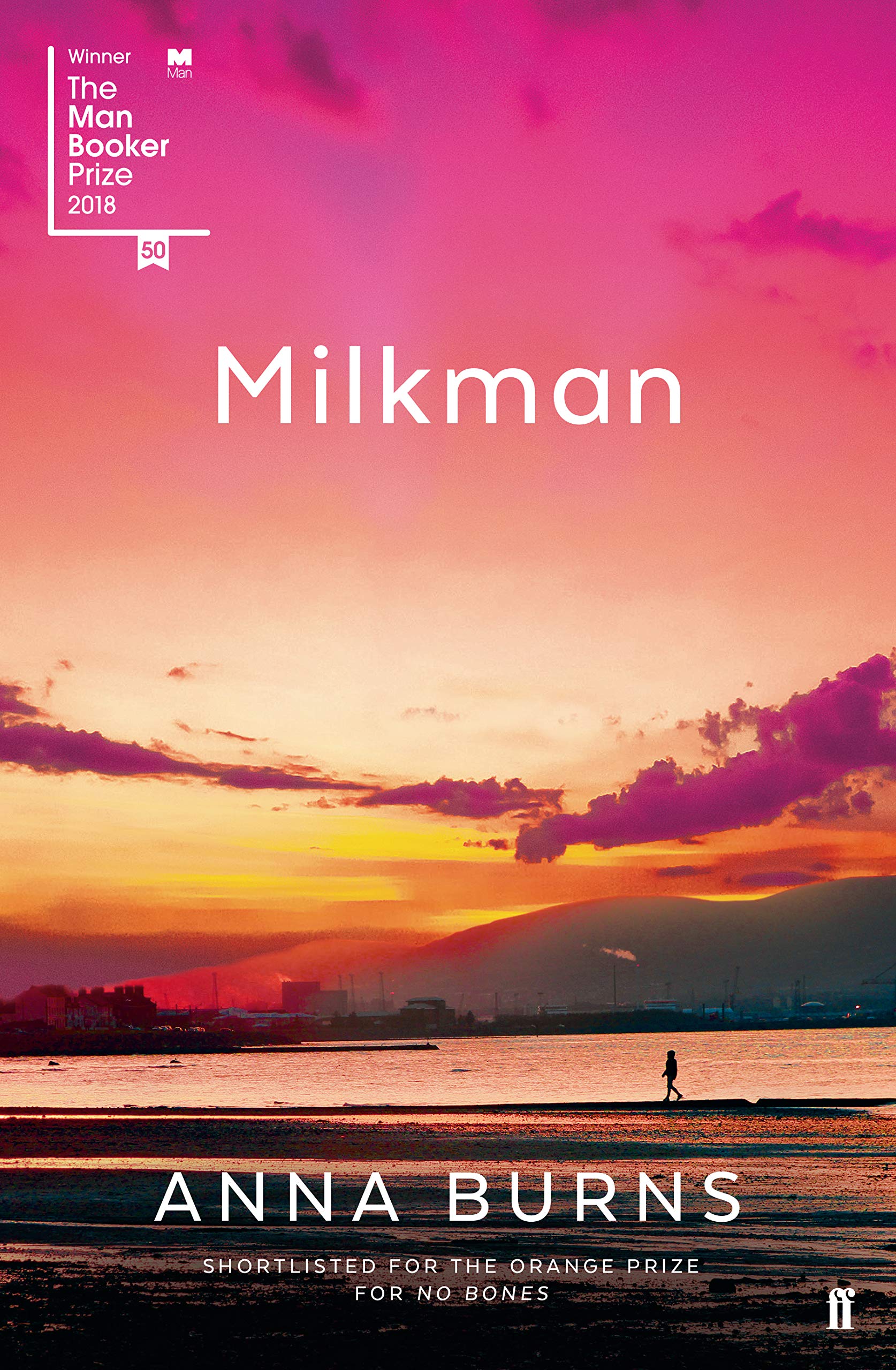
Milkman – Anna Burns – One I have read. Finally I hear you cry! (If you have even got this far!!) This was of course the Man Booker Prize Winner last year. I mentioned in my early blog about the Prize that I found this a difficult read. I read it when I was really busy and I found it hard to connect with the style. So it wasn’t on my personal short list. But it is no surprise that a ManBooker Winner and such an innovative novel would make the short list. I actually think this one was a given.
Circe – Madeline Miller I am thrilled that this one is here. This bold and empowering retelling of the myth of Circe is as beautiful and tantalising as it’s gorgeous cover. If you haven’t read this one please do. It is so refreshing and gives new depth and perspective to a classic tale.
The Silence of the Girls – Pat Barker In all honesty I didn’t think that two re-imaginings of Ancient Greek literature would make it to the short list but, on this occasion, I am absolutely delighted to be wrong. In a similar vein to Circe this book takes a well known story and gives it new and very real credence by using the female perspective. Gritty and honest in true Pat Barker fashion, this absolutely deserves it place on the short list.
My Sister the Serial killer – Oyinkan Braithwaite Of those on the list this is definitely my stand out. Having reviewed it just days ago, there seems little point in waxing lyrical about it again here. All I will say is that Braithwaite is a master wordsmith who uses her tools sparingly but with a precise and dark beauty. This is the one from the list that has stuck with me, and it is the one that I am recommending to any poor fool who will talk to me about all things books.
Thoughts about those that didn’t make it…
In terms of those that didn’t make the list I think I am most disappointed about Ghost Wall by Sarah Moss. I really love this author’s work and for a novella Ghost Wall was so multi layered. I am still thinking about it months later. Bonus points for being set in my go to happy place, wild and beautiful Nothumberland.
Bottled Goods – Sophie van Llewyn was a recent read for me. Pretty sure this is my first taste of Flash Fiction and it really packed a punch. Another little book filled to the brim with life and so much to discuss. The setting of Romania behind the Iron Curtain and everything that entails was absolutely fascinating. I don’t think this is the last time this author will be around a list such as this.
Finally I must say something about Normal People – Sally Rooney. Just about everywhere I go people are raving about this book and there is so much admiration for her work in general. I am going to out myself here and say I breathed a small sign of relief when this wasn’t on the short list. Rightly or wrongly I always try and read at least the short list and…
…I didn’t like Conversations with Friends, her first novel. I am well aware that I am in a small and, probably, shrinking minority, however there it is. I can quite see what people admire about her skill as a writer but I found the characters so intensely irritating that I couldn’t move beyond that. I don’t mind an annoying character but this felt overloaded with self absorbed people living vacuous lives. More than that I didn’t like the way I felt when I was reading the book. For someone who likes to think that I am pretty easy going, I felt old and judgemental and staid.
Having said all of this I am quite a nosy article and hate to think I am missing out so who knows. Feel free to convince me…
So what’s next? My new Women’s Prize reading plans.
Well in reality they aren’t all that different to the ones I published last month. I have read three from the list in my earlier blog post
My Sister the Serial Killer – Oyinkan Braithwaite
Lost Children Archive – Valeria Luisella (More of that in a later blog post)
Bottled Goods – Sophie van Llewyn
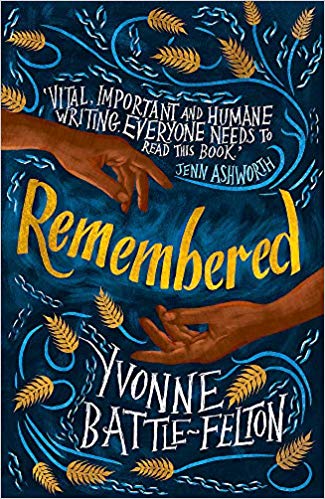
I will definitely be reading Remembered – Yvonne Battle-Felton. Heard so much good stuff about this and it’s themes have been really prevalent in lots of my reading over the past couple of years. May have just ordered this online today…possibly…maybe.
And of course I will be reading the remaining two novels on the Short List – Ordinary People and An American Marriage. No doubt I will be blogging about them in due course.
So, from a sunny Cumbrian Monday evening, I hope you have made at least something of my barely coherent ramblings. Off to throw ‘beans-on-toast’ down my neck and start up Mum’s taxi!
Always want to hear your thoughts, so please comment below or get in touch via Twitter or Instagram.












 Book Bound