Blog Tour! Book Review – The Chain.

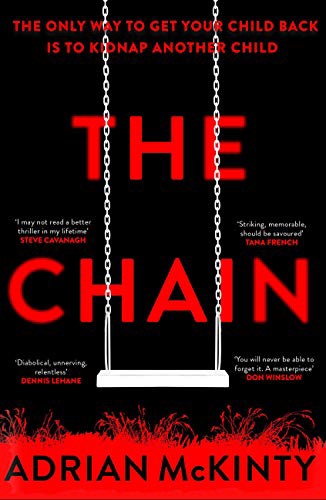
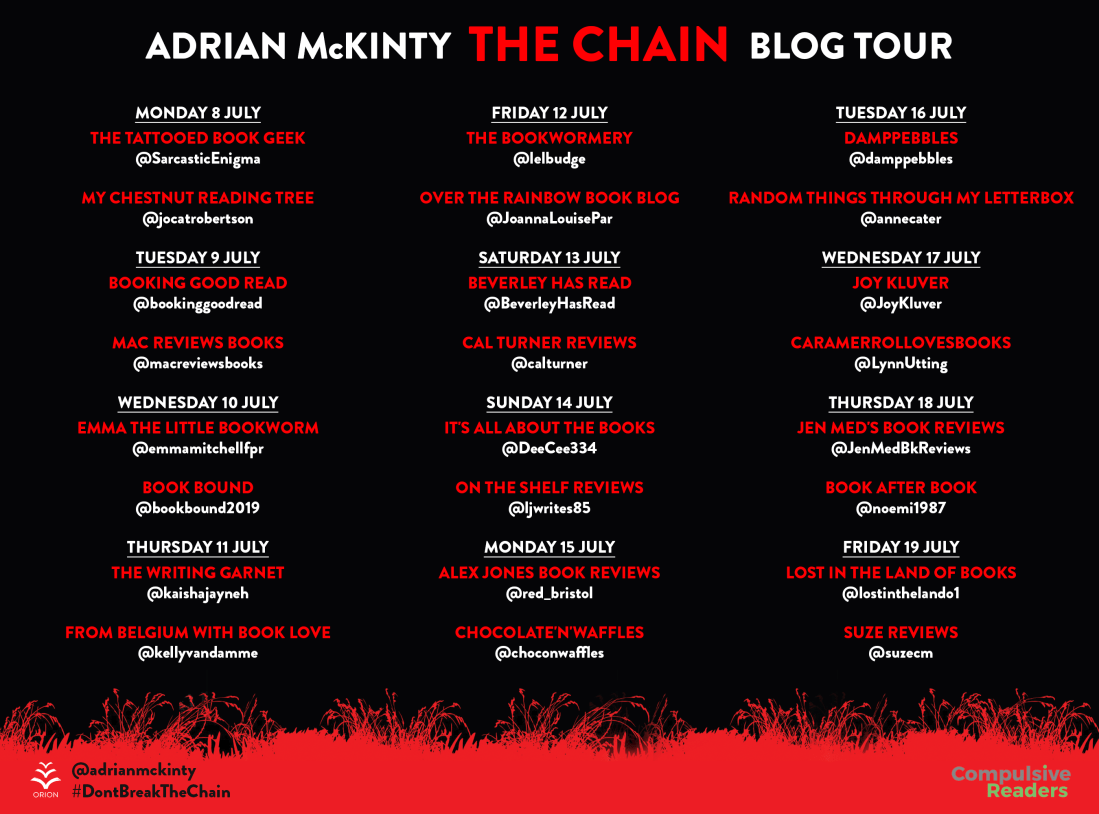
I am delighted to be taking my turn today on the blog tour for The Chain by Adrian McKinty Thank you to Tracy Fenton of Compulsive Readers for inviting me to take part. Are you ready to take on The Chain.

About the book…

Now I am not one to just copy and paste blurbs, but in this case I don’t see the need to mess with perfection. I can’t sum up the premise any better so I ain’t even going to try!

YOUR PHONE RINGS.

A STRANGER HAS KIDNAPPED YOUR CHILD.

TO FREE THEM YOU MUST ABDUCT SOMEONE ELSE’S CHILD.

YOUR CHILD WILL BE RELEASED WHEN YOUR VICTIM’S PARENTS KIDNAP ANOTHER CHILD.

IF ANY OF THESE THINGS DON’T HAPPEN:
YOUR CHILD WILL BE KILLED.

YOU ARE NOW PART OF THE CHAIN

Hooked yet?!???

The power of The Chain lie in the fact that it makes you examine what would you do? It is not coincidence that Rachel is a philosophy graduate and teacher, for this is the ultimate philosophical, moral and ethical question, “What would you do to save your child?”

What would you do to save your own child? Kidnap another child kill another child ?

The fact that Rachel is an unlikely action hero makes this story more compelling. A cancer patient, single mother, just turning her life around, she shows us the ultimate in what you will do when your child is threatened.

Throughout the novel her layers are peels back to reveal a strong independent woman, it is her smart and tactial thinking that pushes the story forward.

When Pete, her ex Marine brother in law steps into the story I admit to a little eye rolling. My thoughts immediately were among the lines of ‘ Here we go, big man to save the day’ but I was wrong . This is a partnership, Pete’s tech knowledge and past experiences are a support to Rachel but his drug addiction continually threatens to undermine their success. All the key mistakes they make are his mistakes, Rachel is the constant, Rachel is the key .

Crucially Rachel embraces life, the catalyst for the books finale is that she doesn’t just want her daughter alive, she wants her to live .

This was pure escapism, but escape into a very dark place where the ultimate moral and ethical question is being asked if you. The plot moves quickly, there is action and tension and more than a sprinkling of those moment which make you want to scream Nooooo! A real plus for me was the use of a strong female lead character.

Can Rachel be the one to break the chain?

This was a quick read, but an absorbing one. If you are looking for an unforgettable summer read then this might well be it!

and there is more…

For more fantastic reviews of this book check out other talented bloggers on the Blog Tour.

Blog tour review : Know No Evil By Graeme Hampton

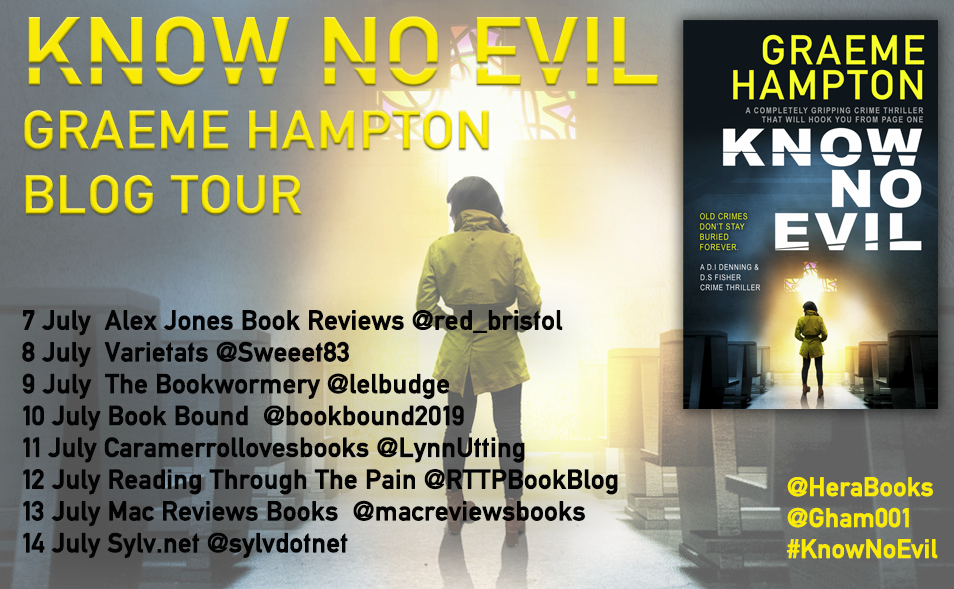
I am delighted to be taking my turn today on the blog tour for Know No Evil by Graeme Hampton. Thank you to Tracy Fenton of Compulsive Readers for inviting me to take part. Won’t you join me on a trip to East London, in the middle of a heatwave, where we might just have a serial killer on the loose?

On to the book…

The streets of East London are the scene for this gripping crime novel. D.I. Matthew Denning is new to the job, recently promoted and new to this team, he is an outsider with everything to prove. When the body of a young mother is discovered in a local park Denning finds himself thrown in at the deep end. At first the murder seems likely to be domestic and relatively straight forward but when other bodies are found all bearing similar hallmarks the case takes a sinister turn.

But Denning has problems of his own. Recently divorced, with an young autistic son, is Denning able to focus on the job in hand? Will simmering resentment from members of his team who feel overlooked and slighted by his appointment throw the investigation off course?

Enter young and upcoming Constable Molly Fisher. Fisher has a particular interest in this case. She approaches Denning after making links between the new cases and those of the Bermondsey Ripper. The trouble is Anthony Ferguson was tried and convicted of those crimes a decade ago and is currently serving a life sentence. Have the Police made a fatal error of judgement or is this a very convincing spate of copy cat crimes?

And why is Molly so invested in these murders? What is the story behind her obsession with The Ripper? Can she separate her personal and professional involvements or will she too be a threat to justice ?

If you are looking for a fast paced crime thriller to get you through the summer then look no further, Know No Evil could very well be the book for you. This story starts with a bang and holds your attention throughout. The plotting is clever, building tension with it’s focus firmly on two police officers both under personal pressure, but both determined to rise through the ranks and prove their worth. Our protagonists are dedicated, vivid and well drawn. The skilful weaving of the personal and professional gives a real sense of three dimensional characters. It is a novel full of characters that are relatable, fallible and believable making the action and thrilling climax all the more powerful.

In the tradition of all excellent crime novels Know No Evil is fast paced and multi layer, each twist and turn drawing us further in. There is a feeling of authenticity and impeccable research. The dialogue is plentiful, snappy and realistic, drawing vivid characters portraits within our minds. There is no stereotyping and no broad sweeping assumptions are made. It is far to say that this is a carefully crafted crime novel where the unexpected is likely and nothing should be taken for granted.

Here’s hoping that this is only the beginning of Denning and Fisher’s crime fighting days. I have a feeling there is a whole lot more to come.

And there is more…

The Blog tour for Know No Evil runs until 14th July 2019. Why not check out more reviews from some other fantastic and hardworking bloggers ?

Know No Evil is published on 10th July 2019 by Hera books.

Graeme Hampton – author of Know No Evil

Book review : The Warlow Experiment by Alix Nathan

On this occasion I see very little point in playing my cards close to my chest, because I am about to gush repeatedly and quite possible extensively about how much I found to admire and love in the pages of The Warlow Experiment by Alix Nathan

This book quite simply took my breath away.

And not because only because as a chronic claustrophobe, I had to read with a curious sense of detachment. It took my breath away as this novel has so much to offer and so much to say.

Throughout my reading I made copious notes, as this beautifully plotted and many layered novel slowly revealed itself. I made so many notes that in truth I am not quite sure where to start.

Part of me wants to mull things over a bit more; this is a book that leaves you pondering and reflecting after each sitting. I guarantee these characters will dance through your dreams and whisper to you while you go about your day.

But another part of me is desperate to review this while it’s all still fresh in my brain. And I feel strongly that this novel deserves a publication day review.

So am starting in the obvious place, at the beginning.

Not just the beginning of the novel but right at the novel’s conception, the point where Alix Nathan found inspiration for this incredible story.
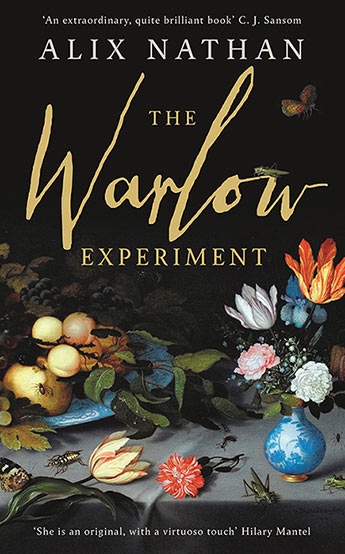
It surely must be an author’s dream to stumble across something as tantalising as a genuine late 1700’s advert searching for a person willingly to spend seven years underground and entirely alone all in the name of science.It is a gift of a starting point, and from it Alix Nathan has created a gift of a novel.

And so we come to our story. Enter Powyss. An amateur botanist, wealthy and living with limited social contact. Considering himself a man of science, tired of simple experiments surrounding his plants, he conceives a scheme to raise his standing in scientific circles.

He advertises for a man to lived beneath his house in specially designed apartments. Filled with books and furnished in style the only thing the chosen subject will want for is human contact. For seven long years.

One man comes forward. Warlow, a local labourer, a married man with minimal education and a growing family. His labours will earn him £50 a year for life and his wife and children will be well cared for during his time away.

The novel begins as Warlow enters the apartments. At this point it is not necessarily the confinement that is the cause of his immediate discomfort but rather the palatial surroundings he finds himself in. Everything that Powyss has seen as essential to Human enjoyment and sustenance, books, fine china and linen, even an organ is entirely alien to Warlow.

From the beginning obvious tensions and paradoxes are apparent. Powyss sees himself as educated, even worldly and yet his actions and reactions particularly to Warlow underline his naivety and social arrogance.

Powyss does not understand the working man, he does not understand how his estate runs, how the people he employs think and feel.

Choosing to dismiss his acquaintance Fox’s lyrical letters highlighting social unrest, beginning with the French Revolution and spilling across the Channel in the form of workers uprisings, Powyss see the wider world as irrelevant to him. Powyss pointedly ignores his gift of Paine’s ‘Rights of Man’, leaving it’s pages uncut, whilst key members of his staff are lapping up it’s teachings.

In fact, far from isolating himself from what is happening in the wider world, Powyss is replicating a societal microcosm in his own home. What could be more pertinent to the ‘Rights of Man’ than choice, education and freedoms? At so many points the novel is an astute exploration of the nature and notion of universal suffrage.

For quite unwittingly Powyss has created a world where perceived order and hierarchies are being subverted. Power shifts as Powyss comes to understand the implications of what he has done. How easy will it be to release this man after such a period? After years of repression, confinement and potential suffering, what kind of retribution will Powyss face. Once again we staring down a metaphor for a wider socio-economic situation.

Or course it is of no surprise that the experiment fosters danger. But does this danger come from the expected quarters ?

The experiment brings change, upsets balance and careful order. It doesn’t just change Warlow but everyone who comes into contact with it.

And of those affected who, poses the greater risk to wider stability.

Is it Warlow? Living isolated and becoming more disassociated from the world and his own self, beginning to understand, even fleetingly, just how important even small freedoms can be.

Or does risk lie in Powyss’ own shifting priorities? For a man who seems to revel in his self perceived solitude, the experiment is bringing dramatic changes to his social circle. Warlow’s wife Hannah is strangely beguiling. What effect will her presence bring to the situation?

And we shouldn’t underestimated Abraham Price and his sweetheart Catherine, master gardener and housemaid, two of Powyss’ overlooked staff. Both are dissatisfied, both drawn to political developments, but who will take their frustrations to the next level?

The experiment is ill conceived of that it there is no doubt, both subject and creator end up trapped and changed by their experience.

Alix Nathan has created a masterpiece. And I don’t say this lightly. There are so many layers within this novel. So many recurring themes, strands that weave beautifully together.

Clearly this is a meditation on what if costs to live both within the world and the effects of being removed from it. But it’s also offers valuable comment on such themes a religion, personal and political power, rights of women and suppression of humanity. It is a novel with a social conscience, a love story and on many levels a tale of horror.

My review is, I hope, heartfelt but is actually a mere skim across the surface of this incredible tale. One blog review will not unlock the wonder of this novel, but I hope it persuades you to turn the first page.

From there you are lost…

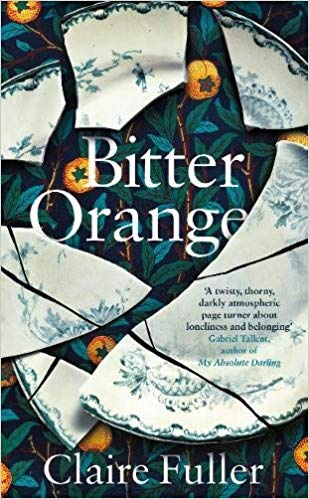
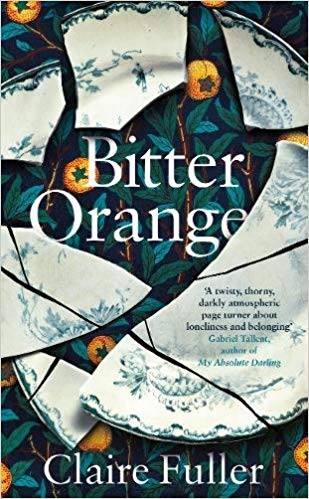
Book review : Bitter Orange by Claire Fuller

I am certainly a little late to the party with this one but ‘wow’, what an absolute gem. This was chosen as a read for one of my book clubs, and I am so grateful it was. The novel had been languishing, undiscovered on my Kindle for weeks and I had clearly been missing something very special.

Before I go any further I must say a big ‘Thank you ‘ to Claire for kindly providing our group with some great ‘book club’ questions. It focused our discussions and gave us a great insight to this multilayered tale.

So what’s it all about? Well a brief synopsis is called for here because one of the joys of this novel is in it’s unravelling. An air of mystery is present from the beginning and pervades throughout, and there is no way I am spoiling anyone’s reading pleasure!!
We begin at the death bed of Frances Jellico. Triggered by repeated visits from the ‘vicar’ Frances is swapped by memories.

It her mind she is back in 1969. A long summer when Frances, recently released from a life of caring and drudgery after the death of her mother finds herself working in a crumbling country house. Tasked with cataloguing and researching the house’s horticultural architecture by it’s new American owner, she finds herself living alongside an intriguing couple Cara and Peter.

Cara is fiery, unstable and longing for Italy. Peter, there to catalogue the inside of the house, seems both drawn to and unsettled by his partner’s unpredictability.

Frances is certainly drawn to both Peter and Cara. Attraction to Peter pulls her close and Cara’s compelling stories seem easy to believe, however unlikely they maybe.

Parallels can quickly be drawn between the two women. Both have difficult relationships with domineering and seemly cruel mothers, both seem to worship fathers long since absent. The lack of parental guidance has all too clearly left it’s mark. Peter seems to take on the mantle of both lover and father figure for both women at various points. Parental chaos is a key underlying theme of the novel.

All three characters fall into a Bohemian and careless routine. Drinking and eating late into the night, pulling each other into strange confidences and conversations, making unlikely and misguided decisions. Decisions that will have terrifying consequences for all concerned.

The state of the house; that of faded grandeur and with an air of broken down convention, has a dramatic and far reaching effect on all three characters, but perhaps most markedly on Frances. Here we see a casting off of restraint. This rather uptight and cowed Woman steps into the light, casting off her Mother’s hand me down girdle and donning floating vintage gowns. Along with her clothing she sheds morality and normality, swept away by this heady new atmosphere and strange, remote setting.

Moreover the house seems to act as metaphor for the character’s lives. It reflects the jaded nature of their past but it too has a history is full of complexity and sorrow. The turmoil of the buildings mirrors the turmoil all the central characters seem to find themselves mired in.

For all of our characters are searching for a truth, a reason for a being, a deeper meaning to their existence. All protagonists have secrets, some more shocking than others. And all are trying to find a way to make peace with those secrets and reconcile themselves with decisions they have made.

At times it feels as those there may be supernatural forces at work within the house. Frances particularly experiences unexplained and unexpected events within her rather shabby sleeping quarters. Confusion and chaos increase throughout the novel, but is it real or imagined? Supernatural or a reflection of the state of someone’s happiness or guilt? Is it just easier make a glib reference to ghosts or even miracles, rather than confront an uncomfortable truth?

For be in no doubt, the narrators in this novel are nothing if not unreliable. Cara is feted as the obvious problem but slowly we come to question everyone’s reliability and integrity. Who, if anyone can we believe? What is Frances hiding? What of Peter’s past? For even the house has secrets that it won’t easily relinquish.

There is a pervading theme of seeking the truth, of spying on others, of listening at closed doors and only hearing part of a story. Characters in this novel are not in possession of the full facts, they can’t see the full picture and the consequences are dire. I promised no spoilers but Frances first discovery is a clear signpost for truth seeking and secrets in the most clandestine of ways!

Because from the start the reader is working through a fog of confusion. Where is Frances now? Who is this ‘Vicar’, and why is he bringing her back at the end of her life to a summer long ago?

As the story concludes ask yourself; are you sure of the truths you have acquired? Or do you need to spend a bit more time with Frances, Cara and Peter? Is there more to unravel in this rather complex web of ‘truth’?

Claire Fuller has created one of those delightful books that is so easy to read and utterly compelling, yet is multi layered and complex. One of those books that is just meant for discussion, that becomes even more vibrant and in this case, sinister with continued thought and probing.

It is a book ripe for rereading, with the promise of finding yet more hidden treasure.

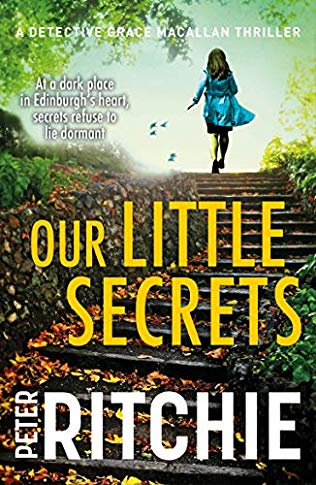
Book Tour Review: Our Little Secrets By Peter Ritchie

I am delighted to taking my turn today on the blog tour for Our Little Secrets by Peter Ritchie. Thank you to Alastair Chivers of Black and White Publishing for inviting me along for this glimpse into the Edinburgh Gangland, in all it’s menacing glory.

On to the book…

Our Little Secrets is the fifth instalment of the Grace Macallan series.

Set in Edinburgh, we catch up with Grace, who is trying to establish where her life is heading. Has she got a future in the force, or does she need to break away for the sake of her family and her own peace of mind?

Meanwhile there is a new woman on the scene. DI Janet Hadden is a woman on the up. Ruthless and without boundaries she is looking to make her mark at any cost. Passed over for promotion, she is out to prove herself, pulling in one of the Gangland’s more notorious figures, Dominic Grainger.

The problem is that Grainger is not as sharp as he used to be and has pressing problems of his own. So begins the construction of a precarious but rather deadly house of cards. It’s going to fall but who will be buried when it does?

If you like your criminals hardened and the stakes high, then this is certainly the novel for you. Ritchie has painted a grizzly portrait of the Edinburgh Underworld. It is a dangerous place with it’s own rules, it’s own hierarchies and a web of intrigue and lies. The authenticity of this dark place where everyone is keeping secrets and no one is being straight can not be over exaggerated. The feeling of menace and tension leap right off the page leaving you terrified but, paradoxically, immediately wanting more.

Ritchie is a master of the plot. He spins a complex mesh of deceit and double crossing, perfectly woven to create a multilayered tale that all comes together in climax that pushes at the boundaries of tension

The focus of this story is on the darkness of it’s characters. Characters who are laid bare many times over, characters who are convincing, often repulsive but always compelling. There are no one dimensional ‘baddies’ here. Their motivations and histories are presented to us, layered up chapter upon chapter, making their actions seem strangely logically and the plot wholly believable.

The lines between traditional perceptions of right and wrong are continually blurred, often warped beyond recognition. Dominic Grainger is barely on the right side of wrong, hiding his crimes behind a legitimate facade, racking up debts and trapped in an unhappy marriage to the daughter of a Gangland chief. His police contact Janet Hadden is cold manipulative and devoid of compassion. Pushing her way through the ranks, she spins her web of informants, but has she stepped too far over the line?

Ritchie is a master of creating complex characters, with histories and high stakes, but crucially, with flaws. Throughout the narrative there is the feeling that no one is running at the top of their game, no one is playing a perfect hand. It is just a matter of time before something or someone tips the balance with a deadly mistake, but who is that going to be?

Greed and long held grudges drive the action forward. No one is prepared to let anything slide, no one is going to be made a fool of and everyone just wants just one more slice of the action. All these strong and brutal characters make for an explosive plot with a fiery conclusion.

And the key question remains can Grace Macallan put the pieces together and will justice, whatever form that may take, be served?

There is no getting away from the fact that this novel is brutal in it’s authenticity. Be warned through out there is strong language, strong feelings and violent confrontations. Violence is the language spoken here and it’s perpetrators have long memories. And it makes for very interesting times!

About the Author

Peter Ritchie is a retired senior police officer. The real- world authenticity in his novels comes from vast experience gained working in CID, murder squads, Serious and Regional Crime Squads, NCIS London and Europol.

Our Little Secrets by Peter Ritchie is published on 27th June 2019 by Black and White Publishing.

And there is more…

Check out other reviews of this gripping novel. Enjoy!

The Snow Goose… and other tales…

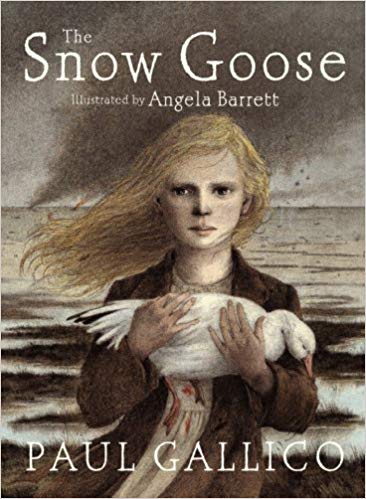
Continuing my with my mantra of keeping the blog individual I would like to introduce, or maybe reintroduce, you to The Snow Goose by Paul Gallico.

Written 1940, this novella is in no way a new release. It is the story of Phillip Rhayader, an artist and conservationist, living alone in abandoned lighthouse on the Essex marshes. Rhayader survives with limited human contact. His outlet is painting and caring for the wildfowl which surround him. All this changes one day when Fritha, a local girl arrives with a injured Snow Goose.

Through the bird Rhayader and Fritha build a bond. The Snow Goose winters at the lighthouse, leaving in the summer months, and this pattern reflects the nature of Rhayader and Fritha’s relationship; when the Goose leaves so does Fritha.

Suddenly the world is plunged into war. Rhayader leaves the lighthouse in his little boat to sail to Dunkirk as part of the evacuation of the beaches. The Goose flies with him, watching over the mission. As this strange man and his bird become part of the solider’s folklore, Fritha waits at home. Waiting to see if both or neither will return.

It is a simple and beautiful tale. I know people who have cherished it since childhood, however I have only discovered it the last few years. And it is not the subject matter it’s self that gives it a special place in my heart and on my shelves.

It is the setting. The lighthouse.

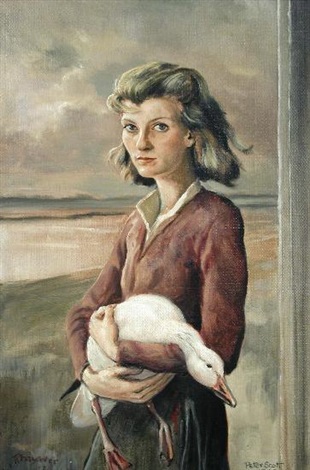
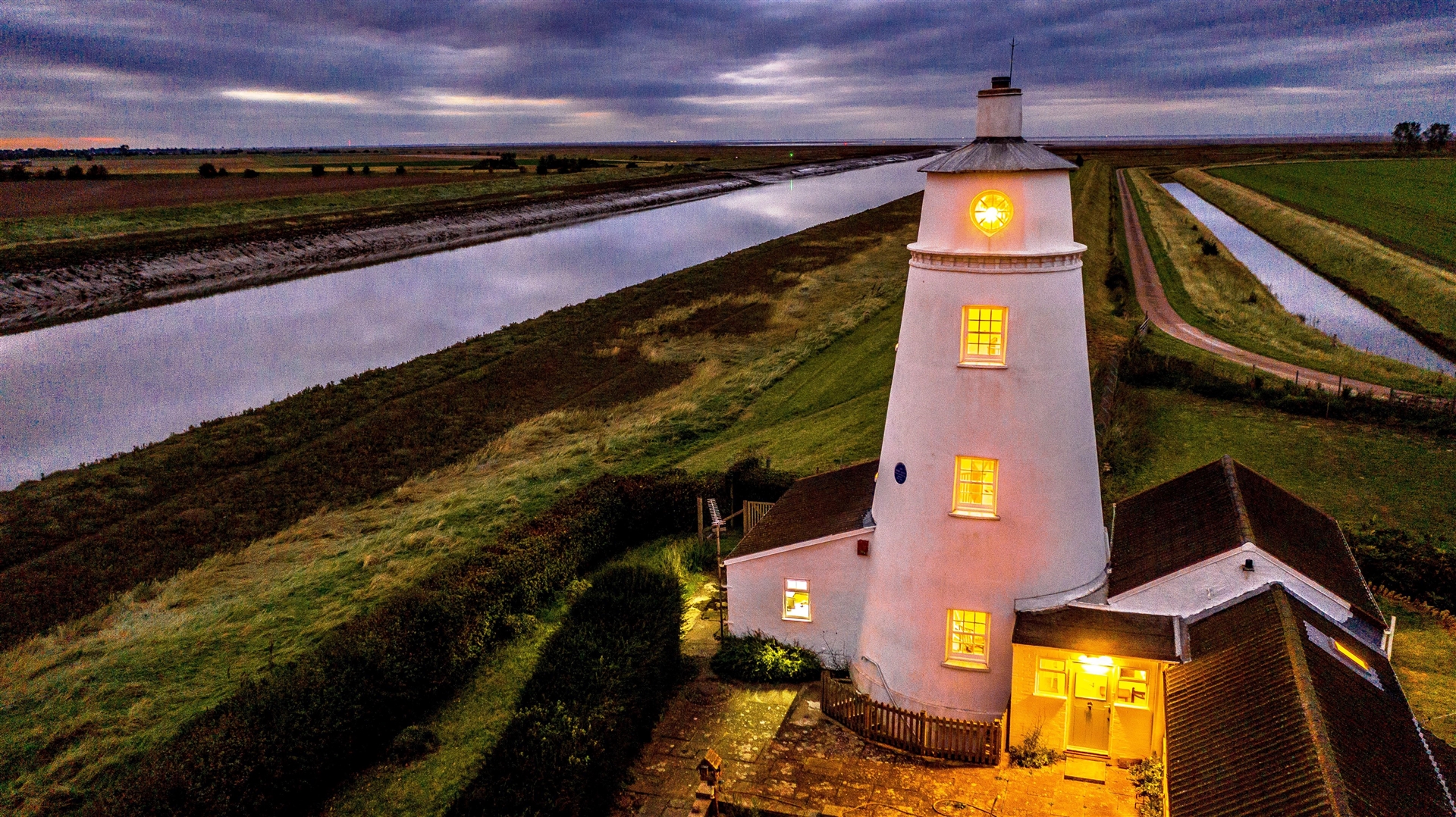
For although this book is set on the Essex’s marshes it’s true inspiration comes from the Fens of my childhood and my ancestors. Rhayader’s lighthouse is in fact the East Bank Light house in Sutton Bridge, on the the mouth of the Lincolnshire Wash. And the Rhayader himself is inspired by Sir Peter Scott, son of the ill fated Antarctic explorer Robert Falcon Scott and sculptor Kathleen Bruce who lived and painted in the lighthouse from 1933 to the beginning of World War II, when it was requisitioned by the Army.

When the English editions of The Snow Goose were published it was Scott who illustrated them, using his first wife as a model for Fritha, the novelist Elizabeth Jane Howard.

It was during his years at the rundown lighthouse Scott underwent his transformation from Wildfowler to wildlife artist and conservationist. He went on to found the World Wildlife Fund and The Wildfowl and Wetlands trust. When asked what the war had cost him, Scott replied ‘his beloved lighthouse’.

And if it was Scott’s beloved lighthouse, it was also an important part of my childhood. In the early 80’s when I would visit with my Grandparents, the lighthouse was derelict and slightly spooky. But somehow ‘ a ride out to the lighthouse’ was always a treat. We would climb the gates and pick samphire on the marsh, Nana’s warning of the creeks ringing in my ears.

The thrill of seeing this childhood landmark depicted in any pages will never quite leave me. Gallico is sharing my lighthouse.

East Bank Lighthouse, Sutton Bridge, Lincolnshire.

It wasn’t until years later that I realised that when Scott lived there my Nana would each day hike up the bank to deliver his milk. She had also turned down his offer of making her his housekeeper, proclaiming the spot too remote.

So instead my Nana hiked back up the East Bank to her home at the Port Hospital, where she lived with two maiden aunts, since she was orphaned in childhood. Aunt Rose and Aunt Alice, Burton sisters and matrons of the Port Hospital, following the footsteps of Burtons since 1881.

1881 when their Grandfather Edward Burton was given charge of the hospital . Built to serve the Sutton Bridge port constructed in the same year.

The port that welcomed just one ship before it collapsed back into the Nene. Taking all the hopes of prosperity and jobs with it.

But somehow inexplicably the Port Hospital remained, cleaned daily and fully stocked. Until it was sold in 1949 it never had a patient. One birth, my mum in 1950 born in the Hospital House, but no patient was ever cared for on it’s wards.

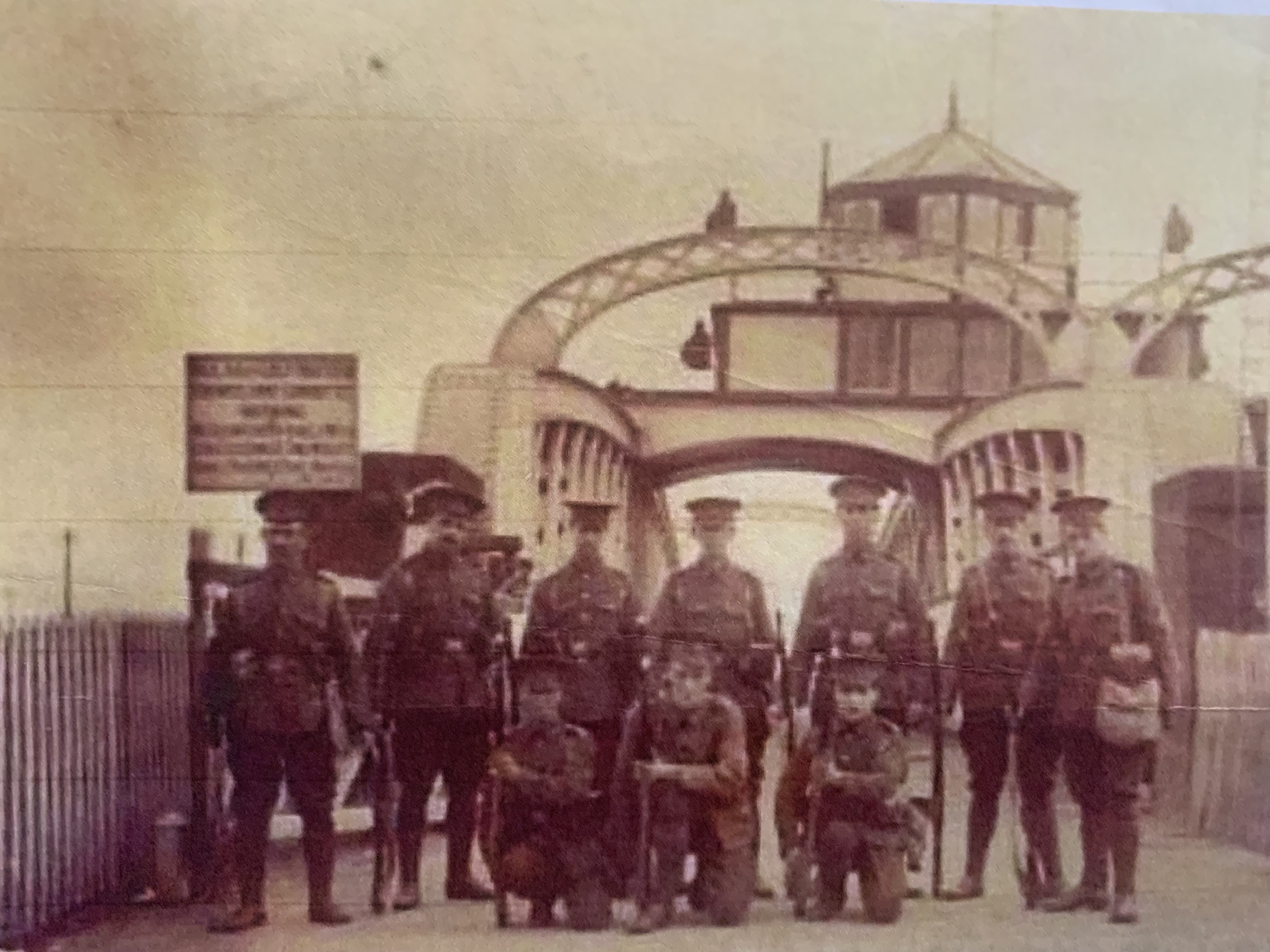
After losing her fiancé in WWI the hospital and raising my Nana became Alice’s life. In my jewellery box sits Alice’s engagement ring and a sliver crucifix, sent back from the trenches for safe keeping. I have this soldiers gifts but I still don’t know his name. Did he go willingly, or was he conscripted? Did Alice know where he was buried? Is he one of the local lads posing on the Cross Keys Bridge?

Soldiers on the Cross Keys Bridge, World War One.

What I do know is that Alice would have watched German Prisoners of War work each day on the East Bank of the Nene. From the camp over the river, they would come to repair the sea wall, build cottages and work the land. How did Alice feel about this? Was she resigned? Angry? Despairing?

Alice and her landscape has haunted me for many years. My mum and my aunt both remember her, she having lived with them until she died. Auntie was fiery; she would promise all political parties her vote for a lift into town on Election Day. It was up to them who got there first!

Alice has a story, and incredible story. And one day Alice I promise I will take your landscape and paint your picture. There is a book in there, I know it.

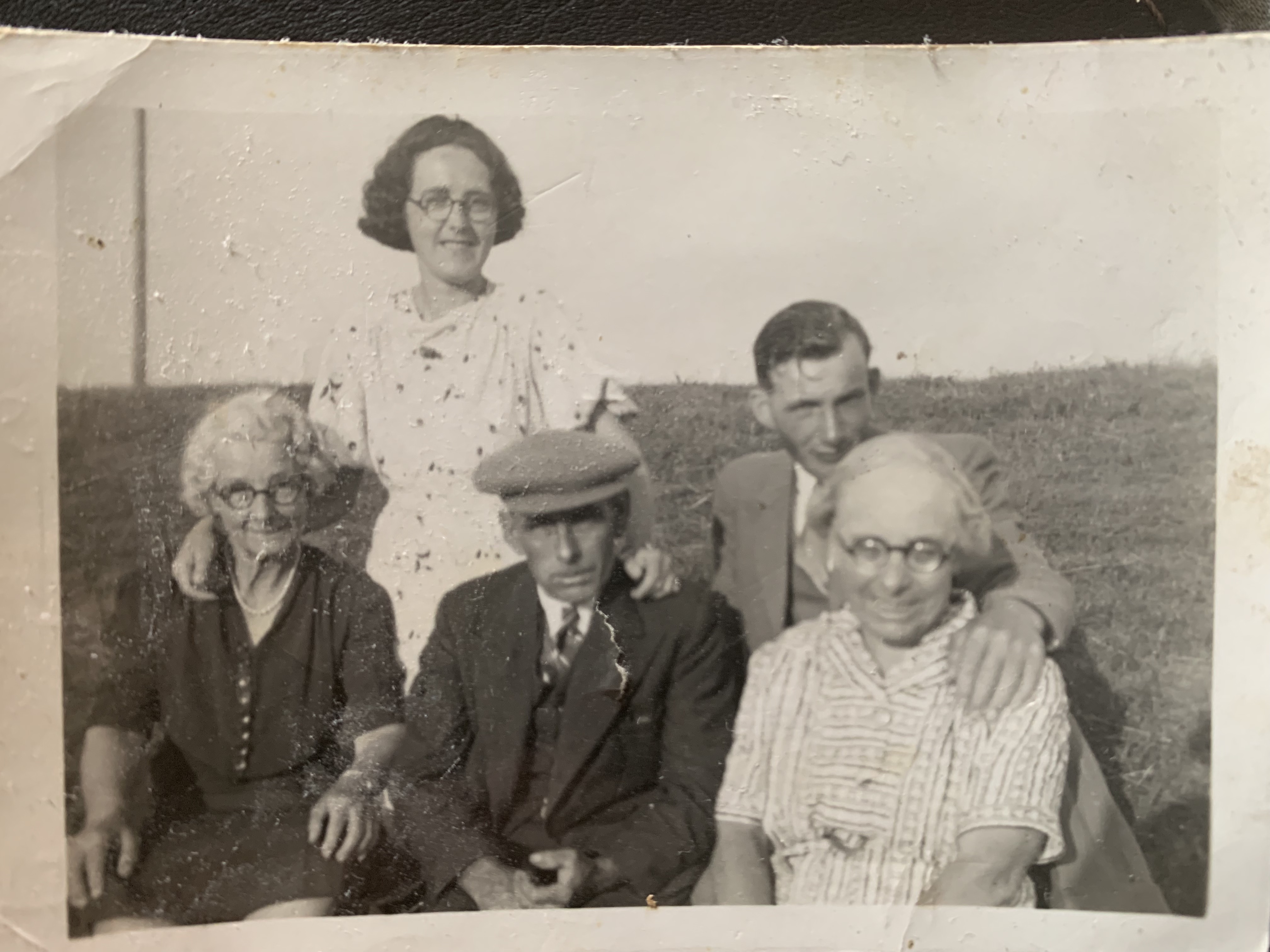
Front row from far left: Aunt Alice, Uncle Dave, Aunt Rose
Behind: Nana- Ivy, Grandad – Stan.
On East Bank Sutton Bridge.

Book review: Remembered by Yvonne Battle-Felton.

With the announcement of the winner at the beginning of this month, I thought I was done with my Women’s Prize reviewing. But when I finally pulled Remembered from the tottering pile of bedside books I was only 30 pages in when I realised that there was no way I could ignore a book of this power and importance.

Set in 1910 Philadelphia, this is the story of Spring and her journey from freedom, to slavery and back again. Spring recounts her story to her son Edward, who is lying broken and dying on the coloured’s ward of the local hospital. Accused of deliberately running a streetcar into a shop window, Edward is the focus of an angry white mob gathering outside. Neither Spring or the ghost of her dead sister Tempe believe that Edward is guilty. Her son’s time is short and in his remaining hours Spring focuses on attempting to tell him of his roots and of the people who nurtured and created him. We follow both the living and the dead on a journey to impart the history of Edward’s young life.

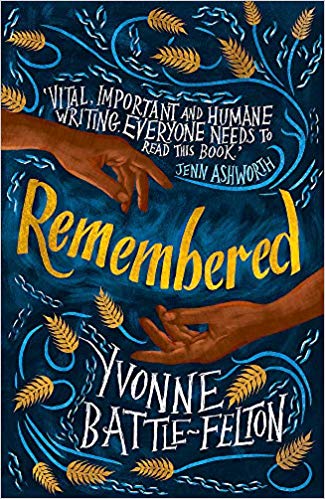
Remembered by Yvonne Battle-Fenton

Remembered is a vibrant and tragic portrait of the reality of slavery. Told through vivid voices, here is a story alive with ghosts and the heaviness of dark spirituality. Taken from the streets of Philadelphia by a team of slave traders, where she had been living as a ‘free negro’ our story begins with Ella. Alone, abused and struck mute with terror she finds herself enclosed within a slave community who work together to ensure her survival.

Ella arrives on apparently cursed Walker plantation. Apart from Agnes no baby has been born or survived on Walker land for years. Instead there is a unit of strong women working together to break the bonds of slavery. Here are women taking control of their reproductive health , their sexual encounters, all working to ensure that no more children are born into slavery. Here are women working together with a collective knowledge and history to prevent childbirth , prevent intercourse and shape their shared futures, however dark and extreme these actions maybe. These women’s are making choices, even when these choices don’t appear to be desirable. The ability to choice as a push against slavery, however small it may appear to be.

For as much as this is a mediation on slavery this is also an exploration of motherhood. How far will a mother, or even a collective of mothers go to ensure a child’s right to freedom? These women ask and answer the difficult question, is earthly survival the most important prize or is that superseded by gaining spiritual freedom?

Battle- Felton creates striking portraits of women who are prepared to embrace death rather than slavery. With a belief in an afterlife that is strong and sustaining they are prepared to end the life of a child to ensure it’s heavenly freedom. For women used to playing the long game, waiting and hoping for liberty, death is a beginning not an ending.

Just as motherhood can transcend death, then motherhood cuts through the bonds of blood. Women in this novel mother as a collective. They raise each other’s children, drawing strength from a shared belief. We see women coming together to protect and sustain their families, always looking for a better time. Even if gaining ground might involve the ultimate earthly sacrifice.

This novel is a powerful example of the oral storytelling so strongly affiliated with the story of slavery. Here are a group of slaves, holding their own histories and preserving their own identities. There is brutality, but there is hope and a sense of a community which defines characters own lives and identities. There is a need to passon their personal stories and a completeness in doing so.

This book really impressed me. The richness of it’s language and the sense of dark momentum driving it forwards brought to mind the work of Toni Morrison and had much in common with Marlon James’ brilliant Book of the Night Women. This is an empowering and significant novel.

I am so glad that I wasn’t quite done with the Women’s Prize.

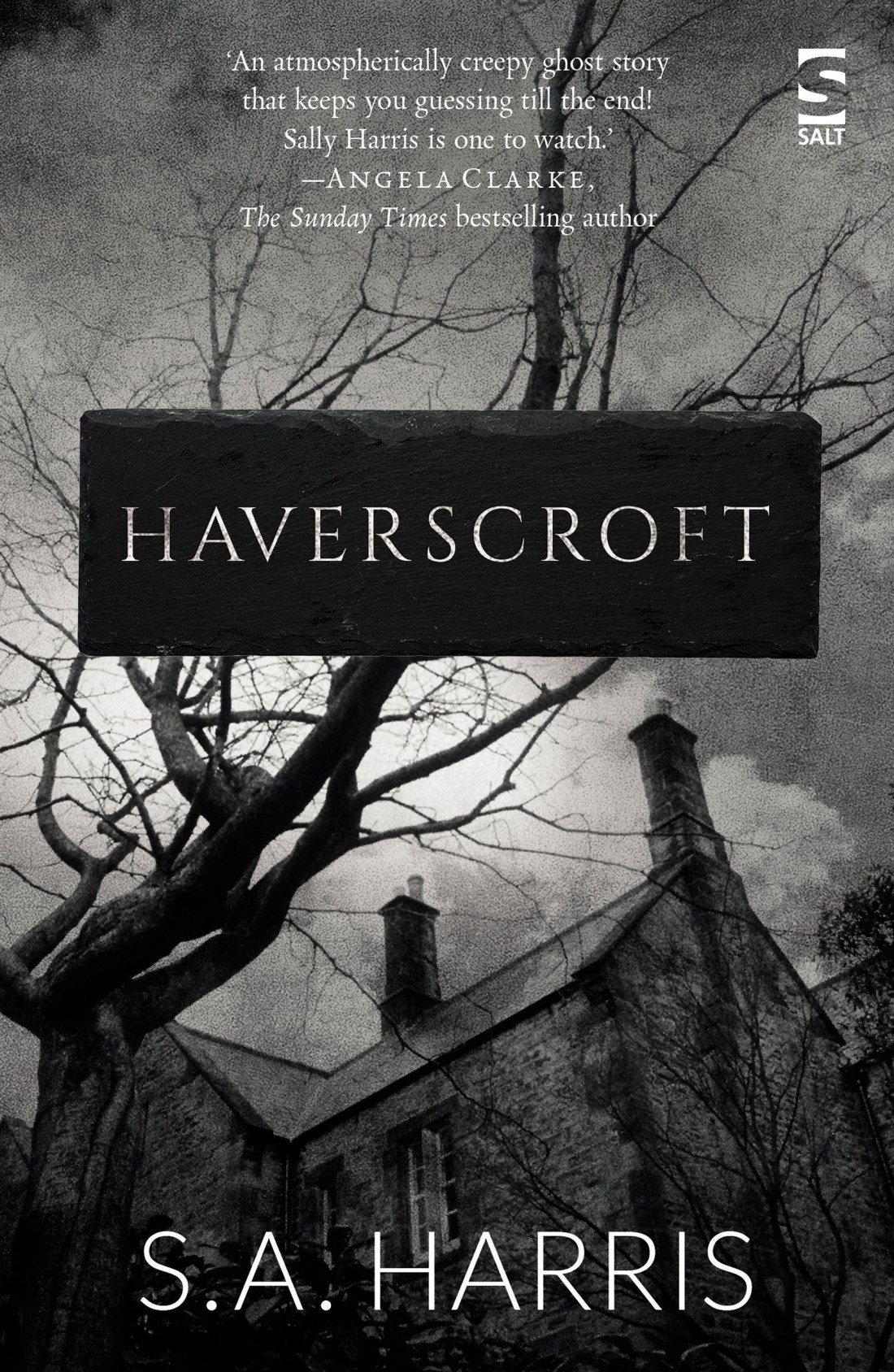
Book Review: Haverscroft by S.A.Harris

I am always in the market for a good ghost story. Followers of Bookbound may well remember that Susan Hill’s classic ghost story ‘The Woman in Black’ made it, rather strangely perhaps , into my Top Ten Comfort Reads. I like nothing better than raising my heckles and disappearing off to dark, forbidding places, bring on the spooks I say!

But the trouble is, in recent years I have found good ghost stories rather hard to find. By the way I am quite happy to be proven wrong in this assertion, so feel free to send me your best supernatural offerings. But be warned I am quite picky. I am not talking horror here, not overtly gruesome or grizzly. I am talking about an old fashioned ghost story, filled with lots of psychological head messing and gloomy attics. Ideally it will contain a storm and definitely an isolated house with untold secrets. Throw in a few freaked out locals for good measure and I am in clover .

The last great ghost story I remember reading was Sarah Waters delicious The Little Stranger. Dark, powerful and reread at least twice, it scratched my ghost story itch. I was starting to think that no one was writing great ghost stories anyone more.

Then along came. Haverscroft

In the past few weeks my Twitter feed has been increasing filled with talk of a new, exciting supernatural tale. Written by Sally Harris and published by Salt, this was a modern ghost story; bang up to date in setting and style but with all the ingredients for a perfect ghost story and more.

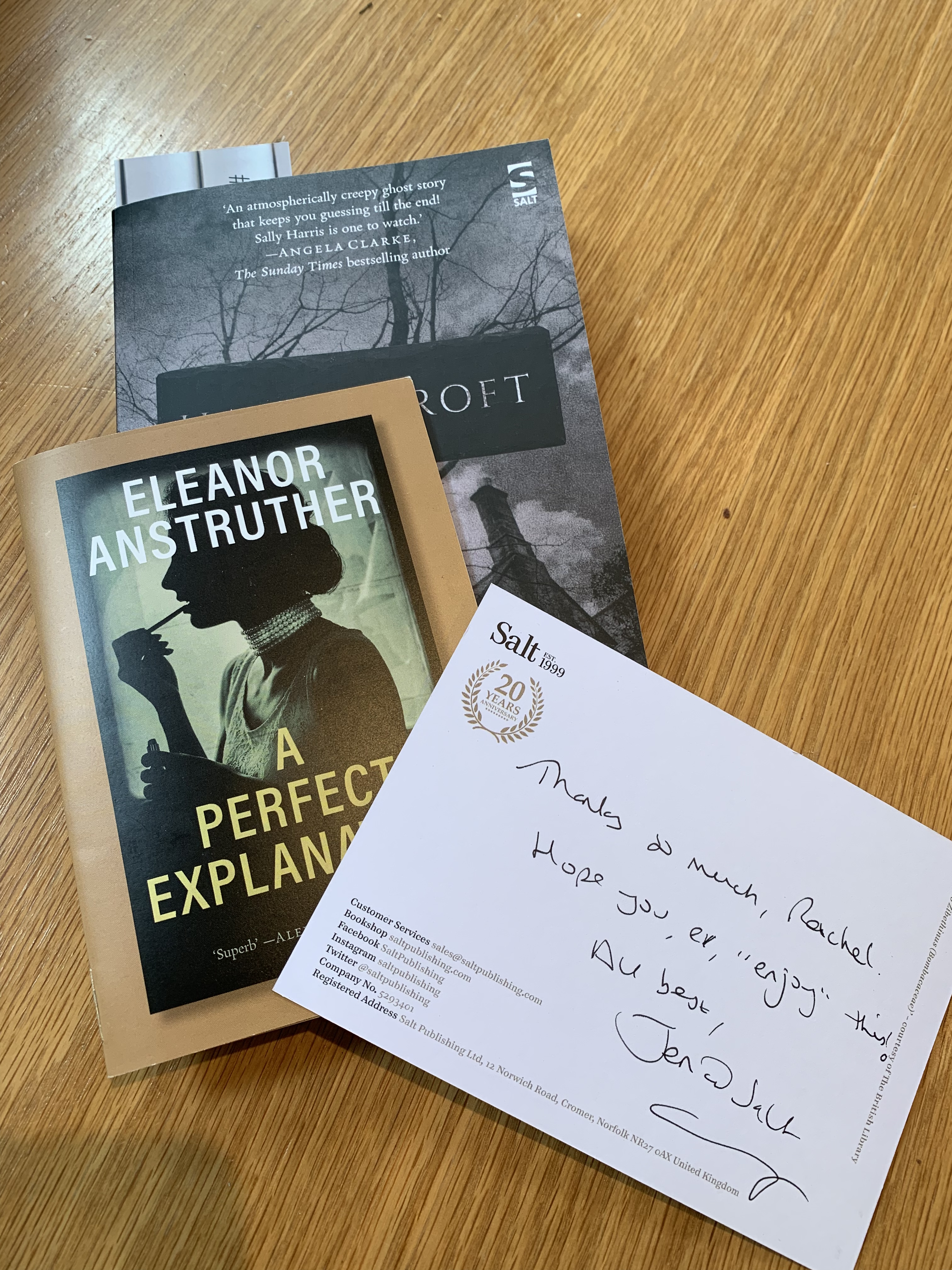
When my beautiful little bookish bundle arrived from Salt, right in the middle of half term, I suspected I was in for a treat.

So here begins the tale of Kate and Mark; we join them on the day they move to Haverscroft, a rundown house in the countryside. Escaping from their London life and trying to repair the cracks in their marriage, the couple arrive at Haverscroft with their young twins. Mark is sure that this the place for them, he is confident and firmly grounded in reality. By contrast Kate is unsure; buying the house feels like a concession to her past mistakes. She is recovering from a breakdown, has left the city and her old life in a determination to make the marriage work. Driven by guilt and uncertainty it is a shaky ground for a new beginning.

Add in the locked attic, sealed by the previous owner, the strange Mrs Havers, doors that refuse to stay shut and an expensive but crumbling classic car in the garage and the we are heading towards ghost story perfection.

Yet Haverscroft is so much more than a standard ghost story. Sally Harris has built this story in a modern and beguiling way. Kate is our guide through this old house and all that comes with it. Her vulnerability makes her immediately relatable, her determination to make this work for her family makes her admirable. And yet her struggles with her mental help don’t make her appear entirely reliable. Harris has created this unreliable narrator to increase the readers interest and make us question what appears to be happening. Can we trust Kate ? Are the things she is experiencing and feeling supernatural happenings or are they due to her fragile mental health?

Slowly and skilfully Harris paints the picture; Kate is not a one dimensional static character. She grows in strength and confidence as the novel progresses. Her feelings about the house and it’s happenings are supported and reflected in the reactions and experiences of the twins, Shirley, the house keeper and other locals. As the house begins to reveal it’s secrets and difficult questions are asked then it moves from being vaguely unsettling to toe -curlingly terrifying.

And if Kate is an unreliable narrator, she is not the only one. In a tale spun of secrets, the feeling that few characters are telling the whole truth adds to the mystery and uncertainty. Mrs Havers, with her selective memory, Mark with his strange behaviour, disappearances and unsettlingly communications; just two of several further examples of an unreliable narrator. Haverscroft is a tangled web of half truth and secrets untold.

Another reoccurring theme is that of mental health. At first Kate seems isolated and alone in her struggles, yet as the novel progresses other characters are revealed as having their own mental health issues. Richard Denning, long time gardener and friend of Mrs Havers has been in an asylum, his past spreading suspicion and doubt on his present and future. The secrets of the house are tied up in the Post Traumatic Stress of Edward Havers war years and his subsequent behaviour. And how far can we trust Mrs Havers? Is she trapped in the beginnings of dementia as Lyle, the local solicitor would have everyone believe.

Herein lies the strength of Harris’ exploration of mental health. It is others reactions to another’s mental health that provides catalyst for the drama, both in the past and the present. There are parallels between Mark’s behaviour and his reaction, some may say exploitation of Kate’s illness, and reactions to both Mrs Havers and her sister by Edward Havers. Here is a story that focuses on power, power within relationships and how love and guilt are used to control, even years later.

Harris has creative a breathtaking portrayal of the damage caused by secrets and what happens when secrets and grievances refuse to die. Using the classic ghost story motifs surrounding lost children and troubled marriages Harris has written a bang up to masterpiece. It’s domestic setting and attention to detail makes it entirely relatable and it is all the more bone chilling for it.

Thank Sally Harris for giving me another great ghost story to ‘enjoy’ and proving to me that the art telling a ghost story is not forgotten.

Haverscroft is published by Salt Publishing and can be bought right here!

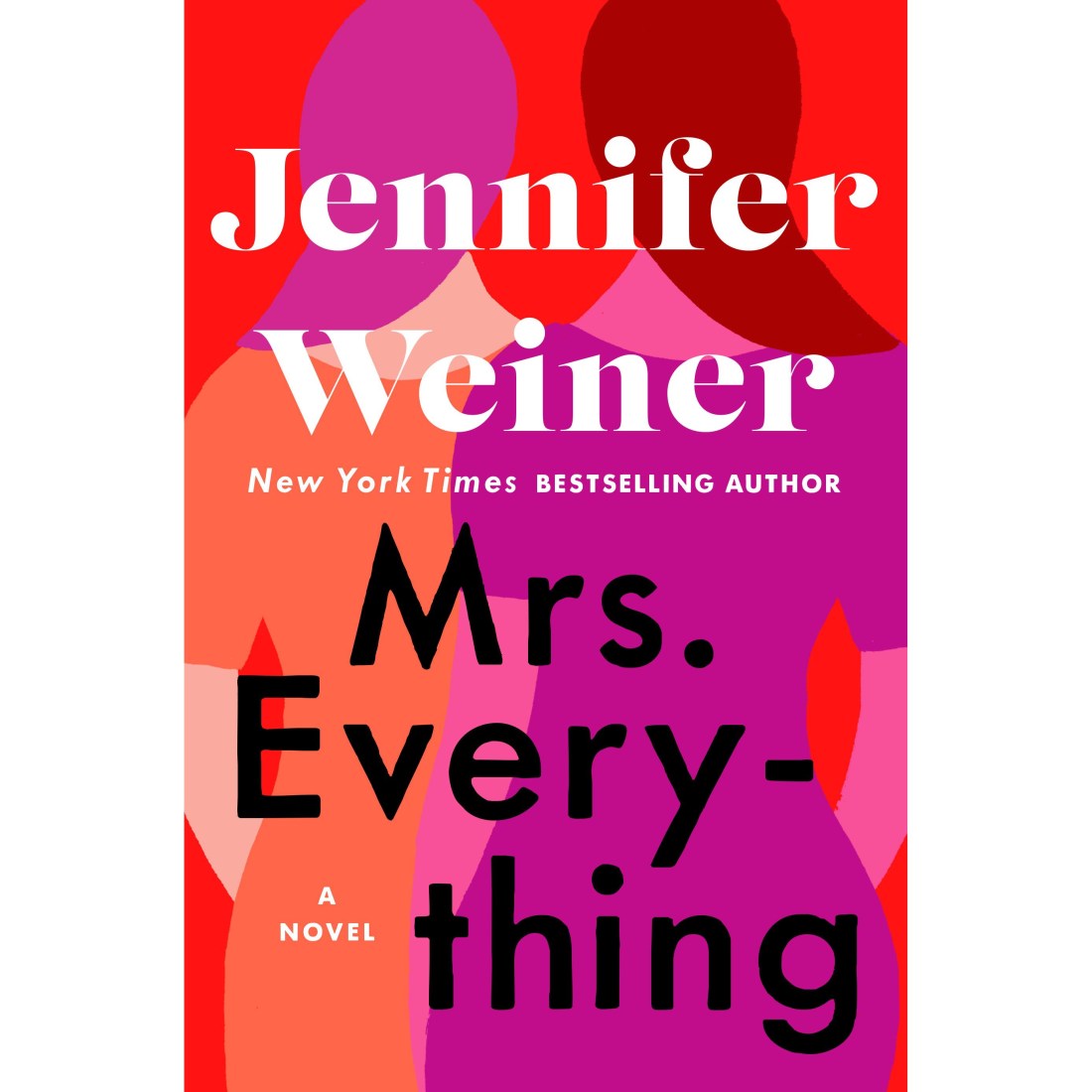
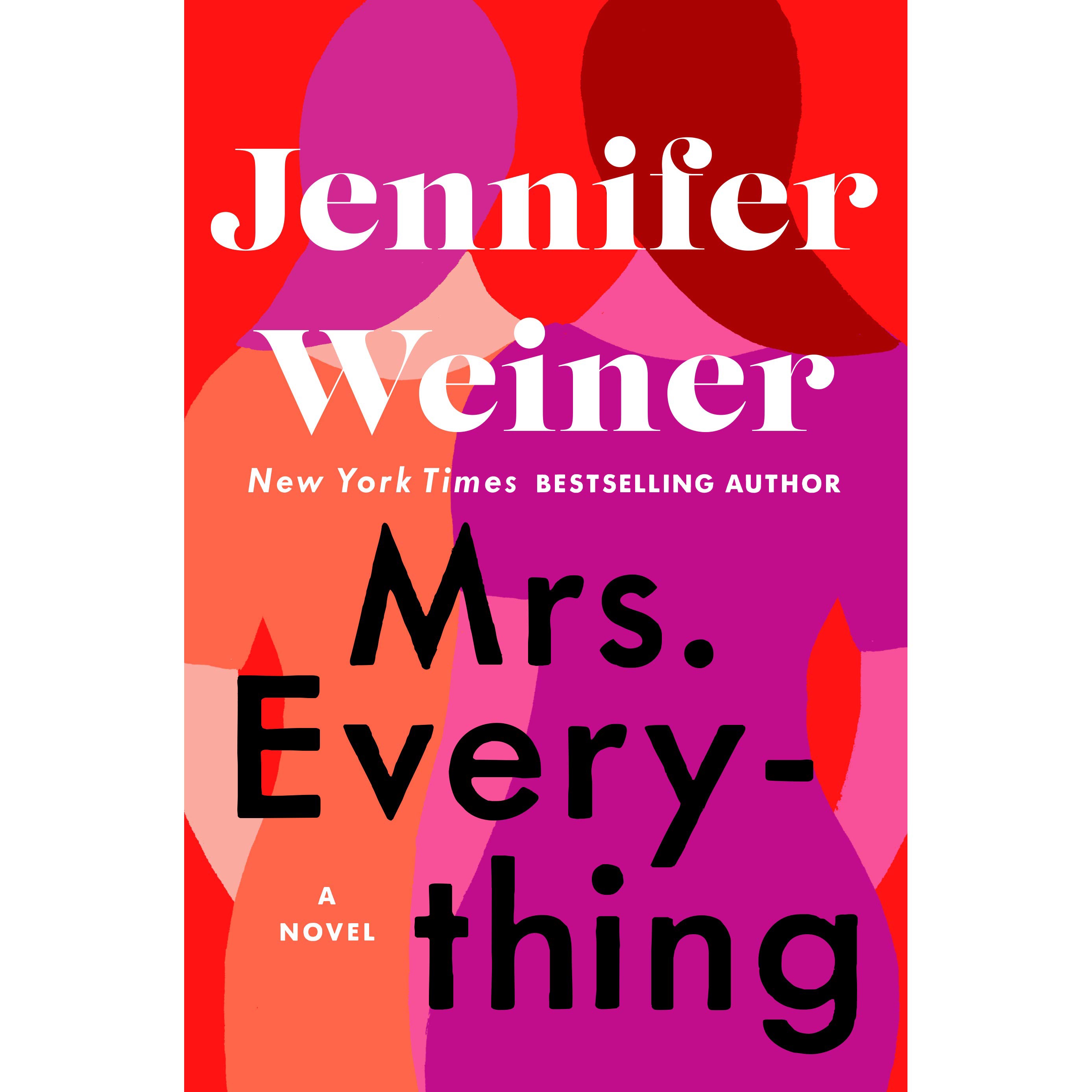
Book Review: Mrs Everything by Jennifer Weiner

Mrs Everything is a compelling American family saga published by Simon and Schuster on 11th June. Thank you to the publishers for my digital advanced reader copy in exchange for an honest review.

The story of two very different sisters Jo and Bethie begins in the 1950’s and comes right up to date with the #MeToo movement. This is a novel that highlights a society experiencing a sexual and political awakening. Through the staid years of the 1950’s, to the civil rights and anti war protests of the 1960’s, the Women’s liberation movement of the 1970’s, we follow these two women. From the outset it seems their lives are predetermined but surprising circumstances and equally surprising decisions carry the women along different paths. Nothing is predictable and if you think you know where this story is going you probably don’t!

Spanning three generations, this is a book about over coming societal norms and ploughing your own furrow. This is a story of discovery, of what it costs to find yourself, to be comfortable in your own skin. It is a novel that explore the idea that there may things in your own make up you have to make peace with in order to live a fulfilling life. It is about giving yourself permission to learn from your mistakes and the strength to reinvent yourself.

Encompassing issues of sexuality and racial diversity Weiner has created an authentic cast of characters trying to find their way in a rapidly evolving world.

As much as this is a novel about society, outward looking and including defining moments of the 20th Century, it is also a novel concerned with character and how families function. Weiner has much to say about how our family relationships are often the bedrock of our lives and asks, ‘Do we let these relationships define us, even restrict us? Or do we take strength from the positives and disregard the rest?’

Perhaps most importantly, this a novel with feminism at its heart . It is a novel championing strong women characters, each on their own individual journey, each trying to come to terms with what they need and what society and their families seem to demand of them. Weiner’s clever use of believable and inter generational stories serve to illustrate how far the women’s rights movement has come and, also, how far it still has to go.

Weiner is portraying sisterhood, in it’s truest form. Not all female characters are heroines; indeed there are some true and deep betrayals along the way, and neither all men one dimensional monsters. But, as the novel unfolds, there is a sense of women coming together, across cultures and across the years to watch each other’s backs and smooth life’s bumpy road. In essence Weiner is trying to explore that age old question, can we really have it all? Can we be Mrs Everything? What defines us or more importantly what do we let define us?

Something in the novel’s tone reminded me of another great American novel of sisterhood, Louisa May Alcott’s timeless Little Women. Were the key characters in Mrs Everything named for two of those sisters of long ago? I don’t know, but in this readers mind they are definitely linked.

Mrs Everything is about real women, living real lives and making real choices. It is relevant, readable and charming. With a host of strong characters it is hard not to find something to relate to within its pages.

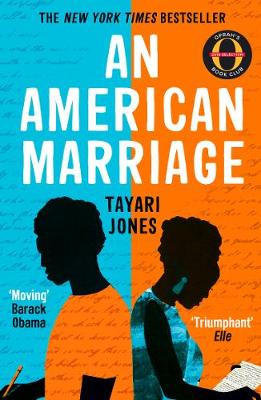
Book review : An American Marriage by Tayari Jones

The completion of this book marked the end of a personal mission; my quest to read all of the shortlisted Women’s Prize novels. I managed to squeeze it in just in the nick of time, before the winner’s announcement on 5th June. Last minute as usual!

To be fair I finished An American Marriage a few days ago. As always I like to let a book settle before I try to review it, take a little bit of time to gather my thoughts before I put words down. I was all set to go and then I watched Simon @savidgereads Women’s Prize Final Thoughts with his lovely mum Louise. As usual it was insightful and entertaining, but it did throw me a curve ball. It brought to my rather limited attention that An American Marriage was a retelling of the myth of Penelope and Odysseus, and it was something I hadn’t connected with at all.

Too be honest it threw me off kilter. I was left wondering whether I needed to reassess my responses in the light of this new knowledge. Should I delay my review, while I did a bit more research?

However I have decided that this review will be what all the others before it have been; my initial and personal response to the novel based on what I saw and the knowledge I brought. I could brush up on The Odyssey but it wouldn’t be an honest representation of what i found when I read this book.

So in short, this review has a distinct lack of Greek myth vibe. I hope it won’t be the poorer for it.

So after a rather long winded justification of my blogging choices, lets move on to the book. An American Marriage is the story of Roy and Celestial, a black, recently married couple living in the USA. Roy is wrongly imprisoned for a crime he didn’t commit. The novel is the story of their time apart, how they cope and what this ordeal means for their marriage. Add in steady, dependable Andre, mutual friend and long time admirer of Celestial and the scene is set for heartbreak.

The structure of the book is clever. It is largely told in a series of short chapters written in the first person, from the point of view of Roy, Celestial and later Andre. Each person has a voice; a powerful, persuasive voice. Just when you think you know where your sympathies lie in this tangled tale, you hear another side, experience another raft of emotions and your perspective changes again. Here is a skilful portrayal of how this couple are ripped apart by this devastating event, but how their experiences and reactions are understandably completely different.

Roughly a quarter of the book is told in a series of letters, written over the five year period that Roy is in prison. To begin with these letters are beautiful, lyrical love letters, holding on to details, trying to keep a young marriage alive. As well as being an exceptionally clever device to show the passing of five long years, they enable us to appreciate how different each characters experiences of those five years are.

Slowly the letters become a source of conflict, revealing how these circumstances have forced the couple into making desperate decisions, decisions that they come to blame each other for. As tensions rise, other letters appear, from other family members and friends, highlighting gaps that are appearing and the way the world is moving on without Roy.

And it is easy to blame the difficulties of this young marriage on the tragedy that befalls it. It seems, and is indeed alluded to throughout the novel, that Jones is retelling that all too familiar tale of a young black man, wrongly punished for a crime he doesn’t commit. Roy’s life is turned upside down, destroyed, his college education, promising career offer no protection as history repeats itself one more terrible time. And all of this is true and relevant. This is undoubtably a comment on the dangers of being a young black male, suspected and victimised. It is a shattering of the illusion that the cycle of racial discrimination has been broken.

But is this the whole story for this particular marriage? In truth, from the beginning, this feels like a marriage built on fractured ground. Even before they are parted both Roy and Celestial are keeping large secrets, coming to terms with different backgrounds and familial tensions, trying to find a solid foundation for their relationship. Right at the start Andre is a presence in their marriage; paradoxically both the one who brought them together and the ultimate potential threat. Even without all the hurdles in it path, would this marriage have survived ?

Celestial and Roy’s is not the only marriage we see portrayed within the novel. Roy’s parents are devoted, traditional; Big Roy’s refusal to allow any hand but his own to bury his wife reflects his final act of love. It is seeing the solid foundation of her own parents marriage as mirror to her own union that compounds Celestial’s doubt about it’s future.

This book throughly deserves it’s place on the Women’s Prize Short List. It does what great books do well, it effortlessly combines the microcosm of a It’s characters, in this case a marriage in crisis, with the wider portrayal of racial tensions and historical factors. So many times over the past months I have heard surprise that this book won a place alongside Diana Evan’s Ordinary People. It was felt by some that it was short sighted to have two books about marital breakdown on the list, just as people felt that two Greek retellings might have been one too many.

Aside from the fact it looks like we have three Greek myths retellings (!), I feel that Ordinary People and An American Marriage are totally different books. They may have similarities, but there is nothing ordinary or everyday about the situation Celestial, Roy and Andre find themselves in. A comparison with Ordinary People feels to me to be superficial.

So there we are. All six shortlisted books reviewed and considered. We await the verdict with anticipation. Anyone got a hunch? Because I haven’t got a clue which way this one is going!