Blog Tour Review: The Family Holiday by Elizabeth Noble

It is a pleasure to be taking my turn on the blog tour today for Elizabeth Noble’s latest novel The Family Holiday published on 25th June and destined to be one of the most popular summer releases.
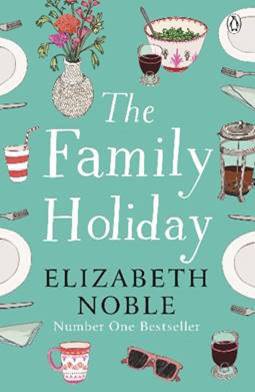
The novel centres around Charlie; approaching his 80th Birthday, he feels the need to pull his family close to him. In a generous and unexpected gesture he hires a beautiful renovated farmhouse for 10 days and asks all his children to join him.

Charlie is a widower, still very much grieving his wife who passed away several years before. Without the glue of it’s matriarch, the family of three adult children has drifted further apart. Scott the eldest is finally married, to a driven and beautiful American with two teenage girls. After yesterday of living the wealthy bachelor life style he now finds himself with a ready made family.

Nick is struggling. Recently and tragically widowed he is trying to bring up three young children single handedly. Convinced that asking for help means he will have failed Carrie, his adored late wife, he is running on empty,

And finally Laura, the only daughter, who is also at a low point in her life. Her husband, Alex, has left for a younger woman and her teenage son Ethan’s first love affair had gone spectacularly wrong, with potentially serious consequences.

It is under these varied and somewhat strained circumstances that this multigenerational familial group comes together, trying to put on a united front for their father’s sake. And it isn’t long before the challenges and differences come to the fore. Take for instance the relationship between the resident sister- in – laws. With Laura feeling inadequate and low, the breezy, super organised, even Instagramming Heather was never going to be easy to take. Add to this the fact that the ever single Scott is now the only sibling with a settled family, throwing establish family dynamics into chaos, and there is a lot of unspoken tension bubbling under the surface.

Their time in the house is filled with incidents, conversations and memories. Some pulling the group further together, some pushing them further apart, all observed by Charlie, wistfully wishing that the Captain that held his family together, his beloved wife Daphne, was still there to steer the ship through this troubled time.

This is a story propelled by any number and scale of domestic dramas. I am very aware that such a description makes this novel sound light, maybe even frivolous, but nothing could be further from the truth. Because in truth the world often hinges on domestic drama. It is within our families, with all their challenges, ups and downs, that we learn to form close bonds, it can be our bedrock and sometimes our undoing . It is our first window on the world.

This is a novel about a family learning to come together again. About those that love each other learning to fill the holes that have appeared over time and to re-evaluate the bonds within a family, both extended and nuclear .It is about learning to welcome the new and let go of the old, learning to live with what is lost and come to terms with what remains.

Reading this after the extended lockdown of recent months, that enforced period of absence from those we love and cherish, this book made me ache for those time with friends and family. And turned my thoughts to happier times.

Rachel x

And there is more…

For more reactions and reviews to this charming novel check out the rest of the blog tour below…
Book Review: Boy Parts by Eliza Clark.

If you are looking for something raw, edgy and on the darker side of black, then look no further; Influx Press is releasing a book today that could be your read of the year.

Boy Parts is the debut novel by Eliza Clark, billed as ‘a pitch black comedy both shocking and hilarious’ this is a read you won’t forget in a hurry.

It is the story of Irina. Working in a bar, whilst perusing her career as a photographer and artist, Irina persuades the men she meet to pose for explicit photographs. She is in search of the perfect pose, often cruel and always self absorbed, her life is fuelled by drugs, drink and extremes. When, out of the blue she is offered an exhibition in London, Irina’s past and present collide and her self obsessed and self destructive life begins to spin out of control.

The novel is wrapped in a world of struggling artists and art students, all vying for attention, searching for their own outlet of self expression, all trying to be authentic, shocking and to stand out from the crowd. It is a world where self expression never seems to equate to self awareness and is often in danger of tipping over into self destruction.

Irina is hard to like. She is damaged and damaging . Talented but difficult. Needy and demanding, and dangerously so. Strangely worshipped but often unkind, she is continually pushing her own boundaries whilst trampling all over everyone else’s. With a dark, yet compelling charisma Irina possesses a powerful hold over others.

Continually and consistently the reader witnesses Irina build people up and then tear them down . With her razor sharp intellect and seemingly wilful cruelty she deconstructs them. People, the men she meets, passing acquaintances, long term friends, appear to be little than extensions of her art; a means to her own, often selfish and dark ends.

A continual presence in Irina’s life is Flo. Ex- lover, self defined best friend, Flo is obsessive and still in love with Irina but as the novel progresses it becomes clear she is a rare stabilising force . When she steps away the worst happens. She has been a constant for Irina, in a world of transition and destruction.

It is hard to find any empathy for Irina. But as the novels progresses it is horribly clear that empathy and kindness is precisely what she needs. Irina is Intelligent and damaged . She is set on a path of self destruction, which accelerates into free fall as we reach the novels conclusion. She doesn’t do much test boundaries as smash them, stretches sexual boundaries until they snap. It becomes clearer as the novel progresses that this uncontrolled and at times vicious pattern of behaviour is a shell. A mask. A defence mechanism against something much darker. It’s a way of forgetting . But forgetting isn’t easy and Irina’s flashbacks are surfacing more readily and with a greater frequency, until there is no turning back.

In all honesty, three chapters in and I recoiled instinctively from this novel. And yet I couldn’t pull away either. Yes, the writing is abrasive and dark, but it is also alive and biting. There is a biting, pinpoint black humour that pop the words off the page . The drugs, the hedonism, the self destruction; it never seems contrived. It’s an authentic and illustrative exploration of a brutalised and damaged life that is both searching for purpose and desperately hiding from the truth .

It struck me that Irina’s story could have been told in any number of different ways and from any number of different viewpoints. It would still been a great read. But a different perspective would have rendered it more mainstream, less raw, less authentic and more forgettable. Eliza Clark’s narrative makes this novel impossible to forget. It’s new, vivid disturbing and visceral. For a debut it is devastatingly good. I for one, am waiting impatiently to see where Eliza Clark goes next.

Rachel x

Book Review: Leonard and Hungry Paul by Rónán Hession

I have been aware of this book for a long time. It seems that everyone whose bookish opinion I trust has read and worshipped this book. Honestly, the praise has been overwhelming and wholly positive. There is so much love and admiration out there for Leonard and Hungry Paul by Rónán Hession published by Bluemoose Books.

So why you may ask has it taken me so long to get around to reading it? Well, firstly, the usual and quite boring answer is I have so much stuff to read I haven’t found the time. But the second is, if I am honest I found all that love a bit overwhelming. What if I didn’t feel the same? Would I be the one who missed the magic? Not sure if this is an example of my stubbornness or insecurity but I didn’t want to be the one who didn’t love Leonard and Hungry Paul.

I am here today to tell you I was an idiot. When I finally dived into this book I didn’t come up for air. For 24 hours I was immersed in a quieter, gentler, less judgemental world and I didn’t want to leave. When I started this book it was a ‘read but not review book’, but there is no way I can put this one on the shelf without sharing my thoughts and adding my own small stitch to the blanket of love that is quite rightly wrapped around this book.

This is a novel centred on the friendship of two men; Leonard and Hungry Paul. Both in their thirties, both reserved, unassuming but both equipped with a perception of thought and emotional intelligence that is so often missing in today’s crazy world. Leonard, works as a ‘content supervisor’ for children’s factual books. He has until recently always lived with his mother and is currently mourning her passing. Hungry Paul lives at home, working on a casual basis as a postman. He is close to his parents Peter and Helen and his sister Grace, successful and high achieving, is about to marry. It is the run up to and culmination of the wedding which frames the novel.

This is a novel truly driven by and filled with it’s characters. The plot is the stuff of their hopes, fears and achievements. The novel focuses on their domestic challenges and changes; those things that may seem insignificant, but are in truth the stuff that makes the world go around.

Painted with true care and addition to detail, these are characters that feel so real you could almost touch them. Each character has a depth, a past, opinions and a true motivation, all seamlessly constructed and conveyed. In short here are characters you can believe in. I revelled in the quiet voices of Leonard and Hungry Paul, with their board game evenings, sense of duty and gently harboured dreams. I sympathised with Grace, close to her parents, loving her brother but equally frustrated and worried about his future and how his unwillingness to leave the nest might impact upon her. And the marriage of Helen and Paul was an untold and insightful joy; devoted to their children but still in love with each other, and trying not to lose sight of their own identify as a couple.

Rónán Hession has blessed us with an intensity of writing that is a simple joy. Throughout the prose possesses a targeted accuracy and undeniable reality; words are constructed in such a way that you are pulled into a novel that is truly immersive and authentic. There is a gentle and perceptive humour, threading it’s way like silk throughout the book. At times provoking a wry smile, at others a deep and genuine belly laugh. And for all that humour and reality, there is a bedrock of wisdom. And it was this I appreciated and adored the most.

At a time when it seems that loud voices and grand gestures are the things being lauded and sometimes demanded, this book is a welcome change of pace and perspective. This book embraces, empowers and champions the introvert. It is a celebration of those who truly observe and move gently on the backroads of life. They are no less important, no less relevant and often filled with a perception and vision others have lost.

A true novel of still waters running deep, I can’t help thinking the world might be an easier and more harmonious place if we were all a bit more Leonard and Hungry Paul.

Rachel x

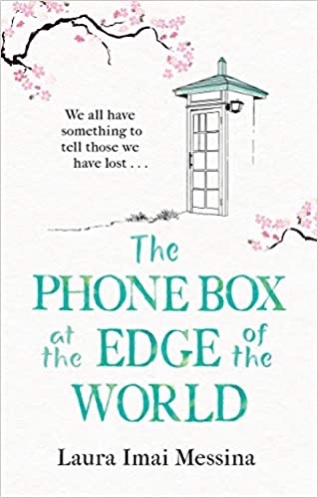
Book Review: The Phone Box at the Edge of the World by Laura Imai Messina

When this book caught my eye on Twitter, I was instantly drawn to the idea behind it. So I was thrilled to receive a gifted copy, for which I offer heartfelt thanks. It has been a pleasure to read and review this unique work. Please, let me introduce you to The Phone Box at the Edge of the World by Laura Imai Messina.

Inspired by real places and true events this story is of an exploration of grief and, at the same time, a celebration of life. It is one of those stories where you find yourself nodding and smiling in recognition at the truths you find within it. And maybe sometimes wiping away a tear…

Yui, lives in Tokyo. She works at a local radio station and she is grieving. Like thousands of others her life was changed beyond recognition on 11th March 2011 when an unprecedented tsunami hit the north- east of Japan. The disaster claimed the lives of both Yui’s mother and young daughter, leaving her entirely alone. For a while her family were among the yukue fumei, ‘whereabouts unknown’. During this time Yui lived in a school gymnasium, on a sheet of canvas, waiting with scores of other grieving souls, for news of their loved ones. All trying to cope with unbearable pain and loss in their individual ways.

When we first meet Yui she is still wrapped tightly within her grief. Life is about coping, about counting the hours and trying to function. Her grief does not have a voice, she does not talk about what happen, it is ‘the deep abyss she carried inside.’

Then she presents a radio programme about coping with loss. A programme in which people share the ways they have found to cope and move forward. It is here that Yui first becomes aware of Bell Gardia, a place offering comfort to those who are lost and grieving in the most unique way.

At Bell Gardia, is a Phonebox, disconnected but still well used. Set in remote gardens, on the top of a hill, it is a place that grieving relatives go to speak to their loved ones. Their words are carried away by the wind, scattered to the four corners of the earth, but providing comfort just for being spoken.

And so begins Yui’s pilgrimage to Bell Gardia. She arrives at the Phone box, but for a long time she is unable to use it. For Yui her journey to this place provides a different lifeline. It is here she meets new people, people who become important to her and help her to find a way forward; Suzuki-san and his wife, guardians of Bell Gardia, Shio, a young man whose own family was torn about by the tsunami, Keira, a high school student grieving for his mother. And most importantly Fujita- san, or Takeshi, a Tokyo doctor, mourning his wife and trying to find a way to help his daughter find her voice again.

It is this relationship that becomes the bedrock of the story and the path to Yui’s own recovery. It is this relationship that the gentle prose wraps itself around, and shows a couple who are learning to be together, celebrating life, whilst at the same time learning to embrace their grief.

For at the heart of this novel is the true but often unspoken fact that life and death are intertwined, that there is a natural symbiosis to be found and celebrated here. This novel is full to the brim with examples of the way the dead touch our daily lives. There are fascinating insights into Japanese culture which highlight just this attitude.

For example, the butsudan; a altar found in many Japanese homes where families honour their dead, talking to them , making them part of everyday life. There is a belief that the dead don’t leave us, they just move to a different place in the house. That the dead are always with us and that the key to moving forwards is to find a way to make the dead part of your life, no matter what form that may take.

That silencing a man was equivalent to erasing him forever. And so it was important to tell stories, to talk to people, to talk about people.

The Phone Box at the Edge of the World by Laura Imai Messina.

This idea extends to and is part of the very structure of the novel. Every second chapter is like a snapshot in time, some relating to the present but many offer a glimpse of the people who have passed. They may seem like mundane lists of favourite foods or sayings, but in fact they reinforce the fact that the importance and essence of people, both living and dead, lies in the individual details. These snapshots reinforce one of the novel’s core messages; that life and healing are to be found in the everyday. That details are important and often they provide crumbs of hope, restoration and salvation.

This book is a celebration and exploration of the process of grief. It offers a sympathetic acknowledgment that loss is part of life and how we deal with that is very much an individual process. The novel details the physical manifestations of grief, the changing stages one person’s grief moves through and draws out cultural differences along the way. I particularly like this summation of the grieving process …

Yui and Takeshi gradually realised that the Wind Phone was like a verb that conjugated differently for each person: everybody’s grief looked the same at first but, ultimately, was completely different.

Pg 126 The Phone Box at the Edge of the World by Laura Imai Messina

Laura Imai Messina has created something truly unique. This novel has a dreamlike quality, but unpick the layers and you will find everything about it is grounded in truth. In a world where we are rushing ahead, shouting out loud, this is a book to draw you back in and make you think about what is truly important and inescapable; life and death, and our attitudes to them both.

Simply lovely.

Rachel x

The Phone Box at the Edge of the World by Laura Imai Messina is published 25th June 2020 by Manila Press/ Bonnier Books.

More information can be found here

Book Review: The Vanishing Half by Brit Bennett

I read this book against the back drop of the #BlackLivesMatter demonstrations gathering momentum across the globe. It is hard to imagine a more momentous time to have engaged with this particular novel, but I am quite convinced that whenever I had met The Vanishing Half , it’s impact would be have been the same.

Brit Bennett has created a mesmerising, immersive and critically important novel. Published by Dialogue, I am so grateful to Millie Seaward for sending me a gifted copy.

The story begins in Louisiana 1954, where twins Desiree and Stella Vignes are growing up in small town named Mallard. Mallard is unique. A black community, but one whose history is built on years of marriages between ‘mulattos’. It’s inhabitants are black but ‘each generation (is) lighter than the one before’.

But make no mistake, this is not a white community. When their father is killed in a klan style lynching, part of which the girls witness, their dreams of school and better life are snatched away. By 16 they are working for white families.

It is free spirited Desiree who persuades Stella to break free, and head to New Orleans. But it is Stella whose life takes the most dramatic turn. When she is mistaken for a white woman, a whole new life opens up before her. What starts as an honest mistake takes on a life of it’s own. One that will pull her away from her family and her old life forever.

But can anyone truly leave their heritage, race and identity behind them? This is the question that is explored throughout out this beautiful and perceptive novel.

In the case of Stella, Brit Bennett, has created a complex and multilayered character. It is all too tempting to dismiss and judge the decisions that Stella has made. It is in the gift and skill of the author to make the reader to stop and reflect on the choices Stella makes.

We are forced to question whether it is Stella who chose to redefined herself or was it society. Is it so wrong that Stella, bone tired from the daily fight against prejudice and injustice, takes the way to a life less fraught, less dangerous? Think of the town she grew up in, it could be argued that she is just taking the town’s philosophy one step further. Or is she crossing an unforgivable line, by turning her back on her life, family and denying her race?

Stella’s story is at the heart of the novel, but the impact of her choices and what it takes to live with these decisions are felt across the generations. Through the eyes of her daughter Kennedy, raised with money and opportunity, we get an emerging understanding of operational and inherent white privilege. Compare Kennedy’s life to her cousin Jude; as black as Kennedy is white, their lives cross but struggle to connect.

The comparison of the direction of the next generation gets starkly and comprehensively to the nub of institutional and long standing racism. By exchanging a black life for a white one Stella seems, almost effortlessly to rise. But is Stella’s life a true life or a half life? Does she exchange one type of fight, complication and heartbreak for another one?

Within the novel Stella is not the only character looking to redefine herself. Reese, partner of Jude, is transsexual, moving forward, and like Stella looking to make sense of a hostile and changing world. The introduction of Reese further enhances the question of where your sense of self comes from. Is it an inherent need, rising from deep inside yourself, or is it something created from your experiences, environment and inheritance?

This is a novel filled to the brim with complexities, joy and pain, truth and lies. The title, The Vanishing Half, is so relevant to and representative of the events and characters within it. It’s generational span is a showcase for a cast of strong, multilayered and authentic women. This novel raises awareness, provokes discussion and offers hope. At any time I would recommend this book, at this time it is a must read.

Rachel x

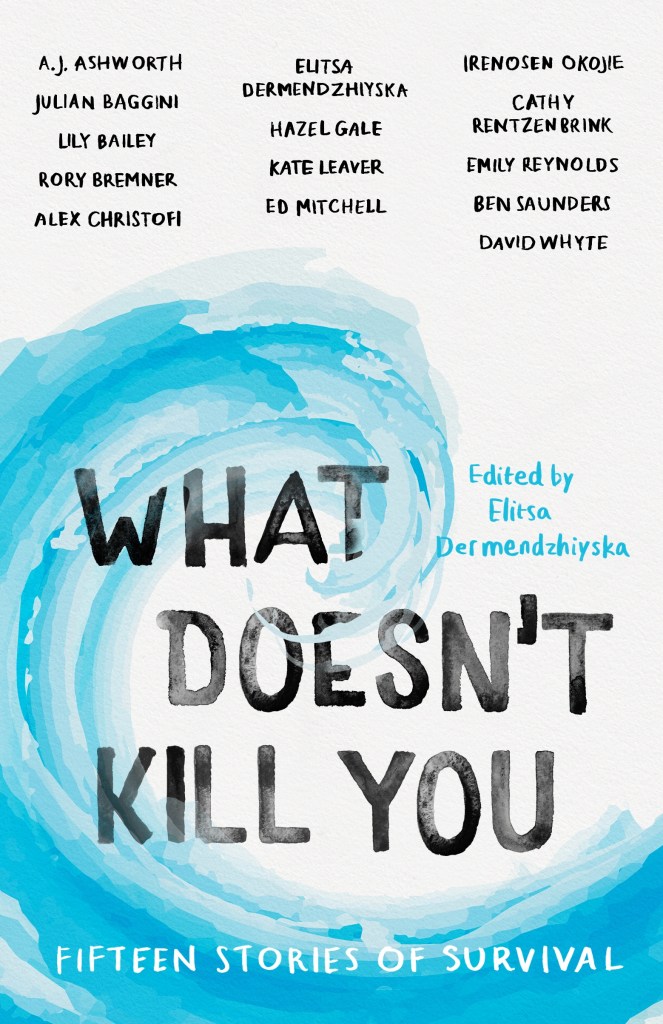
Blog Tour Review: What Doesn’t Kill You…

It is my absolute pleasure today to be taking my turn on the Blog Tour for What Doesn’t Kill You : Fifteen Stories of Survival Edited by Elitsa Dermendzhiyska, published by Unbound.

This is a collection of essay, each written by individuals whose lives have been touched in some way by mental ill health. Their stories are unique, all as a consequence of entirely different circumstances, experiences and illnesses.

But each story is told with a raw honesty; each writer has opened up a small part of themselves to share their experiences sensitively and with compassion.

It seems to cliched to call the writers assembled here brave, but it is also undeniable. In an increasingly challenging world, the acceptance of and discussion around mental ill health still,all too often, feels like a struggle. Wrapped in their eloquence and empathy, each story within this collection offers a glimmer of hope.

Each story is different. That seems a mad and ridiculously obvious thing to write, yet it struck me as I was reflecting on this book, how beautifully these essays collectively illustrate the point that no one person’s story, diagnosis or journey is the same. The complexity and breadth of mental health issues is laid bare within these pages. Yet there is a shared understanding of the fact that no one path of recovery is the same. There is not one catch all drug, no one all encompassing therapy, no magic time limit on recovery. Nothing about mental ill health is linear; recovery is as individual as experience and diagnosis.

But recovery is possible. Each of these stories is a beacon of hope. And each holds that essential element; acceptance and communication. As each story unfolds, it seemed clear to me that the binding thread, the pivotal moment within each account, was the moment when the illness was acknowledged. At this point there was a small shift from a perceived battle, towards a sense of moving on with the illness, diagnosis, condition as a recognised part of life.

As Julian Baggini points out in his contributed essay No Cure for Life , when supporting friends and loved ones who are treading this path you can offer support but no salvation. This journey is unique and often lonely. And, as Baggini rightly states universal happiness is not possible or even desirable. What is labelled here as The Fairy Tale Template, and is perpetuated by our increasingly crazy world of social media and consumerism is one of the biggest barriers to good mental health. Because to appreciate the light, there has to be some dark. The key, and the recognised challenge lies in maintaining the balance,

All stories here contain lifelines, each thrown out by different people, different circumstances, in different times and places. Recovery hinges on catching the right lifeline at the right time and place.

Each story within this collection is an inspiration. It isn’t my intention to talk about each in turn. But like all books there are certain references which will stay with me. For example Rory Bremner’s ADHD and Me was a fascinating insight, particularly for me as an SEN teacher. The acknowledgment of the difficulties but most importantly the gifts his condition presented really struck a cord. His honestly about ADHD being part of his core, part of him, was refreshing,

One of the most powerful depictions of ongoing mental ill health came for me in Eight by A.J. Ashworth. The sense of self laid bare in her vivid descriptions of panic attacks, experienced from a young age, was quite breathtaking. Like so many of these stories, the key to learning to cope comes from acknowledgment and identification. In Ashworth’s case she describes her attacks as ‘a black bulb buried deep that I cannot find the switch for.’

There are so many poignant examples of strength and honesty in this collection I could go on far beyond the edges of this blog post. You need to experience the beauty of Irenosen Okojie prose as she details how her writing slowly brought her through what she describes as her ‘winter’, her silver and grey period.

Or Kate Leaver’s powerful battle with and recovery from anorexia; her turning point coming in the form of Hunger Strike by Susie Orbach. The feminist writings were her way forward to recovery.

What each of these stories by their very nature and being illustrates is the power that we can find in the written and spoken word. Shared experiences and communication won’t eradicate mental health issues, but they bring it out into the open. Acceptance and discussion is a powerful weapon.

It has been my pleasure and privilege to read, and offer my review. I hope this collection is read and appreciated for the gem it is

Rachel x

And there is more…

For more reviews and reactions to this collection, please check out the rest of the blog tour…

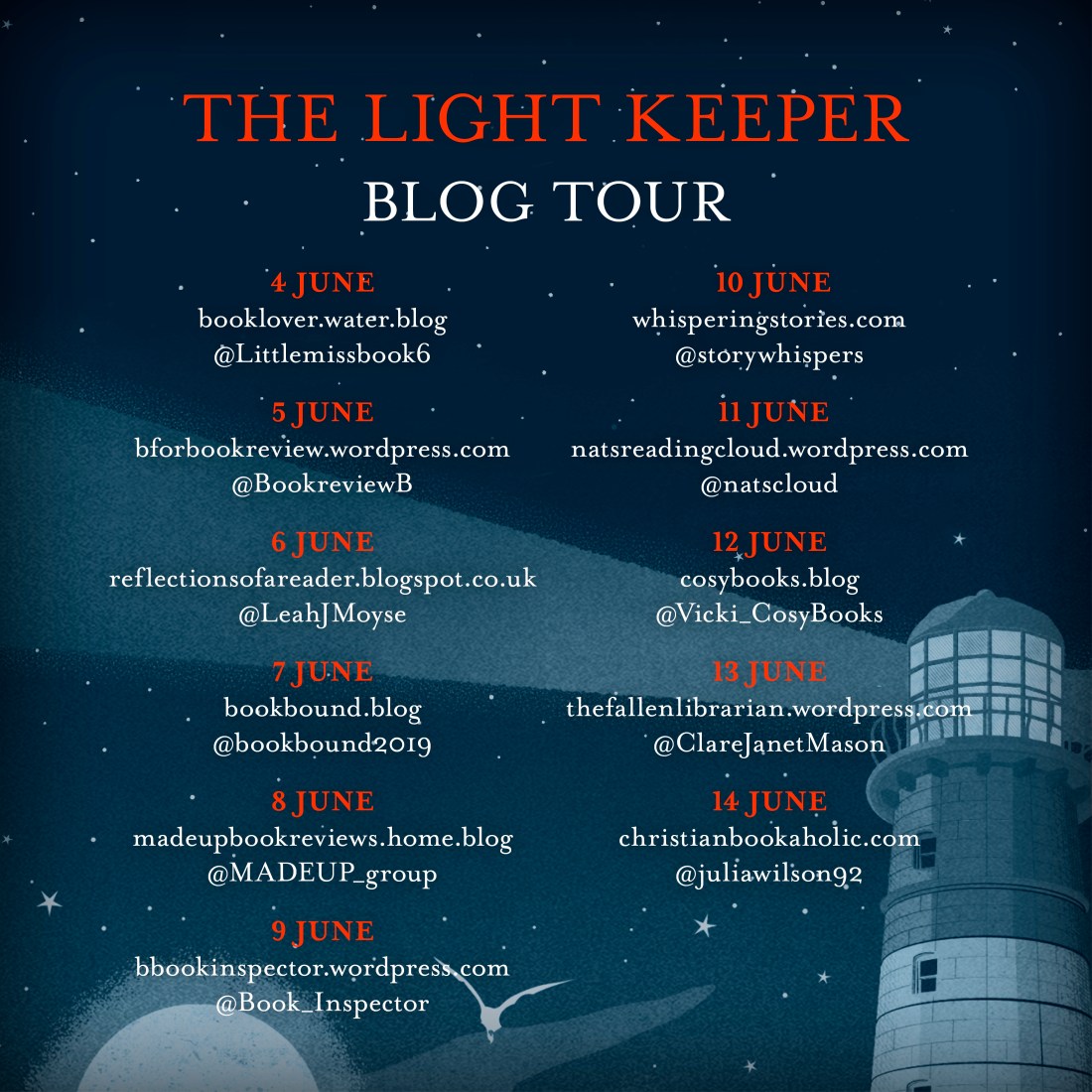
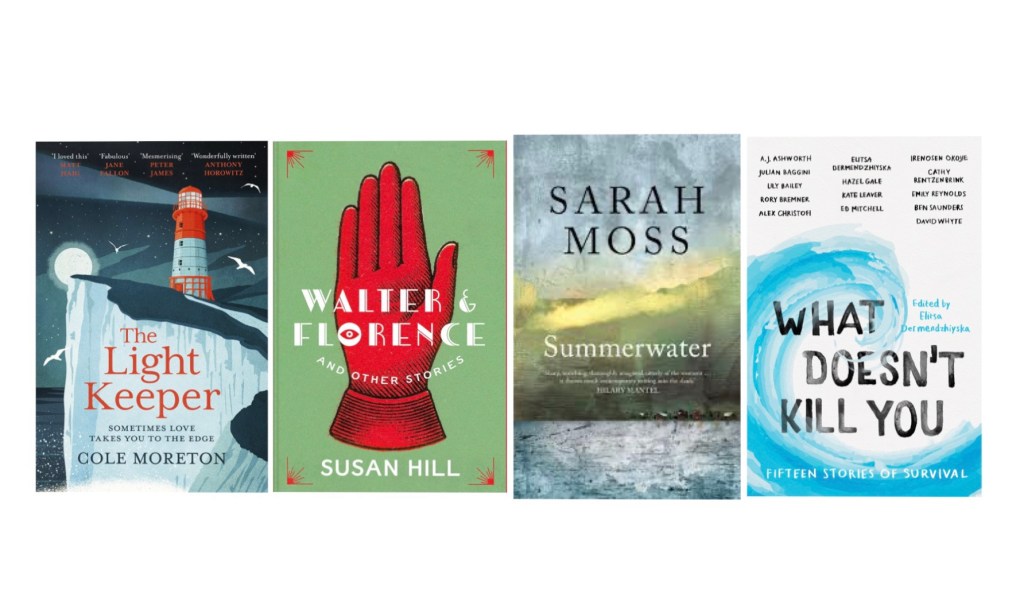
Blog Tour Book Review: The Light Keeper by Cole Moreton

This book crept up on me, and then, all of a sudden I was ambushed. It was such an unexpected joy I immediately took to Twitter to praise and recommend. Then I sat down to write this review. Huge thanks go to the author, Cole Morton for allowing me to read, and to Rhoda Hardie, Marylebone House for my gifted copy. It is my absolute pleasure to be taking my turn on the The Light Keeper Blog Tour today.

So what is so special about this book? I suspect for every reader the answer to this question is likely to be different . For The Light Keeper is that kind of book, so full of life experiences that everyone is likely to take something quite unique away from it.

The novel begins with the story of Jack and Sarah. Jack comes home and finds Sarah is missing. They are coming to the end of their IVF journey; the money has run out and the impending pregnancy test represents their final chance at parenthood. Jack believes that Sarah has buckled under the pressure and is headed to Beachy Head to end her life.

He dashes out of London, but when he arrives on the cliffs Sarah is no where to be found. Jack finds himself in a community that seems governed by the fact the cliffs regularly attract souls who are lost and looking to end their lives. The cliffs are patrolled by The Guardians, on the watch for jumpers; hoping to intervene.

Living on the cliff edge is The Keeper. A former war reporter, living in a semi renovated lighthouse; a man is dealing with his own demons. Trapped inside his grief, he is sustained and at times tormented by imagined conversations with his dead partner Ri. So isolated, his actual name isn’t revealed until towards the end of the novel, when his barriers start to come down.

The lighthouse acts, unintentionally as a meeting place. It is the focal point of the novel where the complex stories of the characters come together and in some cases collide. Slowly a web of connections and stories are woven, stories that span generations and bring influences together from across the globe.

The characters of this novel are it’s strength; it’s backbone. Each character brings their own battles and scars to the plot, all authentically brought together. Lives are complex and this is sympathetically acknowledged; indeed, it is integral to the success of the plot and the novel itself. Nothing here is what it seems at first glance. The past and the present are constantly competing, as characters try to carve their way forward.

Cole Moreton has fashioned a vivid and multilayered portrait of grief, presenting the reader with sensitive and individual reactions to loss and trauma. There are no standard responses, no cliches, but rather a host of characters with their own story to tell, each trying to overcome and cope.

This book is a celebration of humanity. An understanding of the human spirit, an acknowledgment of what happens when hope is gone but someone takes time to listen to your story, to offer hope and see beyond the difficulties. A rare and unexpected treat.

Rachel x

And there is more…

For other reviews and opinions on The Light Keeper check out the rest of the blog tour below…

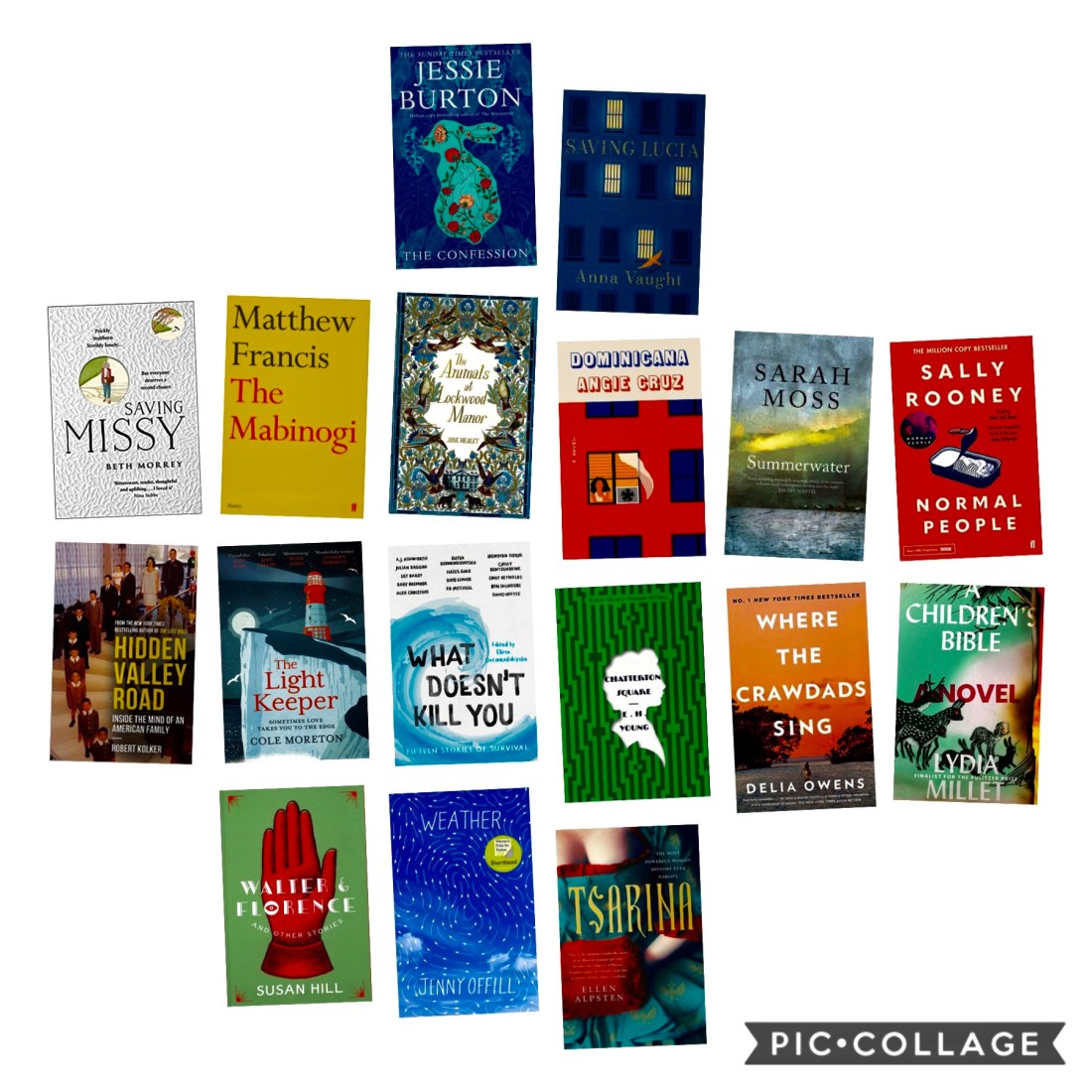
May Wrap Up!

May is almost done and it seems my reading speed as picked up! From struggling with my reading mojo at the beginning of lockdown, I now seem to be finding my retreat in books the longer the situation continues.

With the ever more crazy situation in politics and current affairs in general, books seem a safer refuge. Beautiful weather has taken my reading outside, and the world has seemed blissfully far away.

So, what I have I read! Well quite a lot actually, and I have finally begun to get through some of my ‘overlooked’ titles. Books that have been sitting on my shelves for ages. One such book was The Confession by Jessie Burton. Published last year, I was late to the party but it was completely worth the wait. I hadn’t planned to review this one but I was so surprised and delighted by it that I felt I had to.

Another ‘catchup’ book, was The Animals at Lockwood Manor by Jane Healey. Set at the beginning of World War Two, and with strong female characters, this one was always destined to be a winner for me. My review can be found here.

I also finally got around to reading Where the Crawdads Sing by Delia Owens. I particularly enjoy the setting of this novel. It was one of those books where you became completely transported and immersed. It brought to mind one of my all time favourite reads To Kill a Mockingbird.

I embarked upon a couple more catch up reads as part of my book club reading. The first was the gentle and delightful Saving Missy by Beth Morrey. I read it and enjoyed it but it really came alive in our book group discussion. So many layers are cleverly woven into this novel, it made for a great Book Club book.

My second book club read of this month was Normal People by Sally Rooney. I have to admit here and now that I have avoided this book for a long time. I know it came out to universal praise, but I was quite reluctant to read it. I had read and not enjoyed Conversations With Friends and this quite simply put me off. I haven’t had my book club discussion on this one yet, so I am playing my cards close to my chest…Watch this space!

This month I also completed my self imposed challenge to read the Women’s Prize Short List . Let’s not kid ourselves, this has been no great hardship. I can honestly say that I have enjoyed each book on the short list this year. I finished my reading with Dominicana by Angie Cruz and Weather by Jenny Offill. I will be watching with interest when the winner is announced on 9th September. I have my favourite, but that is for another time.

Other books I have read and reviewed in May have included some fascinating historical fiction. The witty and observant Chatterton Square by E.H Young was recently re-released by British Library Publishing. Set in the summer of 1938, against the backdrop of appeasement, it is a wonderful commentary on a women’s perspective on marriage.

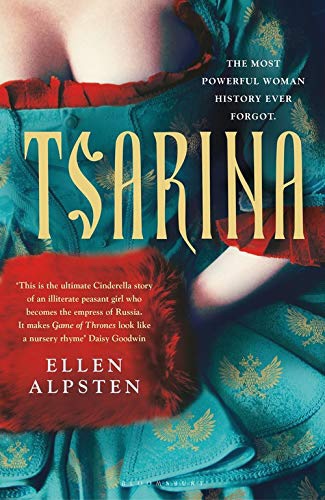
From 1930’s London to 1700’s Imperial Russia, allow me to present Tsarina by Ellen Alpsten. This was a book I reviewed as part of a blog tour. Filled with opulence and cruelty in equal measure it is the story of Catherine I of Russia and her remarkable rise from peasant to Tsarina. You can fine my review here.

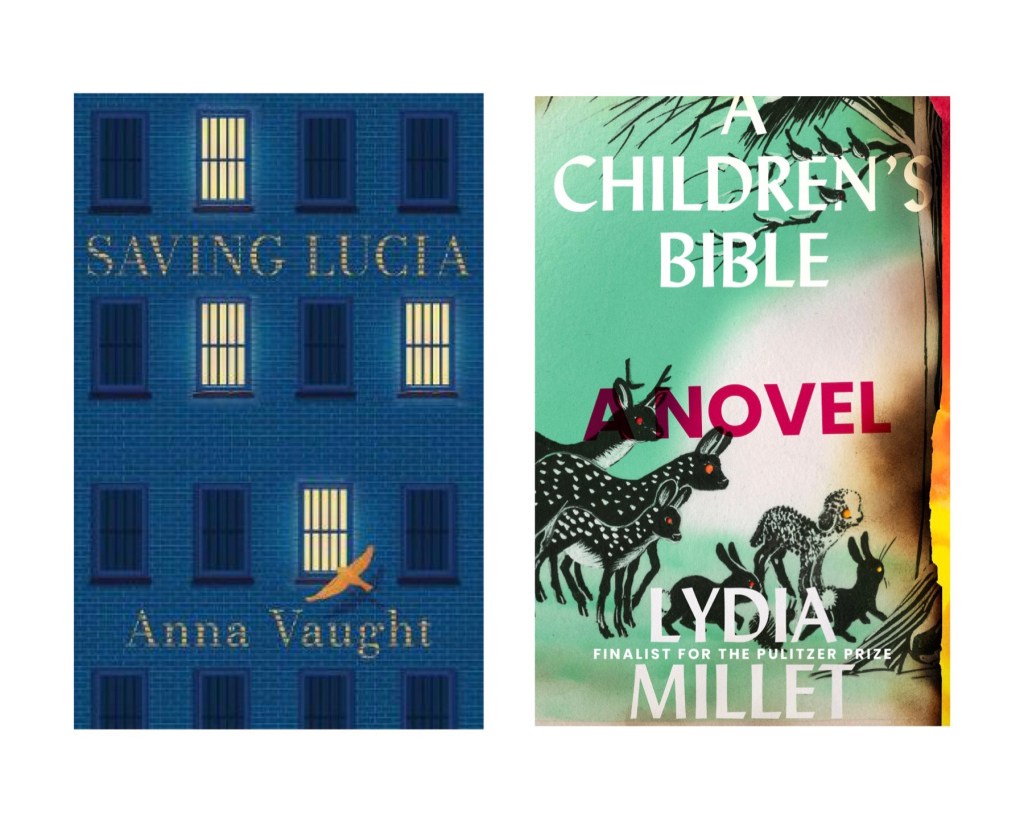
One of my favourite books of the month, both to read and review was the extraordinary Saving Lucia by Anna Vaught. Published earlier this month by Blue Moose Books, this book is the story of four women. All incarcerated within asylums, all infamous , but at the same time all desperately misunderstood and overlooked. This novel is a beautiful reimagining of their stories, offering them freedom through their own voices.

My final review of the month was an Instagram Review of A Children’s Bible by Lydia Millet. Focusing on the approaching global emergency that is Climate Change, the author explores what happens when theory becomes reality and how the older generations struggle to adapt to the sudden and necessary changes needed. A powerful warning to all.

The vast majority of my reading this month has been fiction, but there have been two notable and worthy exceptions. Firstly I dabbled in poetry, picking up Matthew Francis’ The Mabinogi. I heard of this retelling of the ancient Welsh epic from not one but two podcasts, Backlisted and Hay Festival Podcast. I have to say, I loved it. Evocative and lyrical it was a unexpected and welcome change.

Secondly, I come to my one nonfiction read of the month Hidden Valley Road by Robert Kolker. The fascinating, and often heart breaking story of the Galvin family. A fine all American family to the outside world, 6 of their 12 children were diagnosed with schizophrenia. This book examines the realities of life in the Galvin household, and explores how this family helped unwittingly to inform future research in to and treatment of schizophrenia. Thank you to Amanda @BookishChat for putting this one on my radar.

Finally I come to what I am thinking of as ‘Treats yet to come.’ These are the books that I have read this month that either have reviews pending or are yet to be published. And there are some crackers!

I am so excited to currently be working on my review of Summerwater by Sarah Moss. Sarah Moss is a genius in my eyes, and Summerwater is just a delight. This review is taking an age to write, as I am determined to do the book justice. Due out in August of this year, it is not to be missed.

A couple of books that I have reviews written for and ready to share in the next week or so are Walter & Florence and other stories by Susan Hill and The Light Keeper by Cole Moreton. Neither of these books were on my radar at the beginning of the month and both have been a delight. Watch out for the reviews!

And finally we come to What Doesn’t Kill You – Fifteen Stories of Survival. A collection of moving and deeply personal accounts of individual experiences of surviving mental ill health. It is my pleasure to be part of the blog tour beginning early next month, organised by Anne Cater, which celebrates this very important book.

So, all in all a very busy reading month. I think it is far to say that what is getting me through lockdown are family, ice cream and books!! Bring on June!

Rachel x

Blog Tour Review: Tsarina by Ellen Alpsten

I seem to say this a lot…but I do love historical fiction. I love the places it takes me, it’s ability to transport me away from the daily reality and deposit you somewhere entirely different.

So I always have my eye out for new historical fiction and find it very hard to resist signing up for blog tours when the past is on the cards. When Anne Cater offered me the chance to get on board with Ellen Alpsten’s debut novel Tsarina, published by Bloomsbury, I didn’t even try to resist; I jumped at the chance.

Tsarina begins in 1699. On the cusp of a new century, Russia is in the grip of the Great Northern War. Led by Tsar Peter I, the country is under going a transformation. Peter is well travelled, ambitious and ruthless. His desire to modernise and transform his domains is all consuming, and he will stop at nothing to achieve the Westernised Russia he craves.

Rewards for loyalty and bravery are lavish, but punishment for deception , perceived or otherwise, are brutal in the extreme. The chasm between rich and poor gaps. It is both an exciting and terrifying time to be alive.

As Peter wages war throughout the Baltic, Marta, an illegitimate peasant girl is sold by her family aged just fifteen. Finding herself miles from home and surrounded by brutally, she fears the worse when fate leads her to a Russian battle camp. Here she catches the eye of Peter himself and so begins her spectacular rise to power.

Peter is brutal, but he is also brilliant and charismatic. There is an immediate connection between Marta and himself. She is thrown into the world of excess and riches, becoming Peter’s mistress, living openly with him at court. Showered with material pleasures, Marta is all too aware that her existence hangs continually in the balance. She needs to provide Peter with a true heir, and she needs to maintain his interest in a court full of attractive and ruthless women.

This is a true rags to riches story; the story of how a peasant girl became a Tsarina; the infamous Catherine I of Russia, ultimately a ruler in her own right.

I devoured this book! There is a richness and vitality to the writing that mirrors the turbulent opulence contained within it’s pages. Alpsten is master of the detail. Her ability to transport me from lockdown Britain to 18th Century Russia, never failed to amaze or delight me.

This is one of those novels you get hopelessly lost in, immediately immersed in the prose. Historical fiction fans will undoubtedly love it, but anyone who is looking for a breathtaking story spectacularly told need look no further.

The story of Catherine I has everything, and the writing wrapped around it here gives it that little bit more. I guarantee that once you pick up Tsarina, you won’t be able to put it down.

Ellen Alpsten has created something infused with magic.If you love historical fiction …this one is a feast for the senses and the soul! Enjoy the ride!

Rachel x

And there is more…

For more reactions and reviews check out the rest of the Tsarina Blog Tour …

Book Review: Summerwater by Sarah Moss

No one writes like Sarah Moss. When you open a novel by Sarah Moss you are going to fall down a rabbit hole and not come up for air. Her writing is sharp, detailed and quite frankly amazing, so best clear your schedule if you are about to start one of her books.

So when I heard there was a new Sarah Moss, Summerwater , on the horizon I was desperate to read it. Thank you to Camilla Elworthy for the chance. Back in May I devoured it, loved it, sat down to write my review and failed…

Not because Summerwater isn’t a great book, it is. It’s a fabulous book with bells on! I started and stopped my review because I was convinced I couldn’t convey even half of it’s brilliance. So I wrote one line and stalled; chickened out basically.

But now it’s August and this book needs a review. I need to pay some kind of tribute to this clever and complete book, even if it falls short. And I need to pay tribute to an author I have mentioned numerous times on the blog but never reviewed. So I have embarked on my first reread of the year, put my big girl pants on and here goes…

Summerwater is the story of one day. Set in a small holiday park of log cabins, deep in the Scottish hills, on the shores of a Loch. It is midsummer and it is raining. Raining relentlessly, set in, a constant drumming backdrop to the unfolding events of the day. The rain is fraying tempers, stretching the edges of tolerance, already tested by the late night parties of the Eastern European woman saying in one of the lodges.

Each cabin holds a family, each family has their own story, their own reason for being there. Within each lodge we find a microcosm, the story of a family, but also the story of individuals. There are many lives depicted here; it feels like there are seeds of many novels waiting to be written, nestled in the pages, beneath this rainy Scottish sky. But nothing about these snapshots, these glimpses of each life feels superficial or shallow. Nothing feels incomplete. On the contrary it all feels rich, textured, multilayered and tantalising.

Take for example Justine, mother and wife, walking early and slipping out to run, to find her escape from family life whatever it might cost. Or Josh and Millie, engaged and looking forward, but each pulling in slightly different directions. Or David and Mary, retired and veterans of the holiday park. Both ageing, but at different rates, both aware of but ignoring a growing problem in their lives. And the small inappropriately dressed girl, often seen alone at the edge of Loch, daughter of those who party late into the night. All of life it seems is trapped in theses lodges, bored teenagers , struggling mothers, wayward children, babies and misfits.

It is Sarah Moss’ particular skill that crafts beautifully observed, honest and authentic characters. Characters that live lives filled with dark humour and uncomfortable truths. It seems that people’s inner most thoughts are her speciality, particularly the thoughts of women. Her writing is precise, intuitive and relevant, presenting a series of portraits expertly drawn. Everyone’s strengths, flaws and frustrations are laid bare, all building towards the novel’s climax. Each portrait provides a critical layer of tension, a layer of depth and investment. So many times I felt myself move deeper into the story, sure I was reaching a pivotal moment of crisis or intrigue, but then the writing veered away, pulling me in a different direction, on to a climax I didn’t see coming.

Quite simply there is so much in this book. So much to digest and discuss, so many places the story and events could go. Moss is the master at painting complex authentic pictures in a small window. These are snapshots that get to the heart of a character, their thought feelings and preoccupations, some problems momentary and easily resolved, others deeper brewing and more threatening, maybe not yet fully realised.


Authentic is the word I keep returning to time and again. Sarah Moss gets it! Her detail is all so real, tangible and so beautifully observed.At a stroke she encapsulates a sense of time and place. I found myself nodding along as she conveys the nothingness of holidays with small children in the rain. Or that feeling of setting out on a run when your body is screaming and then it all clicks. Or that feeling of quietly lamenting the life before small children, whilst simultaneously being unable to let go of the day to day realities of life and unwind. All of this matters, all of this is real.

And throughout there is an under current, maybe more than an under current linked to Brexit and it impact. Woven neatly into the narrative, without being intrusive is evidence of the changing of attitudes. Lola, a confident bully of a child, tells Violetta, to go home, rehearsing the xenophobia rhetoric she has learnt from her father. Justine laments the choices that will be denied to her children. And the in antisocial behaviour of women in the cabin, much is made of her nationality, as if this will explain away her behaviour, as if this defines her.

I am a huge fan of Sarah Moss. I don’t even try to deny it. I love the way she doesn’t waste a word, the way she uses language to weave a web and trap you, all the while getting to heart of what she has to say. Summerwater is up there with the best of this year’s publications and this review is my own small way of banging it’s drum. If you haven’t read Sarah Moss before, please do. And if you have, Summerwater is another perfect stop off along the way.

Rachel x